How does OEM air filter 4K0 133 844 A / 4K0 133 844 E specifically interact with the EA888 EVO4 2.0 TFSI engine, 12V Mild Hybrid Electric Vehicle (MHEV) system, and electronic coasting dynamics in the Audi A6 C8 (4A2)?
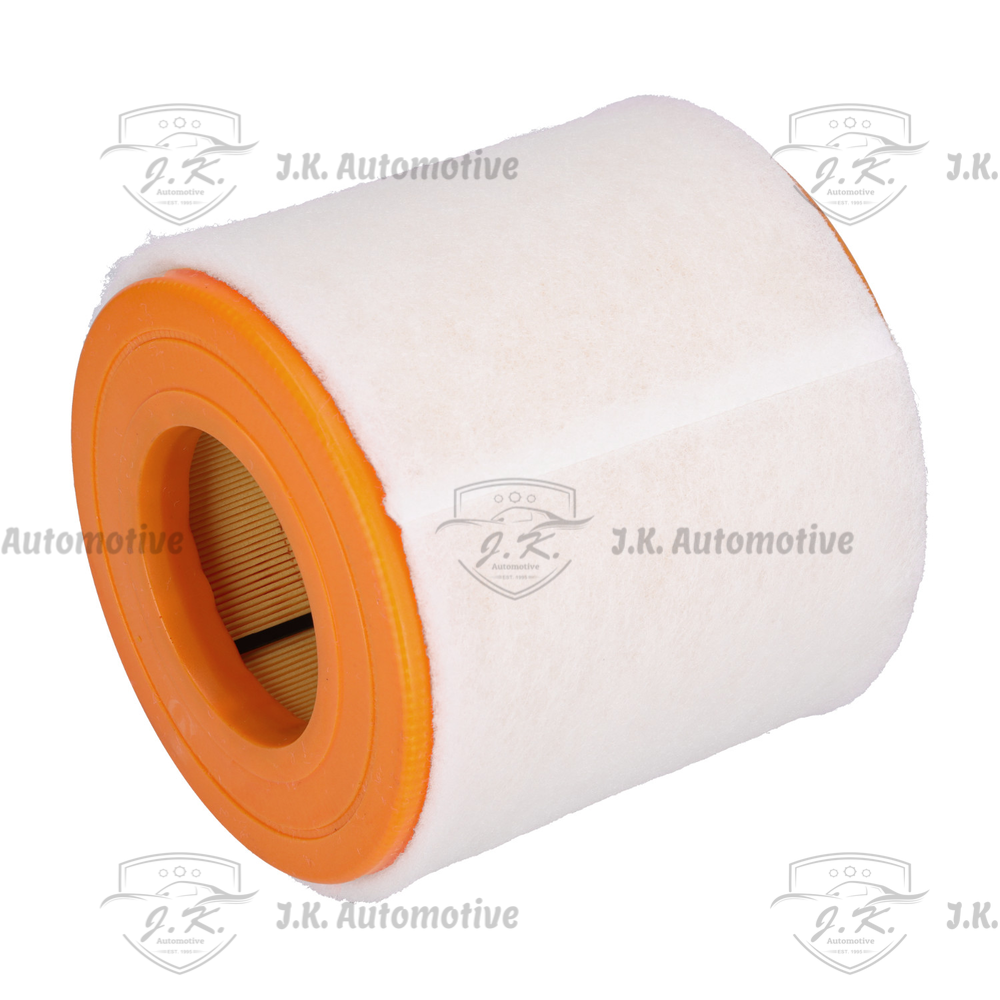
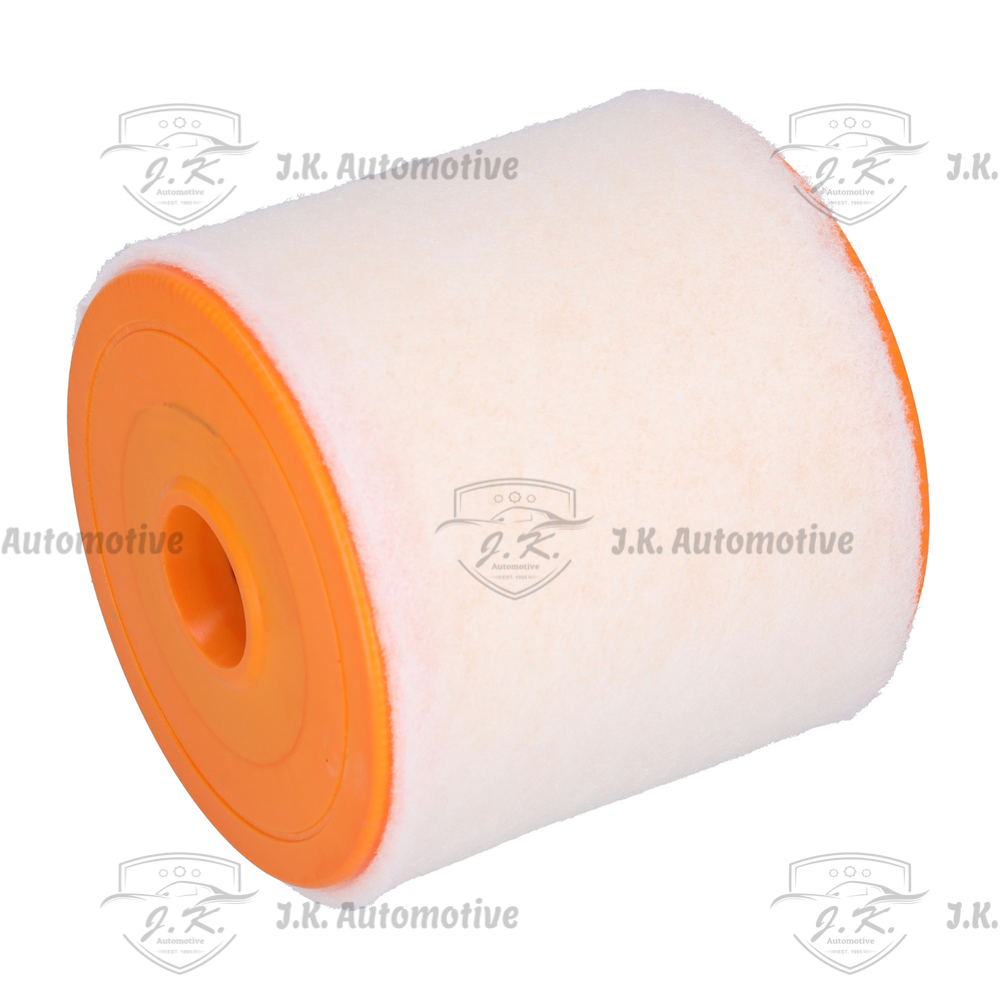
The Audi A6 C8 (4A2) produced from 2018 through 2026—featuring the 45 TFSI powertrain with the updated EA888 EVO4 2.0-liter turbocharged four-cylinder engine (producing 245 PS / 265 PS)—relies on a 12V Mild Hybrid Electric Vehicle (MHEV) architecture equipped with a belt-driven starter-generator (BSG) and a lithium-ion battery array. This MHEV system enables extended engine-off coasting at speeds between 55 and 160 km/h, aggressive coasting start-stop shutdowns below 22 km/h, and instantaneous engine re-starts. Because the EA888 EVO4 engine cycles repeatedly between engine-off coasting and active combustion under varying thermal conditions, maintaining stable static suction pressure and laminar airflow entering the twin-scroll turbocharger is paramount. OEM air filter part numbers 4K0 133 844 A and 4K0 133 844 E specify the cylindrical element engineered for the MLB Evo chassis induction housing. Constructed with deep synthetic microfiber media, bonded pre-filter foam wrap, and inner structural mesh reinforcement, this filter resists high differential vacuum loads during rapid turbo spool-up when the BSG restarts the engine under heavy driver torque demand. Furthermore, the flexible elastomeric sealing end-caps form an airtight compression seal inside the cylindrical airbox chamber, preventing unmetered road grit, micro-particulates, and moisture from bypassing the element. Clean, unrestricted airflow protects compressor wheel geometry, maintains downstream manifold absolute pressure (MAP) accuracy, and allows the Bosch ECU to seamlessly manage MHEV combustion handoffs without torque hesitation or fueling miscalculations.
What advanced diagnostic trouble codes, live parameter shifts, and driving symptoms signal severe intake air restriction on air filter 4K0 133 844 A / 4K0 133 844 E in the Audi A6 C8 45 TFSI MHEV?
Diagnosing a restricted or saturated air filter element (4K0 133 844 A / 4K0 133 844 E) on an Audi A6 C8 45 TFSI requires evaluating physical driving behavior alongside diagnostic telemetry via ODIS or VCDS. As airborne silica sand, soot, and fine environmental debris pack the synthetic microfiber pleats, static suction resistance across the intake duct increases significantly. This forces the electronic wastegate actuator on the twin-scroll turbocharger to work harder and spin the shaft at elevated speeds to achieve requested intake manifold boost. Mechanically, the driver will experience off-the-line lag, jerky transitions when the MHEV system exits coasting mode and restarts the combustion engine, power drop-offs at higher RPMs, and increased fuel consumption. Diagnostically, the engine control unit monitors intake air mass and pressure vectors using MAP sensors and calculated airflow models. When measured intake density falls short of boost request profiles, the ECU scales back fuel injection pulse widths to avoid rich mixtures, reducing engine torque. Sustained restriction will illuminate the EPC lamp or Check Engine Light (MIL) and log diagnostic trouble codes such as P0101 (Mass Air Flow / Air Mass Signal Implausible), P0299 (Turbocharger Underboost Regulation Limit Not Reached), P2279 (Intake Air System Leak), or positive long-term fuel trim corrections (P0171 - System Too Lean Bank 1), signaling the need for filter element replacement. Similarly, applying chemical degreasers, cleaning solvents, or aerosol sprays breaks down the synthetic binder chemicals within the media and degrades the flexible elastomeric sealing end-caps, causing the gasket boundaries to warp, lose elasticity, and leak raw, unfiltered air around the housing seals. Filter 4K0 133 844 A / 4K0 133 844 E is engineered strictly as a dry, single-use replaceable component that must be discarded and replaced with a fresh OEM element whenever dirty or restricted to guarantee complete engine protection.
How does maintaining a clean air filter 4K0 133 844 A / 4K0 133 844 E protect the twin-scroll turbocharger compressor wheel, indirect water-to-air intercooler, and integrated PCV system in the Audi A6 C8 45 TFSI?
Maintaining an unrestricted air filter under part number 4K0 133 844 A / 4K0 133 844 E directly protects the forced-induction and thermal management components on the EA888 EVO4 engine in the Audi A6 C8 45 TFSI. The single twin-scroll turbocharger operates at rotational speeds exceeding 150,000 RPM under boost. Microscopic silica sand particles (5 to 20 microns) that bypass a compromised filter act as an abrasive agent against the forged aluminum compressor wheel blades, causing leading-edge erosion and dynamic shaft imbalance over time. Furthermore, the EA888 EVO4 uses an indirect water-to-air charge air cooler integrated directly into the intake manifold plenum. Particles bypassing the filter can collect inside the intake manifold runners and intercooler core fins, forming an insulating film that degrades thermal exchange efficiency and leads to intake heat soak. Additionally, heavy filter restriction creates an artificially high vacuum inside the intake pipe between the airbox and compressor inlet. This excessive depression places an unnatural suction load on the Positive Crankcase Ventilation (PCV) fine oil separator, pulling volatile motor oil vapors out of the crankcase and into the charge air system. Replacing filter 4K0 133 844 A / 4K0 133 844 E at recommended service intervals preserves compressor blade geometry, keeps the indirect intercooler clean, and prevents oil pullover into the intake system. Once pleat geometry is disrupted and pore size is enlarged, the filter can no longer trap fine silica dust or airborne road grit when reinstalled in the airbox. Reinstalling a blown-out filter allows fine abrasive particles to pass directly into the intake tract, accelerating turbocharger compressor blade erosion, indirect intercooler core fin fouling, and cylinder wall wear.
How do acoustic dampening, cabin refinement, and cold-air intake charge density differ between genuine OEM filter 4K0 133 844 A / 4K0 133 844 E and aftermarket open-element intake kits on the Audi A6 C8 45 TFSI?
The Audi A6 C8 (4A2) 45 TFSI is designed as an executive saloon prioritizing cabin acoustic insulation, smooth power delivery, and low noise, vibration, and harshness (NVH) levels. OEM air filter part numbers 4K0 133 844 A and 4K0 133 844 E are engineered by VAG acoustic specialists to function as primary sound-dampening components within the sealed MLB Evo airbox housing. The high-density microfiber pleats, outer foam sleeve, and elastomeric end-caps dampen turbocharger compressor blade flutter, intake resonance, and diverter valve discharge sounds. Conversely, replacing the factory airbox assembly with an aftermarket open-element or conical intake removes this sealed enclosure, allowing high-frequency turbo spool noise and intake hiss to enter the passenger cabin, which disrupts executive refinement. Furthermore, open-element filters lack the thermal isolation provided by the factory airbox, drawing warm air from inside the engine bay rather than cool ambient air channeled straight through the front grille ducting. Ingesting warmer engine bay air reduces intake charge density, prompting the ECU to retard ignition timing and scale back boost targets to prevent knock, leading to heat-soak power losses in warm weather or stop-and-go driving. Sticking with genuine filter 4K0 133 844 A / 4K0 133 844 E ensures optimal cabin quietness, maximum intake air density, and consistent engine performance. While blowing compressed air from the inside of the filter barrel outward may dislodge surface leaves, large sand grains, and loose organic debris, the concentrated air stream (frequently exceeding 30 PSI) permanently damages the microscopic filtration matrix of the synthetic microfiber layer. The mechanical force of compressed air tears delicate synthetic micro-fibers apart, expanding factory-calibrated 3-micron pore sizes up to 20 microns or larger, while cracking the hot-melt adhesive beads that lock pleat spacing in place.
How does progressive silica dust accumulation on air filter 4K0 133 844 A / 4K0 133 844 E alter charge air thermodynamics, indirect intercooler heat exchange, and thermal loading on the EA888 EVO4 engine in the Audi A6 C8 45 TFSI?
As fine airborne silica dust, highway soot, industrial micro-particulates, and pollen pack the cylindrical synthetic microfiber pleats of air filter 4K0 133 844 A / 4K0 133 844 E, the static restriction across the airbox housing spikes significantly during wide-open throttle acceleration. In the EA888 EVO4 2.0 TFSI engine powering the Audi A6 C8 45 TFSI, the electronic wastegate actuator must close more aggressively, forcing the twin-scroll turbocharger compressor wheel to spin at elevated shaft speeds to overcome intake starvation vacuum and achieve requested intake manifold boost targets. Compressing incoming air across an artificially high depression vacuum generates intense kinetic heat, causing charge air exiting the turbocharger discharge neck to reach drastically elevated temperatures before reaching the indirect water-to-air intercooler integrated inside the intake manifold. Over extended high-load driving cycles, warm-weather highway cruising, or aggressive acceleration runs, this elevated heat load overburdens the secondary low-temperature radiator cooling loop, driving up manifold intake air temperatures (IATs). Higher IATs lower oxygen mass density per combustion stroke and increase thermal stress across cylinder head coolant jackets, exhaust valves, and piston crowns. Because elevated IATs increase engine knock sensitivity, the Bosch ECU detects these elevated thermal states via live sensor telemetry and automatically retards ignition timing while trimming turbocharger boost pressure. This results in a noticeable loss of peak horsepower, sluggish throttle response, elevated exhaust gas temperatures (EGTs), and increased fuel consumption until a fresh OEM filter element (4K0 133 844 A / 4K0 133 844 E) is installed to restore baseline thermal and volumetric airflow performance.
How do high suction forces during sudden 12V MHEV belt-starter generator (BSG) engine re-starts cause structural pleat collapse on unreinforced aftermarket filters, and why is the inner structural mesh core mandatory on part number 4K0 133 844 A / 4K0 133 844 E?
In the 12V Mild Hybrid (MHEV) EA888 EVO4 powertrain of the Audi A6 C8 45 TFSI, the belt-driven starter-generator (BSG) initiates near-instantaneous engine re-starts from coasting modes or automatic start-stop shutdowns under heavy throttle demand. These sudden engine re-starts generate instantaneous airflow demand, creating a sharp differential vacuum spike across the cylindrical filter housing. Substandard or budget aftermarket filters matching part number 4K0 133 844 A or 4K0 133 844 E frequently omit the internal rigid support tube and hot-melt pleat stabilization lines that define genuine OEM construction. Under rapid boost spooling and sudden MHEV engine re-starts, unreinforced paper or low-density synthetic filter walls flex, distort, and physically collapse inward under high differential pressure drops. When filter pleats bunch together, local airflow velocity spikes through the remaining open gaps while creating stagnant, turbulent eddy currents inside the filter barrel. This non-uniform air distribution disrupts the smooth laminar airflow profile entering the turbocharger inlet elbow, causing severe pressure oscillations across downstream pressure and airflow sensors. Confused by rapidly fluctuating manifold pressure feedback, the ECU continuously adjusts wastegate actuator duty cycles and fuel injection pulse widths, resulting in noticeable engine surging during acceleration, harsh MHEV engine engagement transitions, and accelerated mechanical wear on the electronic wastegate actuator. Maintaining a structurally stable OEM filter element 4K0 133 844 A / 4K0 133 844 E with an internal reinforcement core guarantees uniform air distribution across the entire media surface area under peak intake vacuum. A common but damaging workshop mistake during routine vehicle servicing is attempting to extend the operational service life of dirty cylindrical air filter element 4K0 133 844 A or 4K0 133 844 E using high-pressure compressed air nozzles or aerosol cleaning solvents
What precise airbox cleaning, inspection, and sealing alignment protocols must be strictly executed when replacing cylindrical air filter 4K0 133 844 A / 4K0 133 844 E in the Audi A6 C8 45 TFSI?
Executing a flawless replacement of the cylindrical air filter (4K0 133 844 A / 4K0 133 844 E) on the Audi A6 C8 (4A2) 45 TFSI requires an uncompromising multi-step cleaning, inspection, and seating protocol to prevent microscopic grit bypass and guarantee absolute intake system sealing. Technicians must first disassemble the upper airbox housing ducting using appropriate Torx drivers, carefully lifting the cylindrical filter barrel outward while taking extreme care to prevent loose dirt, leaves, and heavy road grit accumulated in the lower tray from falling into the downstream clean-air intake neck. Before introducing the fresh filter element, the technician must thoroughly clean the interior lower airbox chamber using a dedicated automotive shop vacuum, followed by a meticulous wipe-down using a clean, lint-free microfiber cloth lightened with a non-petroleum brake cleaner to eliminate fine oily films and silica micro-particles. Crucially, the lower housing's spring-loaded water drain flutter valve located at the base must be visually inspected and manually cleared of debris to ensure condensed moisture and heavy road spray drain freely rather than saturating the new filter media. Once the housing is pristine, the fresh 4K0 133 844 A / E element must be aligned along its central guide rails and pushed firmly onto the internal plastic spigot until the soft, elastomeric rubber sealing end-cap engages fully around the intake neck with an even, 360-degree radial seal—verifying that no section of the gasket is pinched, bound, or rolled back. Finally, the outer airbox cover must be lowered horizontally over the locator tabs and closed without forcing the filter frame out of alignment, followed by torquing all perimeter housing fasteners evenly in a cross-diagonal sequence to manufacturer torque specifications, thereby ensuring uniform gasket compression, preventing unmetered air leaks past the MAP sensor grid, and fully protecting the high-speed twin-scroll turbocharger compressor wheel from premature abrasive erosion.


Reviews
There are no reviews yet.