Why is part number 13717605913 cross-referenced with older part number 13717571355 for the N55 engine in the BMW F10 535i?
The cross-reference and supersession relationship between part numbers 13717605913 and 13717571355 represents a technical update by BMW to refine the intake filtration specs on the 3.0-liter N55 TwinPower Turbo engine. When the F10 535i launched, early production models were factory-equipped with part number 13717571355. Over time, BMW updated the filter element construction under part number 13717605913 to incorporate enhanced synthetic fiber density and updated perimeter gasket materials capable of resisting higher thermal stress within the engine bay. Both part numbers share identical outer dimensions, pleat depth, and airbox perimeter mounting profiles, making them 100% physically and functionally interchangeable. The updated 13717605913 designation ensures optimal air media rigidity under peak boost suction from the twin-scroll turbocharger. Whether your service manual, dealership history, or online repair database lists the earlier 13717571355 or the updated 13717605913 code, installing either element guarantees an exact factory fit without housing gaps or air leakage. Automotive mechanics and retail parts suppliers can safely cross-reference both codes in catalog databases when sourcing filters for the F10 535i, 535i xDrive, or 640i models produced from 2010 to 2017. Choosing an OEM-specification filter carrying this updated part number ensures original equipment airflow velocity, superior particle separation, and reliable protection for downstream turbocharger components.
What structural design features allow air filter 13717605913 to withstand the high suction forces of the N55 TwinPower Turbo engine?
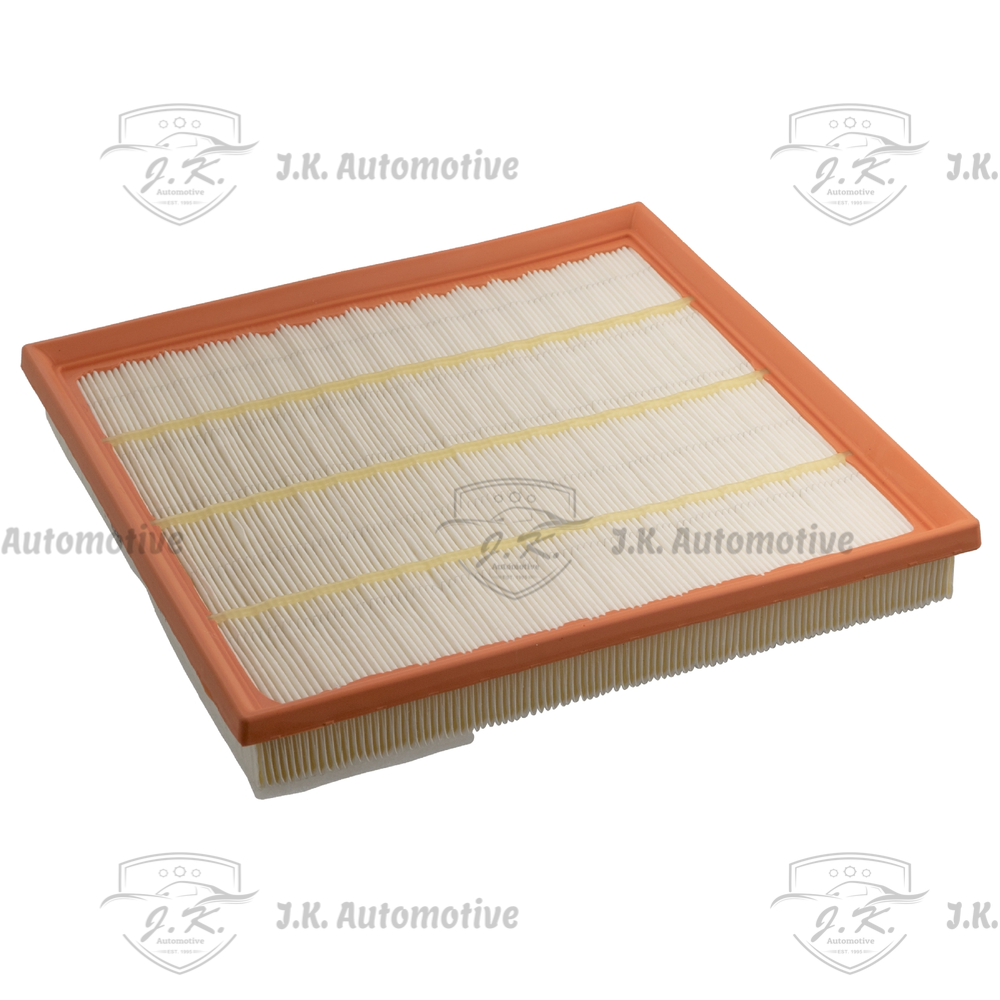
The 3.0-liter N55 twin-scroll turbocharged engine in the BMW F10 535i demands massive volumes of fresh intake air, generating intense suction vacuum across the airbox media during wide-open throttle acceleration. Air filter part number 13717605913 is engineered with high-density synthetic micro-fiber media reinforced by hot-melt adhesive stabilization beads applied directly across the pleat folds. These structural glue lines lock the individual pleats in place, preventing the media from flexing, bunching, or collapsing inward under high differential intake pressures. Low-cost aftermarket paper filters lack these pleat stabilization lines and often distort under heavy boost demand, severely restricting airflow and forcing the engine to work harder to draw air. In addition, part number 13717605913 features a precision-molded polyurethane perimeter gasket that retains its elastic memory and sealing integrity through continuous engine bay thermal cycles. The heat-resistant elastomeric frame creates an airtight perimeter seal inside the plastic airbox, preventing raw, unfiltered ambient air from bypassing the media edges. The synthetic blend media is also treated to resist moisture absorption, ensuring that the filter pleats do not soften or swell when driving through heavy rain, high humidity, or fog. This structural durability ensures clean, uninhibited airflow into the turbocharger under all driving conditions.
What operational symptoms indicate a clogged air filter on an F10 535i, and what mechanical risks arise if replacement is delayed?
When air filter 13717605913 on a BMW F10 535i becomes clogged with road dust, soot, and environmental debris, the N55 turbocharged engine suffers from severe intake air starvation that causes clear performance symptoms and long-term mechanical risks. The initial symptom noticed by the driver is a loss of throttle responsiveness and increased turbo lag, where the sedan feels sluggish when accelerating from a standstill or attempting highway overtakes. Because the Digital Motor Electronics ECU regulates fueling and boost pressure based on real-time mass airflow signals, restricted intake air forces the ECU to pull back timing and boost, resulting in reduced engine power and higher fuel consumption. Oxygen starvation during heavy load causes incomplete fuel combustion, leading to carbon deposits on spark plugs, intake valves, and catalytic converters, which can trigger rough idling and engine misfires. If a severely clogged air filter is left unserviced, the strong intake vacuum pulled by the twin-scroll turbocharger can cause aged or weakened filter paper to tear. Once the media breaks down, raw abrasive silica sand is drawn directly into the turbocharger compressor inlet, causing severe blade erosion known as turbo dusting. Furthermore, microscopic dust bypassing a compromised filter coats the hot-film element of the downstream Mass Air Flow sensor, leading to erratic voltage signals, stalling, and check engine light illumination.
How does air filter 13717605913 protect the Mass Air Flow sensor, turbocharger, and Valvetronic valvetrain on the N55 engine?
The Mass Air Flow sensor, twin-scroll turbocharger, and Valvetronic variable valve lift system on the BMW F10 535i N55 engine are located directly downstream of the air filter box, making them highly vulnerable to airborne contaminants. The MAF sensor relies on a delicate heated film element to calculate incoming air mass; when low-quality filters allow fine dust through, particles bake onto the wire surface, forming an insulating crust that corrupts sensor readings and causes hesitation or rough running. Directly behind the sensor, the aluminum compressor wheel of the N55 turbocharger spins at rotational speeds exceeding 100,000 rpm under boost pressure. At these velocities, fine silica particles act like an abrasive grit, pitting the compressor blade edges, altering their aerodynamic balance, and leading to high-speed shaft wobbles or premature turbo failure. Furthermore, the N55 engine uses Valvetronic technology to regulate intake air volume by continually adjusting valve lift height rather than using a conventional throttle plate. Microscopic silica dust entering the cylinder head accelerates mechanical wear on the precision Valvetronic eccentric shaft, intermediate levers, and intake valve guides, which can lead to costly valvetrain repairs. Utilizing an OEM-spec air filter capturing particles down to 3 microns preserves MAF sensor calibration, prevents turbo compressor wheel dusting, and keeps the complex Valvetronic mechanism operating smoothly.
What primary installation mistakes occur when replacing panel air filter 13717605913 on the F10 535i, and how can mechanics ensure an airtight fit?
Replacing the engine air filter on the BMW F10 535i N55 engine is a straightforward procedure, but subtle errors during installation can compromise the intake seal and introduce unfiltered air directly into the twin-scroll turbocharger. The most common mistake technicians make is failing to completely clear out leaf litter, road sand, and organic debris trapped at the bottom of the lower airbox housing before inserting the new filter element. Leaving loose debris inside the lower housing allows dirt to migrate past the clean side of the filter during reassembly or get drawn into the intake ducting under initial start-up vacuum. Another frequent issue involves misaligning the perimeter elastomeric polyurethane sealing gasket along the housing channel before securing the airbox cover retaining clips. If the filter gasket is pinched, twisted, or unseated along any corner when snapping the airbox cover closed, raw ambient air bypasses the synthetic filter media entirely, pulling unfiltered silica dust straight into the Mass Air Flow sensor and turbo compressor wheel. Mechanics can prevent perimeter leaks by vacuuming the lower airbox cavity, wiping down the sealing channel with a damp microfiber cloth, and visually verifying that the filter frame rests completely flat around all four edges before applying latching pressure. Furthermore, inspect the flexible intake ducting leading to the front radiator support to ensure it is fully attached and unkinked. Taking these extra installation precautions guarantees a 100% airtight seal, protects sensitive internal intake components, and ensures your F10 535i operates with maximum volumetric efficiency.
How does high-efficiency air filter 13717605913 prevent boost loss and maintain precise air-fuel ratios in the N55 TwinPower Turbo system?
The N55 3.0-liter engine in the BMW F10 535i relies on precise coordination between the twin-scroll turbocharger, wastegate actuator, Mass Air Flow sensor, and Digital Motor Electronics engine computer to deliver seamless power and optimal fuel efficiency. Air filter part number 13717605913 plays a fundamental role in this balance by providing an uninhibited, uniform volume of clean air across the entire intake surface area. When an inferior or heavily clogged filter is installed, intake restriction increases significantly, forcing the turbocharger compressor wheel to work much harder to pull ambient air through the dense, restricted media to achieve target boost pressure. This elevated workload increases turbocharger compressor operating temperatures, which in turn heats the charge air entering the intercooler and lowers overall intake air density. To protect the engine from pre-ignition and detonation caused by hot, restricted intake air, the DME computer automatically reduces ignition timing advance and lowers peak boost pressure, resulting in a noticeable loss of horsepower and engine sluggishness. Furthermore, uneven airflow distribution across a distorted filter element can create turbulent air eddies over the Mass Air Flow sensor hot-film wire, leading to fluctuating voltage outputs and erratic fuel metering by the fuel injectors. Utilizing an OEM-specification air filter with stabilized synthetic pleats ensures smooth laminar airflow, maintains stable intake air temperatures, keeps target boost pressure consistent, and preserves original factory air-fuel ratios under all driving loads.
How do environmental factors and driving habits impact the service life of air filter 13717605913 on the BMW F10 535i?
While factory service guidelines recommend replacing the air filter on the BMW F10 535i every 30,000 to 40,000 kilometers, the actual lifespan of part number 13717605913 is heavily dictated by your local driving environment and vehicle usage habits. Vehicles operated primarily in arid, dusty geographical regions, on unpaved rural roads, or through areas with continuous road construction encounter high concentrations of fine airborne silica dust that clogs the micro-fiber pleats far more rapidly than standard highway driving. Similarly, frequent daily commuting in heavy urban stop-and-go traffic exposes the intake system to concentrated concentrations of diesel exhaust soot, fine rubber tire dust, and industrial chemical particulates that form a dark, oily film over the filtration media, reducing airflow capacity sooner than expected. Additionally, vehicles driven frequently in coastal environments or high-humidity regions subject the filter media to salt-laden moisture, which can cause low-quality paper filters to swell and restrict airflow prematurely. To protect the high-performance N55 engine, drivers operating under these severe environmental conditions should perform visual inspections of the air filter element every 15,000 kilometers or during every annual oil change service. If the filter media appears heavily discolored, packed with debris in the pleat valleys, or shows signs of moisture deformation, replacing the filter element early ensures uninhibited engine breathing, preserves optimal fuel economy, and protects delicate downstream turbocharger components from premature wear.
Why is upgrading to an oiled high-flow aftermarket air filter often problematic for the BMW F10 535i compared to OEM synthetic filter 13717605913?
Many enthusiasts consider replacing the factory panel air filter with an aftermarket oiled cotton-gauze "high-flow" air filter in search of increased intake sound and performance, but this modification frequently introduces significant mechanical risks to the BMW F10 535i. The primary issue with oiled aftermarket filters stems from over-oiling during routine cleaning and maintenance cycles; excess oil applied to the cotton media easily becomes aerosolized under the strong intake vacuum drawn by the N55 twin-scroll turbocharger. Once airborne, microscopic oil droplets travel down the intake ducting and coat the delicate hot-film element of the downstream Mass Air Flow sensor. As dust particles stick to the oily sensor wire, the insulating layer alters the sensor's thermal conductivity, causing the engine control unit to receive incorrect air mass measurements, which leads to rough idling, hesitation, poor fuel economy, and check engine diagnostic trouble codes. Furthermore, cotton-gauze filter media typically has larger pore sizes than the fine synthetic micro-fiber media utilized in OEM part number 13717605913, allowing microscopic silica particles to pass through the filter material. Over time, these fine abrasive silica particles impact the spinning aluminum compressor blades of the turbocharger at speeds exceeding 100,000 rpm, causing blade edge erosion and imbalance. Using factory-specification dry synthetic air filter 13717605913 avoids oil contamination risks, provides superior particle filtration down to 3 microns, and ensures long-term reliability for your 5 Series intake system.



Reviews
There are no reviews yet.