Why are part numbers 13718518111 and 13718510239 specifically engineered for the N57 3.0L turbo diesel engine in the BMW F10 530d?
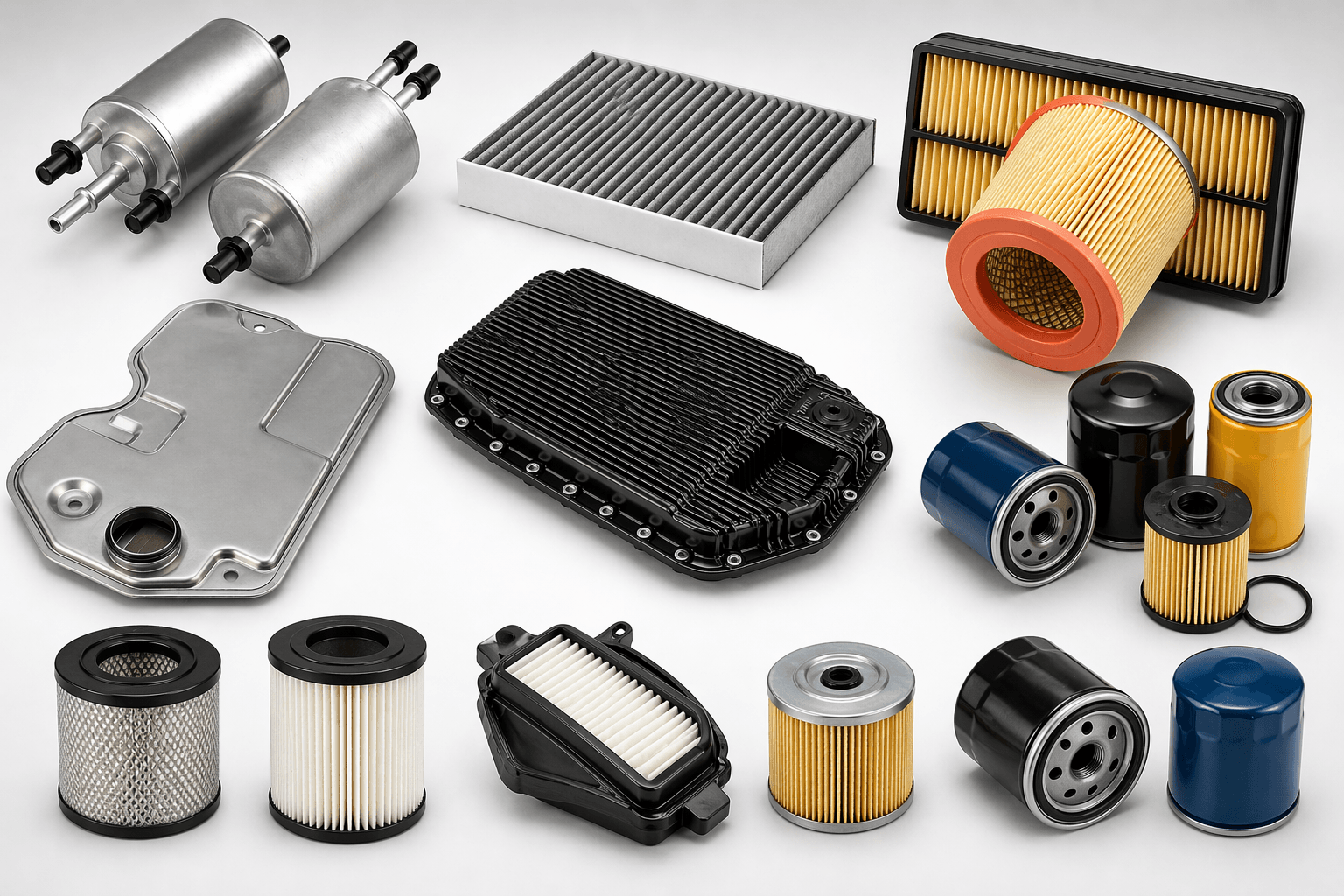
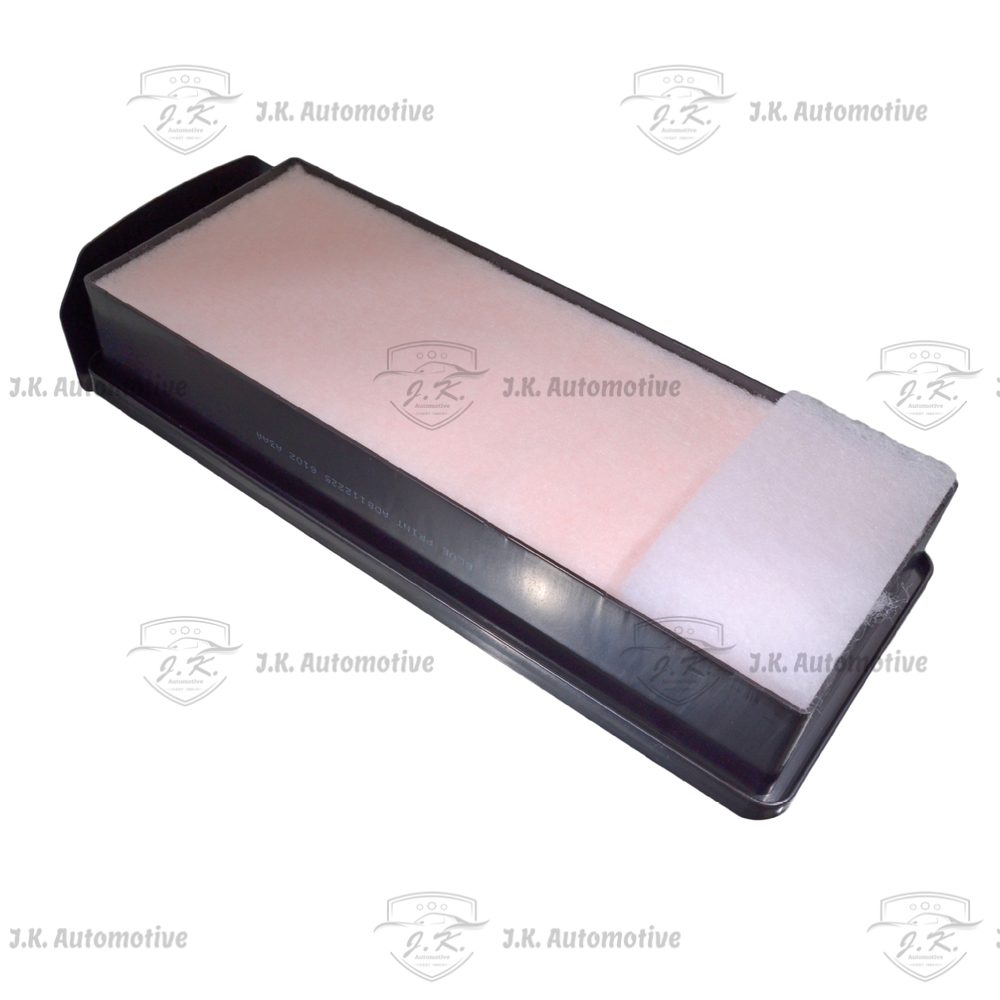
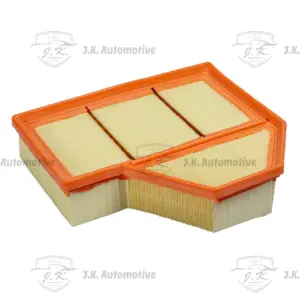
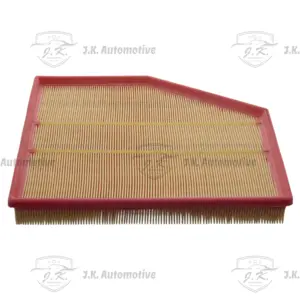
The BMW F10 530d produced between 2010 and 2017 features the 3.0-liter N57 inline-six TwinPower Turbo diesel engine, which requires high volumetric intake airflow to generate its substantial low-end torque. Air filter part numbers 13718518111 and 13718510239 feature a custom panel contour engineered specifically to seat flush inside the original equipment airbox assembly of these high-displacement diesel models. Inline-six diesel engines pull heavy volumes of intake air under high vacuum pressure during variable-geometry turbocharger spool-up, requiring an air filter media capable of withstanding heavy suction without flexing or collapsing. The synthetic micro-fiber media used in part numbers 13718518111 and 13718510239 is calibrated to deliver ultra-low flow resistance while trapping microscopic airborne dust particles down to 3 microns. Precision hot-melt adhesive stabilization beads applied across the pleat folds maintain uniform spacing, preventing the filter media from bunching together under high differential pressures when accelerating under full boost. Furthermore, the heat-resistant polyurethane perimeter frame creates a compressed, airtight seal against the plastic airbox lip, completely eliminating the risk of raw ambient air bypassing the filter element. Installing this exact OEM-specified air filter ensures that incoming fresh air is thoroughly cleaned before entering the turbocharger intake ducting, preserving torque responsiveness, fuel combustion efficiency, and long-term engine health over thousands of kilometers.
What is the relationship and interchangeability between OEM part numbers 13718518111 and 13718510239 for the F10 530d?
The relationship between part numbers 13718518111 and 13718510239 reflects official technical updates and supersessions implemented by BMW to optimize intake air filtration across the N57 diesel engine family. Factory production models of the F10 530d initially utilized part number 13718510239 or related earlier revisions, which BMW later updated under superseding part number 13718518111 to introduce improved synthetic media density and enhanced heat-resistant polyurethane framing materials. Both part numbers share identical physical dimensions, outer perimeter frame geometry, and elastomeric seal profiles tailored specifically for the F10 diesel airbox housing. Whether your vehicle service manual, dealership invoice, or workshop parts catalog specifies 13718518111 or 13718510239, purchasing either filter guarantees direct factory fitment with complete sealing integrity. Installing a filter element complying with these exact factory codes ensures that the airbox channels seal completely, preventing unfiltered ambient air from bypassing the media. Technicians and auto parts distributors can safely treat these two part numbers as 100% interchangeable across electronic parts databases when servicing F10 530d inline-six diesel models produced between 2010 and 2017. Adhering to these verified cross-references maintains original equipment airflow capacity, protects the variable-geometry turbocharger, and preserves the smooth, high-output torque delivery characteristic of the 3.0-liter diesel engine.
What are the primary symptoms of a clogged air filter on an F10 530d, and what mechanical risks occur if replacement is delayed?
When air filter 13718518111 or 13718510239 on a BMW F10 530d becomes saturated with road dust, soot, and environmental debris, the 3.0L N57 turbo diesel engine experiences intake air starvation that causes clear operational symptoms and mechanical risks. The most immediate symptom noticed by the driver is a loss of low-end throttle responsiveness and increased turbo lag, making the luxury saloon feel sluggish when pulling away from a stop or attempting highway passing maneuvers. Because the Digital Diesel Electronics engine control unit regulates diesel fuel injection volume based on real-time mass airflow measurements, restricted air intake leads to incomplete fuel combustion inside the combustion chambers. Incomplete combustion produces excessive unburned carbon soot, which results in dark exhaust smoke puffing from the tailpipe under heavy load and accelerates soot accumulation inside the Exhaust Gas Recirculation valve and Diesel Particulate Filter. If a severely clogged air filter is left unserviced, the intense suction vacuum generated by the 3.0-liter turbocharger can cause low-quality or aged filter paper to tear or separate from its frame. Once the filter element breaks down, raw, unfiltered air carrying fine sand is drawn directly into the turbocharger compressor inlet, causing severe abrasive erosion on the blades. Additionally, fine dust bypassing compromised filter media coats the delicate hot-film element of the downstream Mass Air Flow sensor, causing erratic sensor voltage signals, stalling, and check engine light illumination.
How does a clean air filter protect the Mass Air Flow sensor, turbocharger, and DPF system on the BMW F10 530d N57 engine?
The Mass Air Flow sensor, variable-geometry turbocharger, and Diesel Particulate Filter (DPF) system on the BMW F10 530d diesel engine are situated directly downstream of the air intake filter box, making them exceptionally sensitive to airborne dust contamination. The MAF sensor relies on a delicate hot-film element to measure incoming fresh air mass; when low-quality or degraded air filters allow microscopic dust particles into the airstream, contaminants bake onto the heated film surface, forming an insulating crust. This contamination corrupts sensor accuracy, causing the engine control unit to receive false low-airflow signals that lead to flat spots under acceleration, rough idling, and engine diagnostic fault codes. Furthermore, the N57 turbocharger compressor wheel spins at rotational speeds exceeding 100,000 rpm under boost pressure; at these velocities, fine silica particles act like an abrasive grit, pitting the compressor blade edges and altering their aerodynamic balance. Beyond the turbocharger, maintaining clean intake air is vital for the health of the downstream DPF system. Oxygen starvation caused by restricted intake air results in incomplete diesel fuel combustion, generating excessive soot that rapidly overloads the DPF filter channels and forces frequent active regeneration cycles. Using a high-efficiency air filter capturing particles down to 3 microns preserves MAF sensor accuracy, prevents turbo compressor wheel dusting, and extends the operating life of the DPF system.
What structural design advantages does panel air filter 13718518111 offer over low-cost aftermarket alternatives for the F10 530d?
The precision engineering of air filter 13718518111 provides distinct structural and performance advantages compared to lower-quality aftermarket panel filters for the F10 530d 3.0L N57 engine. Premium synthetic-blend filtration media is treated with moisture-resistant compounds that allow the filter pleats to retain structural rigidity even when driving through heavy rain, dense fog, or high humidity environments. Cheaper aftermarket paper filters lack moisture resistance and tend to soften, swell, and buckle under engine bay heat and ambient moisture, drastically reducing the usable surface area for intake air. Furthermore, the rigid polyurethane perimeter gasket on part number 13718518111 maintains its elastic memory across extreme engine bay thermal cycles, ensuring that the filter gasket does not shrink, crack, or harden over time. A stable perimeter gasket prevents small air leaks around the airbox edges, which could otherwise draw unmetered, unfiltered silica dust straight into the intake ducting. Protecting the variable-geometry turbocharger compressor wheel from fine road dust is critical, as abrasive particles entering the turbo compressor wheel cause blade erosion, shaft imbalance, and boost degradation over time. Utilizing a genuine specification panel filter guarantees uninhibited airflow into the intake tract, keeping turbocharger operation smooth and ensuring consistent, quiet diesel engine power across all driving conditions.
What installation step errors frequently occur during F10 530d air filter replacement, and how can technicians ensure a leak-free seal?
Replacing the air filter on the BMW F10 530d is a standard service task, yet minor installation oversights can compromise the intake seal and allow unfiltered air to enter the N57 turbocharger system. The most common mistake made by technicians is neglecting to clean out accumulated leaf litter, fine sand, and road grime from the bottom of the lower airbox housing before installing the new filter element. Leaving loose debris inside the airbox allows dirt particles to migrate onto the clean side of the filter or get drawn into the intake ducting during initial engine startup. Another frequent error involves misaligning the polyurethane perimeter sealing gasket along the airbox seating groove before securing the housing retaining clips. If the filter gasket becomes pinched, twisted, or unseated along any corner when clamping the airbox cover shut, raw ambient air bypasses the synthetic filter media entirely, pulling abrasive silica dust directly into the Mass Air Flow sensor and turbo compressor wheel. Mechanics can ensure a complete seal by vacuuming the lower airbox cavity, wiping down the sealing channel with a clean microfiber cloth, and visually checking that the filter frame rests completely flat around all four edges before applying latching pressure. Furthermore, inspect the flexible rubber intake ducting connecting the airbox to the front air scoop to ensure it is fully seated and uncracked. Taking these installation precautions guarantees a 100% airtight seal, protects sensitive intake sensors, and ensures the engine receives uninhibited, clean air flow.
How do driving environments and high-load usage patterns influence the actual replacement frequency of air filter 13718518111 on the F10 530d?
While standard factory guidelines recommend replacing the air filter on the BMW F10 530d every 30,000 to 40,000 kilometers, the actual functional lifespan of part number 13718518111 depends heavily on your driving environment and vehicle operational demands. Vehicles driven frequently in arid regions, on unpaved rural roads, or through continuous construction zones encounter high concentrations of fine airborne dust that clogs the synthetic pleats much faster than highway driving. Similarly, F10 530d models used for frequent stop-and-go urban commuting, high-speed autobahn driving, or towing heavy loads expose the intake system to concentrated concentrations of diesel exhaust soot, rubber tire dust, and industrial particulates that form a dark, oily film over the filtration media. Additionally, operating in coastal environments or high-humidity climates exposes the filter media to salt-laden moisture, which can cause lower-quality paper media to swell and restrict airflow prematurely. To protect the high-torque N57 inline-six diesel engine, drivers operating under severe or high-dust conditions should perform visual inspections of the air filter element every 15,000 kilometers or during every annual oil service. If the filter media appears heavily discolored, packed with debris in the pleat folds, or shows signs of moisture distortion, replacing the element early guarantees uninhibited engine breathing, maintains optimal fuel economy, and protects delicate turbocharger components from premature wear.
Why is replacing a dirty air filter critical for preventing premature soot loading in the F10 530d Diesel Particulate Filter (DPF) and EGR valve?
The Diesel Particulate Filter and Exhaust Gas Recirculation valve on the BMW F10 530d 3.0L N57 engine are highly sensitive emissions control components whose longevity depends directly on maintaining clean air intake filtration. Turbocharged diesel engines rely on precise air-to-fuel ratios calculated by the Digital Diesel Electronics control unit; when a restricted or dirty air filter starves the engine of fresh oxygen, fuel combustion inside the cylinder chambers becomes incomplete. Incomplete fuel combustion produces excessive amounts of unburned carbon soot, which flows directly out of the cylinder head into the exhaust system. This heavy soot concentration travels first through the EGR valve, causing sticky carbon deposits to build up on the internal valve mechanism and intake manifold runners, which leads to valve sticking, rough idling, and engine fault codes. Furthermore, excess exhaust soot enters the DPF substrate, rapidly filling the porous wall-flow channels and forcing the engine control unit to initiate frequent active DPF regeneration cycles to burn off the trapped soot. Frequent DPF regenerations increase overall fuel consumption, subject the turbocharger and exhaust system to elevated thermal stress, and accelerate engine oil dilution with unburned diesel fuel. Installing a fresh OEM-specification air filter every 30,000 kilometers ensures full combustion oxygen saturation, minimizes unburned soot production, keeps the EGR system clean, and extends the operational life of the expensive DPF assembly.


Reviews
There are no reviews yet.