What is the Pierburg Rheinmetall Germany Oil Pump for Mercedes-Benz GLE (W166) OM651 Diesel Engines – 7.07919.21.0?
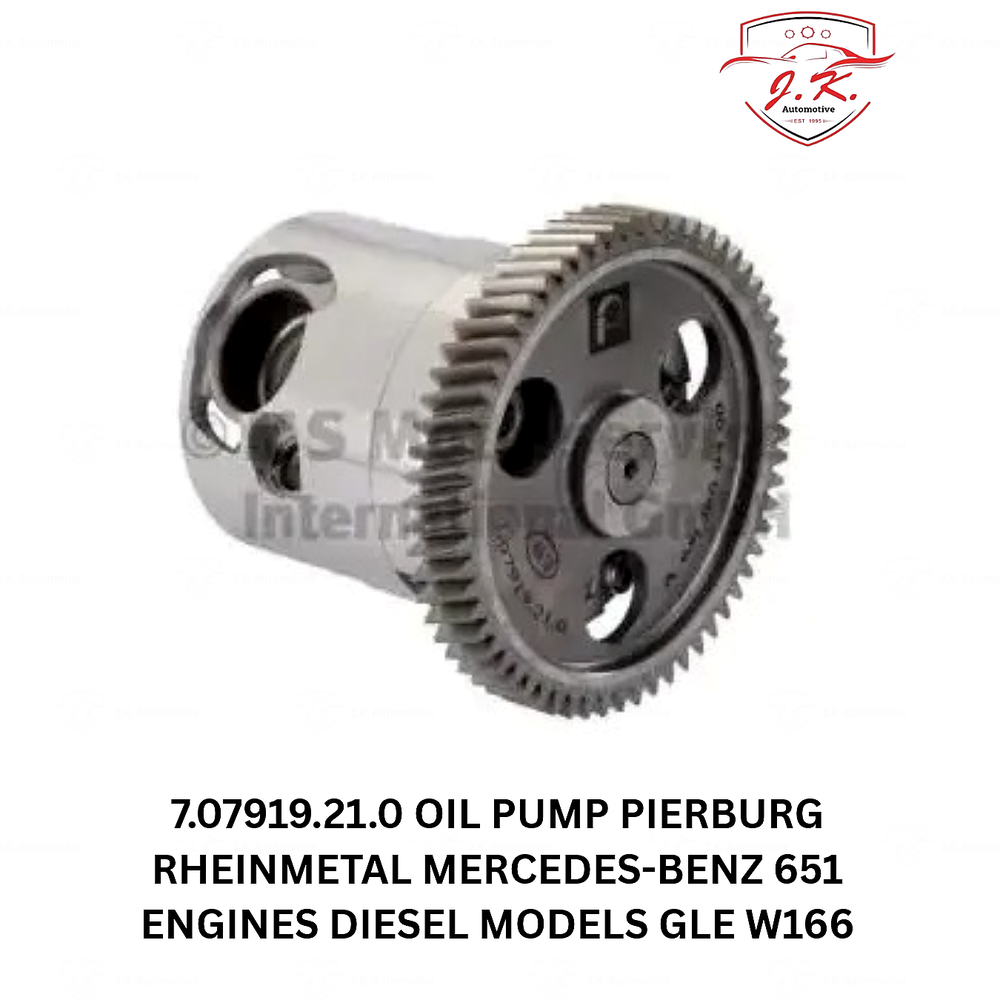
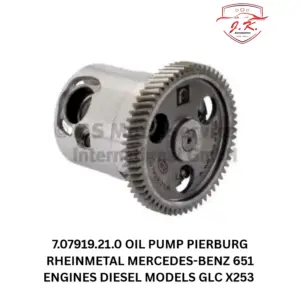
The Pierburg Rheinmetall Germany Oil Pump for Mercedes-Benz GLE (W166) OM651 Diesel Engines – 7.07919.21.0 is an engine lubrication-system replacement component intended for compatible Mercedes-Benz OM651 diesel applications. Its complete manufacturer reference is 7.07919.21.0. The pump helps circulate engine oil under pressure through designated lubrication passages. The Mercedes-Benz OM651 is a four-cylinder diesel engine family used in several vehicle applications. Certain GLE (W166) 250 d variants use the OM651.960 engine configuration. These engines depend on an appropriate supply of lubricating oil during operation. Engine oil reduces friction between moving mechanical surfaces. It also helps protect bearings against excessive wear. The crankshaft requires a suitable oil supply for its bearing surfaces. Connecting rod bearings also depend on an effective lubricating film. Camshaft components require appropriate lubrication during engine operation. The turbocharger needs a reliable oil supply for its bearing system. An engine oil pump supports these requirements by circulating oil through the lubrication circuit. It draws oil from the engine's oil supply through the intended pickup arrangement. The pump then moves oil through the connected system according to the engine's design. The oil filter helps remove suspended contaminants. Filtered oil travels through designated passages toward components requiring lubrication. Published aftermarket information identifies this Pierburg reference as a vane-type oil pump. A 61-tooth specification is also listed. These details help distinguish the component from other engine oil pump assemblies. Its design must correspond with the original engine requirements. The oil pump is particularly important because inadequate lubrication can cause mechanical damage. Insufficient oil pressure may reduce the protective film between moving surfaces. This can increase friction and component wear. Severe lubrication failure may damage engine bearings and other internal parts. However, a low oil-pressure warning does not automatically mean the oil pump has failed. Insufficient oil level can produce lubrication problems. A blocked oil pickup can restrict oil delivery. Internal engine wear may also reduce pressure. An unsuitable oil specification can affect lubrication behaviour. A faulty oil-pressure sensor may produce misleading warnings. Therefore, proper diagnosis is necessary before replacing the pump. Pierburg Rheinmetall Germany manufactures a range of automotive pumps and engine-related components. Its products are used in various vehicle applications. However, the manufacturer's reputation does not establish compatibility with every GLE W166 engine. The original Mercedes-Benz component reference must be checked. The complete vehicle identification number should also be verified. Mounting points, oil passages and drive arrangements must correspond with the original installation. Professional installation and oil-pressure testing help ensure that the lubrication system functions correctly. Customers should confirm their exact OM651 engine configuration before purchasing through JK Automotive Online India.
What is the part number of the Pierburg oil pump for Mercedes-Benz GLE (W166) OM651 diesel engines, and how can compatibility be confirmed?
The Pierburg Rheinmetall Germany oil pump manufacturer reference supplied for this Mercedes-Benz GLE (W166) OM651 diesel listing is 7.07919.21.0. This complete reference should be preserved exactly during catalogue searches and purchase enquiries. Every digit and punctuation mark helps identify the correct component. The number belongs to Pierburg's manufacturer numbering system. It should not be confused with a Mercedes-Benz original equipment reference. Aftermarket parts catalogues associate this pump with several Mercedes-Benz OE comparison numbers. One published comparison reference is 651 180 04 00. Additional references may appear depending on the catalogue and application. However, these numbers should not automatically be considered interchangeable for every engine. The original reference must be established for the individual vehicle. The first step is to identify the exact Mercedes-Benz GLE model. W166 identifies the vehicle generation supplied in the product title. OM651 identifies the relevant diesel engine family. Certain GLE 250 d and 250 d 4MATIC variants use the OM651.960 engine configuration. However, other GLE variants use different engines and lubrication components. Therefore, the vehicle model name alone cannot establish fitment. The complete vehicle identification number should be obtained. The VIN helps identify the factory engine and equipment specification. An appropriate Mercedes-Benz electronic parts catalogue should then be consulted. The original oil pump reference should be recorded. Any applicable OE replacement or supersession information should also be checked. The existing pump may have identification markings. These markings can assist with component identification. The mounting arrangement must correspond with the replacement. The oil pump drive configuration must also match. Oil passage positions and sealing surfaces must be compatible. Published specifications describe Pierburg 7.07919.21.0 as a vane-type pump with 61 teeth. These details may help distinguish the component from alternatives. However, a matching tooth count alone does not guarantee compatibility. The complete assembly must meet the factory requirements. A qualified technician should compare the replacement with the original specifications. The underlying lubrication problem should also be diagnosed. Low oil pressure can result from insufficient oil level. A blocked pickup strainer can restrict oil delivery. Internal bearing wear can also reduce oil pressure. Pressure-control problems may require separate investigation. Incorrect oil viscosity can influence oil-pressure readings. A faulty pressure sensor can produce misleading warnings. Replacing an oil pump without confirming the cause may not solve the problem. Customers should provide their VIN and original pump number when requesting assistance. Accurate verification helps prevent unsuitable purchases, installation difficulties and unnecessary engine repairs.
How does the Pierburg Rheinmetall Germany Oil Pump 7.07919.21.0 work in Mercedes-Benz GLE (W166) OM651 diesel engines?
Pierburg Rheinmetall Germany Oil Pump 7.07919.21.0 supports pressurised engine lubrication in compatible Mercedes-Benz OM651 diesel applications. Its primary function is to circulate engine oil through designated lubrication passages. The OM651 engine contains numerous moving mechanical components. These components require an appropriate lubricating film to reduce friction. The crankshaft rotates inside bearing surfaces that depend on engine oil. Connecting rod bearings also require reliable lubrication. Camshaft components and related mechanical systems need an adequate oil supply. The turbocharger requires lubrication for its bearing assembly. The engine oil pump helps provide the circulation necessary for these components. The pump draws oil from the engine's supply through the intended pickup arrangement. It then moves oil into the lubrication circuit. Published technical information describes this reference as a vane-type oil pump. A vane pump uses internal moving elements to displace oil. The precise drive and pressure-control arrangements depend on the original engine configuration. The pump must therefore match the factory lubrication-system design. Oil travels through the relevant filtration and lubrication passages. The engine oil filter helps capture suspended contaminants. The oil then reaches designated engine components through internal channels. A protective oil film helps separate moving mechanical surfaces. This reduces direct metal-to-metal contact. Engine oil also assists with carrying heat away from certain components. Suitable circulation supports long-term engine durability. The oil pump must deliver the required flow and pressure under relevant operating conditions. If oil delivery becomes inadequate, internal friction can increase. Increased friction may cause rapid wear of engine bearings. Severe lubrication failure can damage important internal components. However, engine oil pressure depends on more than pump condition alone. Oil viscosity affects pressure and flow characteristics. Engine temperature also influences oil behaviour. Internal bearing clearances can affect pressure readings. A restricted oil pickup can reduce the oil entering the pump. A pressure-control fault may also interfere with normal lubrication. Incorrect oil levels can create additional problems. A faulty oil-pressure sensor can produce warnings without confirmed pump failure. Therefore, abnormal oil pressure requires professional testing. The technician should follow the appropriate Mercedes-Benz workshop procedure. A calibrated mechanical gauge may be used where specified to verify actual pressure. The oil filter and pickup system may also require inspection. The original pump reference must be compared with Pierburg 7.07919.21.0 before replacement. Mounting points and drive compatibility must be verified. The prescribed installation and priming procedures should be followed. Post-repair testing must confirm suitable oil pressure before the vehicle returns to service.
What are the common symptoms of a faulty Pierburg oil pump in Mercedes-Benz GLE (W166) OM651 diesel engines?
A faulty oil pump may produce several lubrication-related symptoms in a Mercedes-Benz GLE (W166) OM651 diesel engine. The exact symptoms depend on the nature and severity of the defect. One important indication is an engine oil-pressure warning. Such a warning may indicate insufficient pressure within the lubrication circuit. Inadequate oil pressure can reduce the protective oil film around moving components. This may increase friction and mechanical wear. A red oil-pressure warning should always be treated as urgent. The driver should stop safely and follow the Mercedes-Benz operating instructions. The engine should not continue running when genuine low oil pressure is suspected. Continued operation can cause severe internal engine damage. Another possible symptom is unusual mechanical noise. Insufficient lubrication may contribute to bearing noise. Camshaft-related mechanical components may also become noisy. However, similar noises can originate from unrelated engine faults. Therefore, noise alone does not establish oil pump failure. Some lubrication problems become more noticeable when the engine reaches operating temperature. Engine oil becomes less viscous as it warms. Internal wear may cause low pressure under these conditions. The oil pump may also experience internal wear. However, the actual cause must be established by testing. Inadequate lubrication can also affect the turbocharger bearing system. Turbocharger noise or failure may justify checking the engine oil supply. However, turbocharger symptoms do not independently prove oil pump failure. Insufficient engine oil can reduce lubrication. A blocked oil pickup can restrict circulation. An unsuitable oil specification may affect pressure. A damaged pressure-control component may also produce abnormal readings. Faulty wiring or an oil-pressure sensor can create misleading warnings. Therefore, the actual oil pressure should be measured using the prescribed procedure. A qualified technician should inspect the oil level. The condition and specification of the engine oil should also be checked. The oil filter and pickup assembly may require examination. Diagnostic fault codes may provide useful information. Internal bearing clearances may need investigation where pressure remains low. Visible oil leakage should also be checked. A technician should compare the original oil pump number with Pierburg 7.07919.21.0. Correct component identification is essential before replacement. After installation, the lubrication system should be checked for proper pressure. Relevant mechanical noises should also be reassessed. An unresolved warning must not be ignored. Early diagnosis can help prevent expensive engine damage. Customers should provide the VIN and original component reference when requesting assistance from JK Automotive.
How often should the Pierburg Rheinmetall Germany Oil Pump be replaced on a Mercedes-Benz GLE (W166) OM651 diesel engine?
There is no universal replacement mileage that applies to every oil pump installed in Mercedes-Benz GLE (W166) OM651 diesel engines. Oil pump service life depends on engine condition, maintenance history and operating conditions. The supplied Pierburg manufacturer reference is 7.07919.21.0. Published specifications identify the component as a vane-type engine oil pump. Its internal moving elements may experience gradual wear. Contaminated engine oil can accelerate mechanical wear. Inadequate maintenance can also affect the lubrication system. Therefore, regular oil and filter servicing is important for engine durability. Any specified replacement interval should be confirmed using Mercedes-Benz service documentation. An oil pump does not necessarily require replacement at a fixed mileage. Replacement is generally appropriate when a mechanical or functional defect has been confirmed. An oil-pressure warning should prompt investigation. However, low oil pressure does not automatically establish pump failure. An insufficient engine oil level can affect lubrication. Incorrect oil viscosity may also influence pressure readings. A restricted pickup strainer can reduce the oil supply. Internal engine bearing wear may contribute to pressure loss. A damaged pressure-control component can cause similar symptoms. A defective oil-pressure sensor may produce misleading warnings. These possibilities should be investigated before replacement. Engine oil should meet the relevant Mercedes-Benz approval requirements. The correct viscosity should be selected for the specific engine. Oil and filter service intervals should follow the applicable maintenance schedule. The engine should be checked for external leakage. Unexplained oil consumption should also be investigated. Unusual mechanical noises require attention. Oil-pressure warnings must never be ignored. Driving with inadequate oil pressure may damage engine bearings and the turbocharger. Previous service records can help identify recurring lubrication concerns. Heavy operating conditions may influence component wear. However, these conditions do not establish a precise replacement interval for the pump. When replacement becomes necessary, the original component number should be identified. The complete VIN should be used to establish the factory engine specification. Mounting points and drive compatibility must match. Oil passages and sealing requirements should also correspond with the original assembly. Professional installation helps reduce the risk of lubrication failure. The prescribed priming procedure should be completed where required. Suitable engine oil and filtration components should be used. Actual oil pressure must be checked after installation. The vehicle should return to service only after the necessary tests have passed. JK Automotive customers should confirm reference 7.07919.21.0 and their exact OM651 engine configuration before ordering.
Can a faulty Pierburg oil pump affect engine performance, turbocharger operation, fuel efficiency and reliability in Mercedes-Benz GLE (W166) OM651 diesel engines?
A faulty oil pump can affect the mechanical reliability of a Mercedes-Benz GLE (W166) OM651 diesel engine when lubrication pressure or flow becomes inadequate. The supplied Pierburg manufacturer reference is 7.07919.21.0. Its principal function is to support pressurised engine oil circulation in compatible applications. Diesel engines contain numerous moving components that depend on suitable lubrication. Engine oil reduces direct friction between contacting mechanical surfaces. It helps create a protective film around bearings and other moving parts. The crankshaft depends on appropriate oil delivery. Connecting rod bearings also require a suitable oil supply. Camshaft components need lubrication during operation. The turbocharger depends on engine oil to lubricate its bearing system. When oil circulation becomes insufficient, mechanical friction may increase. Increased friction can accelerate component wear. Lubrication failure may also increase temperatures at affected mechanical surfaces. Severe pressure loss can cause extensive engine damage. Certain vehicles may display an oil-pressure warning when a lubrication problem occurs. However, the exact warning system depends on the vehicle's factory equipment. A loss of engine performance does not automatically establish oil pump failure. Fuel injection problems can also affect engine power. Turbocharger control problems may produce similar performance symptoms. Lubrication-related concerns must therefore be diagnosed separately. Insufficient oil delivery may damage turbocharger bearings. However, turbocharger damage alone does not prove that the oil pump is defective. A restricted oil supply passage can also affect turbocharger lubrication. A blocked oil pickup can reduce the amount of oil entering the pump. Insufficient engine oil may cause pressure problems. Incorrect oil viscosity can influence oil pressure and flow. Excessive bearing clearances can reduce available pressure. A defective pressure-control component may create abnormal readings. Faulty oil-pressure sensors can also produce misleading warnings. Therefore, actual oil pressure should be measured using the appropriate workshop procedure. Fuel efficiency may change indirectly when excessive friction or engine faults influence operation. However, replacing an oil pump does not guarantee better fuel economy. The main purpose of replacement is to restore intended lubrication when the original pump is defective. A qualified technician should inspect the engine oil level and condition. The correct Mercedes-Benz oil approval should be confirmed. The oil filter and pickup system may require investigation. Internal engine wear should also be considered where pressure remains low. A red oil-pressure warning requires immediate attention. The driver should stop safely and follow the manufacturer's operating instructions. The engine should not continue running with suspected inadequate lubrication. Once the fault is confirmed, the original oil pump reference must be identified. Pierburg 7.07919.21.0 should be checked against the vehicle VIN. Correct installation and any prescribed priming procedure are important. Post-repair pressure testing helps confirm successful repair.
How can I confirm that Pierburg Rheinmetall Germany Oil Pump 7.07919.21.0 fits my Mercedes-Benz GLE (W166) OM651 diesel engine?
Confirming compatibility is essential before purchasing Pierburg Rheinmetall Germany Oil Pump 7.07919.21.0 for a Mercedes-Benz GLE (W166) OM651 diesel engine. The complete manufacturer reference must be preserved during catalogue searches and purchase enquiries. The supplied product title identifies the Mercedes-Benz GLE W166 and OM651 diesel engine family. However, different GLE versions use different engines and lubrication components. Aftermarket catalogues list this reference for certain GLE 250 d and 250 d 4MATIC vehicles. The relevant engine designation in these catalogues is OM651.960. These listings do not establish universal compatibility with every W166 diesel model. The first step is to obtain the complete vehicle identification number. The VIN helps identify the original factory engine configuration. An appropriate Mercedes-Benz electronic parts catalogue should then be consulted. The original oil pump reference should be established. Published catalogue information associates Pierburg 7.07919.21.0 with several Mercedes-Benz OE comparison numbers. Examples include 651 180 04 00 and 651 180 13 01. Other references may appear in aftermarket cross-reference information. However, these numbers must not be assumed interchangeable for every engine. The appropriate reference should be confirmed against the individual vehicle. Any manufacturer supersession information should also be checked. The original pump should be inspected for identification markings. Its mounting arrangement must match the replacement. The pump drive configuration must also correspond with the original assembly. Oil passage positions and sealing surfaces should be compatible. Published technical specifications identify a vane-type design with 61 teeth. These details help distinguish the component. However, a matching tooth count alone does not prove compatibility. The complete assembly must meet the original engine's requirements. A qualified technician should compare the existing pump with current manufacturer information. The reported lubrication-system problem must also be diagnosed. Low pressure may result from insufficient engine oil. A restricted oil pickup may interfere with supply. Internal engine bearing wear can also cause pressure loss. Pressure-control equipment may require inspection. Faulty pressure sensors or wiring may produce misleading warnings. Replacing the pump without diagnosis may not solve the problem. Customers should provide their VIN and existing pump reference when requesting assistance. Photographs of identification markings may also be useful. Relevant seals and installation hardware should be confirmed. Professional installation is recommended after compatibility has been established. JK Automotive customers should confirm the exact OM651.960 application before ordering. Accurate identification helps prevent unsuitable purchases and unnecessary repair costs.
What precautions should be taken when installing Pierburg Rheinmetall Germany Oil Pump 7.07919.21.0 on Mercedes-Benz GLE (W166) OM651 diesel engines?
Installing Pierburg Rheinmetall Germany Oil Pump 7.07919.21.0 on a compatible Mercedes-Benz GLE (W166) OM651 diesel engine requires accurate component identification and proper workshop procedures. The replacement should first be compared with the original Mercedes-Benz pump specification. The vehicle VIN should be used to establish the factory engine configuration. The existing OE reference must be checked against the applicable Pierburg catalogue. Mounting points must correspond with the original installation. The pump drive arrangement must also match. Oil passage positions and sealing surfaces should be compatible. Published specifications identify the component as a vane-type pump with 61 teeth. However, these details alone do not establish complete interchangeability. The underlying lubrication problem should be diagnosed before repair begins. Low oil pressure may have several causes. An insufficient oil level can affect lubrication. A restricted pickup strainer may reduce the supply. Internal bearing wear can lower pressure. Faulty pressure-control equipment may also create abnormal readings. Oil-pressure sensor faults should be considered where appropriate. The engine must be switched off before repair. It should be allowed to cool sufficiently for safe handling. Suitable tools and personal protective equipment should be used. The applicable Mercedes-Benz workshop procedure should guide disassembly. Engine oil should be drained and collected safely where required. Used engine oil must be disposed of responsibly. Nearby engine components should be protected during removal. Dirt must not enter exposed lubrication passages. The oil pickup should be inspected for contamination. The oil sump may also require examination. Mounting surfaces should be cleaned according to manufacturer instructions. Required seals and gaskets must meet the original specifications. Designated single-use parts should be replaced. Fasteners must be inspected carefully. Hardware requiring replacement should not be reused. Manufacturer tightening procedures and torque specifications must be followed. The replacement pump should not be forced into an incompatible position. Its drive arrangement must engage correctly. Any related pressure-control components must be installed according to the factory configuration. The prescribed priming procedure should be completed when required. Priming helps establish the intended initial oil supply. Engine oil meeting the relevant Mercedes-Benz specification should be used. The oil filter should be serviced as required. The engine must not be operated without a suitable oil supply. Actual oil pressure should be verified after installation. Relevant diagnostic warnings and fault codes should also be checked. The engine should be inspected for abnormal noises. Any oil leakage around disturbed components should be investigated. The vehicle should return to service only after the required tests have passed. Professional installation helps reduce the risk of repeat lubrication failure.
Why should Mercedes-Benz GLE (W166) OM651 diesel owners consider Pierburg Rheinmetall Germany Oil Pump 7.07919.21.0 for replacement?
Pierburg Rheinmetall Germany is an established manufacturer of automotive pumps and engine-related components. Its products are used across various vehicle and engine applications. Mercedes-Benz GLE (W166) OM651 diesel owners may consider a compatible Pierburg replacement when the original oil pump requires attention. The supplied manufacturer reference is 7.07919.21.0. Its exact compatibility should first be verified for the individual vehicle. Pierburg's experience in automotive component manufacturing is one consideration when selecting replacement parts. The engine oil pump must support the lubrication requirements of the original engine. Suitable oil circulation is important for mechanical durability. The OM651 diesel engine contains bearings and moving components that depend on pressurised lubrication. Engine oil helps reduce direct contact between mechanical surfaces. It also assists with heat transfer from certain moving components. The turbocharger requires a suitable oil supply. A correctly functioning oil pump supports these lubrication requirements. Published technical specifications describe this Pierburg component as a vane-type pump. The product is also listed with 61 teeth. These characteristics may help identify the correct component. However, mounting and drive compatibility must also be confirmed. A compatible replacement may restore lubrication when the original pump is defective. Nevertheless, replacing the oil pump cannot resolve every low-pressure problem. Internal bearing wear may continue to reduce pressure. A blocked oil pickup may restrict oil circulation. Incorrect oil viscosity may affect system behaviour. A damaged pressure-control component may require separate attention. Faulty oil-pressure sensors can create misleading warnings. Therefore, accurate diagnosis remains important. Product authenticity should also be considered when purchasing. Manufacturer identification markings should be checked. The component reference must match the ordered product. Warranty conditions and supplier support should be reviewed. The original pump number provides important identification information. The VIN helps establish the factory engine configuration. Professional installation is recommended because incorrect fitting can result in lubrication failure. Seals, pickup components and related passages should be checked during replacement. Suitable engine oil and an appropriate filter should be used. Any prescribed priming procedure should be completed. Actual oil pressure must be tested after installation. Customers should not expect automatic increases in horsepower or fuel efficiency from replacing an oil pump. Its main purpose is to restore the intended lubrication function of a defective component. Pierburg reference 7.07919.21.0 should be checked against the original Mercedes-Benz application. JK Automotive customers should confirm their vehicle and engine specifications before purchasing.
Why is Pierburg Rheinmetall Germany considered a suitable oil pump brand for Mercedes-Benz GLE (W166) OM651 diesel engines compared with FEBI Bilstein, Kolbenschmidt and other aftermarket manufacturers?
Pierburg Rheinmetall Germany is an established manufacturer of automotive pump and engine-management components. Other aftermarket manufacturers and suppliers, including FEBI Bilstein and Kolbenschmidt, are also associated with engine replacement products. Choosing a suitable oil pump requires comparing exact specifications rather than relying only on brand reputation. The Pierburg reference supplied for this Mercedes-Benz GLE (W166) OM651 diesel listing is 7.07919.21.0. Compatibility must first be confirmed against the original engine. Published aftermarket specifications identify the component as a vane-type oil pump. A 61-tooth specification is also listed. These details are relevant when evaluating replacement alternatives. However, matching the tooth count alone does not establish interchangeability. A competing oil pump must meet the factory lubrication-system requirements. Its mounting arrangement must correspond with the original installation. The drive mechanism must also be compatible. Oil passage positions and sealing surfaces must match. The replacement must support the required oil delivery and pressure. Any related pressure-control arrangement must also meet the engine's specifications. Different OM651 configurations may use different original component references. Therefore, the complete VIN should be checked before selecting an alternative. The Mercedes-Benz parts catalogue should identify the correct original pump number. The exact competing manufacturer reference should then be compared with that OE number. Brand names should not be treated as interchangeable part references. Pierburg has experience producing automotive pump components. However, this does not establish that every Pierburg oil pump is superior to every competing product. FEBI Bilstein distributes a broad range of automotive replacement components. Kolbenschmidt is associated with engine-related replacement products. Each specific component must be evaluated using its technical characteristics. Reliability depends on component design and manufacturing quality. Engine maintenance also affects service life. Incorrect engine oil can interfere with lubrication-system operation. Contaminated oil may accelerate wear. A restricted pickup can reduce oil supply regardless of pump brand. Worn engine bearings can also affect pressure. Professional installation is another important consideration. Incorrect drive engagement can prevent normal pump operation. Damaged seals or assembly mistakes can cause lubrication problems. Failure to follow prescribed priming procedures may affect initial oil delivery. These issues should not automatically be attributed to inferior manufacturing quality. Product authenticity matters when selecting a supplier. Manufacturer markings and packaging should be inspected. Warranty terms and technical support should be compared. Price may influence the decision after compatibility is established. A lower price does not automatically mean better value. A higher price does not guarantee longer service life. Reliable durability comparisons require application-specific evidence. Without suitable evidence, universal brand superiority claims cannot be justified. Pierburg may be an appropriate replacement when its exact OM651 application is confirmed. Competing manufacturers may also provide suitable alternatives when their references and specifications are verified. The final choice should prioritise precise fitment, product authenticity, technical compatibility, warranty terms and professional installation.

Reviews
There are no reviews yet.