What are Textar Germany Front Brake Pads 2248501 for Land Rover Range Rover Evoque L551?
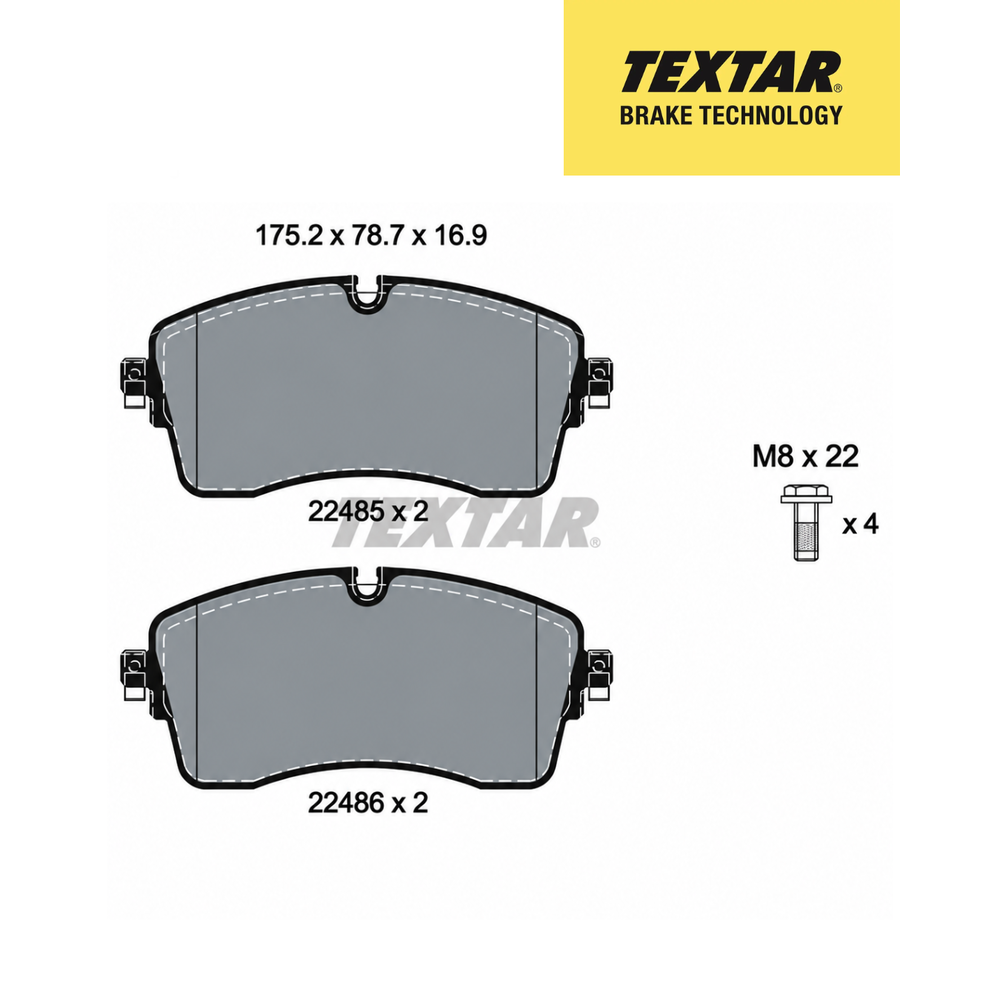
Textar Germany Front Brake Pads 2248501 are premium front axle brake pads developed for compatible Land Rover Range Rover Evoque L551 applications. This product is supplied as a complete set of four brake pads, allowing both front wheels to be serviced together during a standard brake pad replacement. Textar is a well-known braking specialist with extensive experience in friction materials and replacement braking components for European vehicles. The Textar 2248501 brake pad set is engineered to provide smooth, controlled and predictable braking when matched with the correct Evoque front brake system. The Range Rover Evoque L551 is a premium SUV, so braking comfort, stability and progressive pedal response are important during both city and highway driving. Properly selected brake pads help maintain consistent contact between the friction material and brake disc during braking. The front axle performs a significant portion of the braking work because vehicle weight transfers forward when the brakes are applied. This makes correct front brake pad selection especially important for a vehicle of this type. Textar friction compounds are designed to operate consistently across normal variations in temperature and braking load. Frequent stop-and-go driving can create repeated heating and cooling cycles, while highway braking may require stronger deceleration from higher speeds. A correctly matched brake pad should remain predictable across these everyday driving conditions. The Textar 2248501 set is associated with Land Rover OEM references LR091308, LR091568, LR164029 and LR134638. These part numbers help identify the intended original braking application and are useful when cross-referencing replacement parts. However, Range Rover Evoque L551 variants may be equipped with different brake systems depending on engine, trim, production date and equipment level. For that reason, fitment should always be confirmed using the VIN, existing brake pad reference or actual brake system specification. Brake disc diameter and caliper type may also need to be checked when there is any uncertainty. Correctly fitting brake pads sit securely inside the caliper and help distribute braking pressure evenly. This can reduce irregular pad wear and unwanted movement inside the braking system. Before installation, the brake discs should be checked for wear, scoring, cracks, heat damage and minimum thickness. Caliper pistons and guide pins should also move freely to ensure that the new pads apply and release correctly. A sticking caliper can cause premature wear even when high-quality pads are fitted. Brake pads should always be replaced as a complete axle set rather than individually. Installing all four pads together supports consistent braking characteristics between the left and right front wheels. Professional installation is recommended because the braking system is a critical safety component. Correct bedding-in after installation can also help establish even contact between the pad and disc surfaces. Overall, Textar 2248501 offers a premium replacement option for compatible Range Rover Evoque L551 vehicles requiring front brake pad replacement.
Is Textar 2248501 compatible with Land Rover Range Rover Evoque L551?
Textar 2248501 may be compatible with selected Land Rover Range Rover Evoque L551 variants where the fitted front brake system matches the specifications and OEM references associated with this brake pad set. Compatibility should not be determined only from the vehicle model name because different versions of the Evoque can use different front braking systems. Engine type, trim level, production period and factory equipment can all affect which brake pad specification is required. The safest method is to check the vehicle VIN and compare it with a reliable parts catalogue. The existing brake pad number can also provide valuable confirmation during replacement. Textar 2248501 is associated with Land Rover OEM references LR091308, LR091568, LR164029 and LR134638. If one of these numbers matches the original brake pad application, it can be a strong indicator of compatibility. However, final fitment should still be verified against the actual brake system fitted to the vehicle. Premium SUVs may be offered with different brake disc diameters or caliper designs, even within the same model generation. Two Range Rover Evoque L551 vehicles can therefore appear identical externally while requiring different brake pads. The shape and dimensions of the existing pads should be compared where necessary. Brake disc size can also help identify the correct application. Correct pad dimensions are essential because the backing plate must fit securely inside the intended caliper carrier. An incorrect pad may not seat properly and can result in noise, uneven wear or compromised braking operation. A properly matched Textar 2248501 set should align with the intended brake caliper geometry. Both front wheels should always use the same brake pad specification. During installation, the caliper guide pins should be checked for smooth movement. The pistons should retract correctly and show no signs of sticking. Rubber boots and surrounding hardware should also be inspected for damage. Brake discs must remain above the manufacturer's minimum thickness and should not show severe grooves or heat damage. Brake wear sensors should be checked if they are used on the specific vehicle application. Depending on the design, the sensor may need replacement when new pads are fitted. Correct installation procedures and torque specifications should always be followed. Once the new pads are fitted, the brake pedal should be pressed before the vehicle is moved so the pads are correctly positioned against the discs. A proper bedding-in period can then help establish stable friction contact. Vehicle owners should therefore verify Textar 2248501 using VIN, OEM reference and actual brake system details before ordering. Correct identification reduces the risk of fitting the wrong component. In summary, Textar 2248501 can be a suitable front brake pad set for compatible Range Rover Evoque L551 applications when the brake system and OEM references correspond.
What OEM numbers cross-reference with Textar 2248501 Range Rover Evoque L551 front brake pads?
Textar 2248501 is associated with Land Rover OEM references LR091308, LR091568, LR164029 and LR134638 for compatible Range Rover Evoque L551 front brake applications. OEM numbers are an important part of brake pad identification because they help link an aftermarket replacement product with the original component specification used by the vehicle manufacturer. The references listed above may appear in Land Rover parts catalogues, service information or previous replacement records. Vehicle manufacturers sometimes update component part numbers during a model's production cycle. This process may result in older numbers being superseded by newer references even when the underlying application remains closely related. This is why cross-reference checking is valuable when sourcing replacement brake components. A vehicle owner may have one OEM number on an earlier invoice while the current parts catalogue shows another. Textar uses the reference 2248501 to identify its corresponding brake pad set. Matching this Textar number with the correct Land Rover OEM reference helps reduce the risk of ordering an incorrect pad. However, OEM numbers should always be checked together with vehicle-specific data. Range Rover Evoque L551 models may use more than one front brake setup depending on specification. A matching OEM reference is useful, but VIN verification is still recommended whenever there is any uncertainty. The brake disc diameter and caliper design can also help confirm the application. Existing pad shape and dimensions may be compared before installation. Correct identification is especially important because visually similar brake pads can have different backing plate profiles or friction dimensions. An incorrectly sized pad may not move correctly inside the caliper. This can cause uneven pressure against the brake disc, unwanted noise or abnormal wear. Proper fitment helps the pad maintain stable contact during braking. Customers should provide the OEM number exactly as shown whenever requesting a cross-reference. Small differences in the sequence may indicate a different braking component. The core Land Rover references for this product are LR091308, LR091568, LR164029 and LR134638. Textar 2248501 should only be installed where the complete application data corresponds with the actual front brake system. Professional parts verification is recommended if the customer is uncertain. The removed pad can also be inspected for markings or manufacturer references. Brake disc measurements may provide additional confirmation where multiple systems are listed. The complete set of four pads allows both front wheels to be serviced together once compatibility has been confirmed. Correct cross-referencing also helps avoid delays caused by returning incorrect parts. Because brake components directly influence vehicle safety, identification should never be based on appearance alone. Overall, Textar 2248501 cross-references with Land Rover OEM numbers LR091308, LR091568, LR164029 and LR134638 for its intended compatible Evoque L551 front brake applications.
Why should Range Rover Evoque L551 owners choose Textar Germany brake pads?
Range Rover Evoque L551 owners may choose Textar brake pads when they want a premium replacement product from a brand focused specifically on braking and friction technology. The Evoque is a premium SUV that combines urban usability, highway capability and refined driving characteristics. Its braking system must therefore deliver dependable stopping performance while maintaining smooth and predictable response. Textar has extensive experience developing friction materials for a wide range of European vehicles. This specialised focus makes the brand a strong option for owners looking for replacement pads that prioritise balanced braking behaviour. Textar 2248501 is intended for applications where its dimensions and friction characteristics correspond with the fitted Evoque front braking system. A correct brake pad should deliver progressive stopping force without making the pedal response unnecessarily harsh. This is especially important in a premium SUV used for daily commuting and family driving. Textar friction compounds are designed to operate across normal changes in brake temperature. City traffic creates repeated braking cycles that can raise temperatures gradually. Highway driving may require more substantial deceleration from higher speeds. A suitable friction material should remain stable under these different conditions. Brake comfort is also an important consideration for Evoque owners. Excessive squeal, vibration or abrupt braking can reduce the refinement expected from the vehicle. Brake noise depends on the entire system, but accurate pad design and proper friction formulation can contribute to smoother operation. Correct fit inside the caliper also helps reduce unnecessary movement of the pads. Textar brake pads are manufactured to defined specifications for their intended applications. This can help support even friction contact and predictable wear. The Range Rover Evoque L551 places significant demand on its front brakes because weight shifts forward during deceleration. Using a quality replacement pad can therefore contribute to confidence in everyday driving. Textar 2248501 is supplied as a set of four pads for complete front axle replacement. Both sides should be changed together to maintain consistent braking characteristics. Brake discs should be inspected before fitting new pads. Excessively worn or damaged discs can reduce the performance of new friction material. Caliper pistons and guide pins should also be checked for free movement. Brake fluid and related braking components should be maintained according to the vehicle's service requirements. Correct installation is essential because even premium brake pads cannot perform properly if the surrounding components are defective. Professional fitting is recommended for all brake work. Proper bedding-in after installation can further support smooth and consistent braking. For compatible applications, Textar offers a combination of specialist friction engineering, premium European brand positioning and application-specific design. This makes Textar 2248501 a strong replacement choice for Range Rover Evoque L551 owners seeking dependable front brake pads.
How many brake pads are included in the Textar 2248501 set for Range Rover Evoque L551?
The Textar 2248501 set described for compatible Range Rover Evoque L551 vehicles includes four front brake pads. These four pads are intended to service both front wheels during the same replacement procedure. A standard front disc brake system normally uses two brake pads at each wheel. One pad is positioned on the inner side of the brake disc and the other sits on the outer side. This means a complete front axle replacement typically requires four pads in total. Supplying all four pads as one set makes it easier to service the front braking system correctly. Brake pads on the same axle should always be replaced together. Replacing only one side can create differences in friction and braking behaviour between the left and right wheels. This can negatively affect braking consistency. Balanced braking is particularly important on a premium SUV such as the Range Rover Evoque L551. The front axle carries a large portion of the braking load during deceleration. Textar 2248501 therefore provides the quantity needed for complete front axle servicing. Before installation, the new pads should be compared with the removed components. Their shape, backing plate profile and dimensions should correspond with the fitted caliper system. The brake calipers should also be inspected while the pads are removed. Uneven wear between the old pads may indicate a sticking piston or guide pin. Such mechanical problems should be corrected before the new Textar pads are installed. The brake discs should also be checked during the service. A disc with severe grooves, heat damage or insufficient thickness may need replacement. Installing new brake pads against a damaged disc can lead to poor contact and accelerated wear. Brake wear sensors should be inspected where fitted. Some applications may require the sensor to be replaced at the same time as the pads. Correct service procedures and torque specifications should be followed throughout installation. After the new pads are fitted, the brake pedal should be pressed before driving the vehicle. This ensures the pads are properly positioned against the discs. A bedding-in process can then help establish even friction contact. New pads may feel slightly different during the initial period while the surfaces settle. Unnecessary repeated harsh braking should be avoided where road conditions safely allow. However, normal or emergency braking must always be used when required. Replacing all four pads together also ensures that the complete front axle uses the same friction specification. This supports predictable braking response. Therefore, the Textar 2248501 package contains a complete set of four front brake pads for compatible Range Rover Evoque L551 applications.
When should front brake pads on a Range Rover Evoque L551 be replaced?
Front brake pads on a Range Rover Evoque L551 should be replaced when the remaining friction material reaches the recommended service limit, when a brake wear warning appears or when inspection reveals excessive or uneven wear. There is no universal mileage at which every Evoque will need new front pads because actual wear depends on the way the vehicle is driven. Stop-and-go city traffic can wear brake pads more quickly because the brakes are applied frequently. Highway driving may cause less frequent braking, but slowing from higher speeds can generate substantial heat. Driving style also has a major impact on brake pad life. Frequent hard braking or late braking can accelerate friction material wear. Vehicle load is another factor because additional passengers and luggage increase the energy that must be absorbed during deceleration. The Range Rover Evoque L551 is a premium SUV with meaningful vehicle mass, so the front braking system carries significant responsibility during stopping. Front pads often wear faster than rear pads because weight transfers toward the front axle when the brakes are applied. Brake pad thickness should therefore be checked during routine servicing. A technician can inspect both the inner and outer pads because they may not always wear at the same rate. Pads should be replaced before the friction material is completely exhausted. Continuing to drive with severely worn pads can damage the brake discs. Metal-to-metal contact may produce a grinding sound and can greatly increase repair costs. A dashboard brake wear warning should be investigated promptly where the vehicle uses electronic wear monitoring. Other symptoms can also indicate a braking problem. Persistent squealing may justify inspection, although brake noise can have several causes. A grinding sound should be treated as more urgent. If the vehicle pulls to one side under braking, uneven pad wear or a caliper issue may be present. Steering vibration while braking can indicate disc irregularities. The complete braking system should therefore be inspected rather than assuming every symptom is caused only by the pads. When replacement is necessary, both sides of the front axle should be serviced together. Textar 2248501 provides four pads for compatible applications. Brake discs should be checked for thickness, grooves and heat damage during the same service. Caliper pistons and guide pins should move freely. Brake fluid should also be maintained according to the vehicle's service schedule. Owners should not rely solely on mileage because two Evoque vehicles with identical odometer readings may show very different pad wear. Physical inspection is the most reliable method of determining replacement timing. Regular maintenance helps identify wear before braking performance deteriorates. When new pads are required, correctly matched Textar 2248501 brake pads can help restore smooth and controlled braking performance on compatible Range Rover Evoque L551 vehicles.
Are Textar 2248501 front brake pads suitable for daily city and highway driving in the Range Rover Evoque L551?
Textar 2248501 front brake pads are designed for compatible Range Rover Evoque L551 applications and are suitable for normal city, highway and mixed driving when matched with the correct front braking system. City driving places repeated demands on the brakes because the vehicle may stop frequently in traffic, at signals and in congested areas. This creates repeated heating and cooling cycles in the brake pads and discs. A stable friction compound is important because braking response should remain predictable as temperatures change. Textar specialises in braking and friction technology, making the brand a strong choice for premium European vehicles. The Range Rover Evoque L551 is a premium SUV, so smooth and controlled braking is especially important for driver confidence and passenger comfort. During highway driving, the brakes may need to slow the vehicle from higher speeds. This creates a different type of load compared with normal city braking. The Textar 2248501 pad set is intended to provide progressive braking characteristics rather than an unnecessarily harsh initial response. This can help maintain refined driving behaviour during everyday use. Vehicle weight also affects braking demand. The Evoque may carry passengers, luggage or additional cargo, increasing the energy the braking system must manage. Properly matched pads help maintain predictable stopping performance in these situations. The front axle performs a significant share of braking work because weight transfers forward when the driver applies the brakes. This makes front pad quality especially important. Textar 2248501 is associated with Land Rover OEM references LR091308, LR091568, LR164029 and LR134638. These references should be checked against the vehicle VIN or original brake pad number before installation. Different Evoque L551 variants may use different brake disc sizes or caliper configurations. Correct fitment should therefore always be confirmed rather than assumed from the vehicle model alone. Brake discs should also be inspected when replacing pads. Excessive grooves, heat damage or minimum thickness issues can reduce braking performance. The caliper pistons and guide pins should move freely so that the pads apply and release evenly. A seized component can create uneven wear or excessive heat. All four front pads should be replaced together to maintain consistent braking across the axle. Professional installation is recommended because brake components are safety-critical. Proper bedding-in after installation can help establish even friction contact between the pad and disc surfaces. Unnecessary aggressive braking should be avoided during the initial bedding period where road conditions allow. However, emergency braking should always be performed whenever required. Regular inspections are also important because actual pad wear depends on traffic, driving style and vehicle load. For compatible Range Rover Evoque L551 applications, Textar 2248501 offers a premium replacement option suitable for everyday city and highway driving.
Do Textar 2248501 brake pads provide low noise and smooth braking for the Range Rover Evoque L551?
Textar 2248501 brake pads are designed with braking refinement and controlled friction behaviour in mind, which can help support smooth braking on compatible Range Rover Evoque L551 vehicles. The Evoque is a premium SUV, so unwanted squealing, harsh pedal response or vibration can noticeably reduce the driving experience. Textar develops brake friction products for a wide range of European vehicles and focuses on balancing performance with comfort. A correctly matched brake pad should provide stable contact against the brake disc throughout normal braking. This can help deliver a progressive and predictable response when the driver presses the brake pedal. Brake noise, however, does not depend on the pad alone. The condition of the brake discs plays a major role. Deep grooves, uneven wear or excessive runout can create vibration or noise even when new premium pads are installed. Caliper condition is equally important. If the guide pins are sticking, the pads may not move correctly inside the carrier. This can cause uneven pressure and unwanted noise. The brake caliper piston must also retract properly after braking. A sticking piston can leave the pad in continuous contact with the disc. This creates excessive heat and premature wear. Correct installation is therefore essential for achieving good braking refinement. The pad contact points should be clean and free from corrosion. Application-specific clips, shims or hardware should also be fitted correctly where required. Textar 2248501 should be used only when the dimensions and brake system application match the vehicle. The pad backing plate needs to sit securely inside the correct caliper. Excessive movement can contribute to clicking or squealing. The brake discs should be inspected before new pads are installed. If the surfaces are badly damaged, replacing the pads alone may not produce smooth braking. Proper bedding-in is also important after installation. This allows the friction material to establish an even transfer layer against the disc surface. Uneven deposits can contribute to brake judder. Temporary noise may sometimes occur because of moisture, dust or surface rust, especially after the vehicle has been parked. This does not necessarily indicate a defective brake pad. Persistent squealing, grinding or vibration should always be inspected professionally. A grinding sound can indicate severe wear and should not be ignored. Steering-wheel vibration under braking may point toward disc irregularities rather than the pads themselves. For the best result, the entire braking system should be maintained in good condition. When correctly matched and professionally installed, Textar 2248501 can support the smooth and refined braking characteristics expected from a Range Rover Evoque L551. Textar remains a strong choice for drivers who value premium European friction technology and controlled everyday braking.
How long can Textar 2248501 front brake pads last on a Range Rover Evoque L551?
The service life of Textar 2248501 front brake pads on a compatible Range Rover Evoque L551 depends on driving style, road conditions, vehicle load and the mechanical condition of the braking system. There is no fixed mileage that applies to every vehicle because brake pads wear differently under different operating conditions. A vehicle driven mainly in heavy city traffic may use its brakes much more frequently than one driven primarily on open highways. Frequent stop-and-go driving increases the number of braking cycles and can accelerate pad wear. Aggressive braking can also increase operating temperatures and reduce service life. A driver who anticipates traffic and slows gradually may experience more even pad wear. Vehicle weight is another important factor. The Range Rover Evoque L551 is a premium SUV, so its front brakes must manage significant mass during deceleration. Additional passengers and luggage can increase braking demand further. Mountain driving may also accelerate wear because the brakes can be used repeatedly on downhill sections. Front brake pads commonly perform a substantial proportion of the braking work. This can cause them to wear faster than rear pads depending on the vehicle setup. Textar friction compounds are developed to provide a balance of braking performance and service life in their intended applications. However, even premium brake pads can wear rapidly if the surrounding components are faulty. A seized caliper piston can cause a pad to remain against the disc after braking. This creates constant friction, excessive heat and premature wear. Sticking guide pins can also cause one pad to wear faster than another. The brake discs influence pad life as well. A rough or heavily grooved surface can accelerate wear of new friction material. Regular brake inspections are therefore more reliable than estimating replacement solely by mileage. During routine servicing, a technician should inspect both inner and outer pad thickness. The left and right sides should also be compared for uneven wear. A large difference may indicate a mechanical problem. Brake wear warning systems should be checked where fitted. Dashboard warnings should not be ignored because driving with excessively worn pads can damage the discs. Owners should also pay attention to grinding noises, unusual pedal feel or changes in braking response. These symptoms may indicate that inspection is required. All four front pads should be replaced together when the service limit is reached. The brake discs and calipers should be checked at the same time. Correct installation and bedding-in can help establish even contact and more consistent wear. Drivers can help reduce unnecessary brake wear by maintaining suitable following distances and avoiding avoidable hard stops. However, safety must always take priority over extending pad life. There is therefore no single guaranteed mileage for Textar 2248501. Regular inspection remains the most accurate way to determine when replacement is necessary on a Range Rover Evoque L551.
Should the brake discs be replaced when fitting Textar 2248501 front brake pads on a Range Rover Evoque L551?
Brake discs do not automatically need to be replaced every time Textar 2248501 front brake pads are installed on a Range Rover Evoque L551. However, the discs should always be carefully inspected before new pads are fitted because their condition directly affects braking performance. Each brake disc has a minimum service thickness specified by the manufacturer. The existing discs should be measured during brake service to determine whether they remain within specification. If the disc is below its minimum thickness, it should be replaced. Deep grooves are another reason replacement may be necessary. A heavily grooved surface can prevent the new pad from making even contact with the disc. This can lead to reduced braking refinement and uneven pad wear. Cracks or severe heat damage are also warning signs. Brake discs may develop heat spots after repeated heavy braking or when a caliper does not release correctly. Excessive runout or thickness variation can cause vibration through the brake pedal or steering wheel. Installing new Textar pads cannot correct a mechanically damaged disc. The condition of the rotors therefore needs to be assessed independently. If the discs remain within specification and the surfaces are acceptable, they may be reused. This can avoid unnecessary replacement costs. Professional inspection is recommended because some defects may not be obvious from appearance alone. Brake discs should normally be replaced in pairs across the same axle if replacement is required. This helps maintain consistent braking between the left and right wheels. When new discs are fitted, new pads should generally be installed as well. This creates clean mating surfaces and helps establish even contact. Textar 2248501 should be used only with the correct front brake configuration for the vehicle. Brake disc diameter and caliper type should match the intended application. The caliper pistons and guide pins should also be checked for smooth movement. Sticking components can damage new pads and discs quickly. Brake hardware and rubber boots should be inspected during the same service. Brake wear sensors should also be checked where applicable. The brake fluid should be maintained according to the vehicle service schedule. After installation, the brake pedal should be pressed before driving so the pads are correctly positioned. Proper bedding-in should then be carried out. This helps establish uniform contact between the new friction material and the disc surface. Unnecessary repeated heavy braking should be avoided during the initial bedding period when safely possible. Normal and emergency braking should always be used whenever required. Replacing brake discs should therefore be based on measured condition rather than a fixed rule. For best performance, Textar 2248501 pads should be installed only after the complete front braking system has been inspected.
Why are Textar Germany brake pads a strong choice for the Range Rover Evoque L551 compared with Brembo brake pads?
Textar and Brembo are both recognised names in automotive braking, but they have different brand strengths and product positioning. For a Range Rover Evoque L551, the better choice depends on the exact brake system, driving style and the type of braking characteristics the owner prefers. Textar is especially well known for friction materials and OE-oriented replacement brake products for European vehicles. This makes the brand attractive to drivers seeking smooth, controlled and progressive braking for normal road use. The Range Rover Evoque L551 is designed as a premium SUV, so refinement and predictable braking response are important. Textar 2248501 is intended for applications where its dimensions and friction characteristics match the fitted Evoque front braking system. The pad set is associated with Land Rover OEM references LR091308, LR091568, LR164029 and LR134638. These references should be checked against the vehicle VIN or original pad number before ordering. Textar places significant emphasis on braking comfort as well as stopping performance. This can suit owners who prefer an OE-style pedal feel in city traffic and highway driving. Brembo is also a highly respected manufacturer with extensive experience in brake discs, calipers, pads and performance braking systems. The brand has a strong reputation in motorsport and high-performance applications. However, Brembo also manufactures replacement brake components for everyday road vehicles. It would therefore be inaccurate to say that every Textar pad is automatically better than every Brembo pad. The exact product range and friction compound being compared matter greatly. Some drivers may prefer a more immediate initial bite, while others may prefer smoother progressive braking. Textar often appeals to drivers who prioritise refinement and consistent braking behaviour. Brembo may appeal to drivers who value a more performance-oriented brand image or specific product characteristics. Brake noise and dust can also vary depending on the exact pad compound rather than simply the brand name. Proper fitment is more important than brand reputation alone. An incorrectly matched premium pad can perform poorly if it does not correspond with the fitted brake system. Brake disc condition, caliper movement and installation quality also influence the final result. New pads fitted to damaged discs may produce noise or vibration regardless of whether they are Textar or Brembo. Both brands should therefore be installed by experienced technicians. For normal premium-road use in a compatible Range Rover Evoque L551, Textar 2248501 offers a compelling combination of specialist friction expertise, controlled braking and OE-oriented replacement characteristics. Brembo remains a credible alternative when the correct corresponding pad is specified. For drivers looking specifically for smooth and refined daily braking, Textar is a particularly strong choice. The correct VIN and OEM reference should always be checked before purchase. Ultimately, the best brake pad is the one correctly matched to the vehicle and maintained as part of a healthy braking system.

Reviews
There are no reviews yet.