What are Textar 2517901 front brake pads for Mercedes-Benz S-Class W222 Petrol Models?
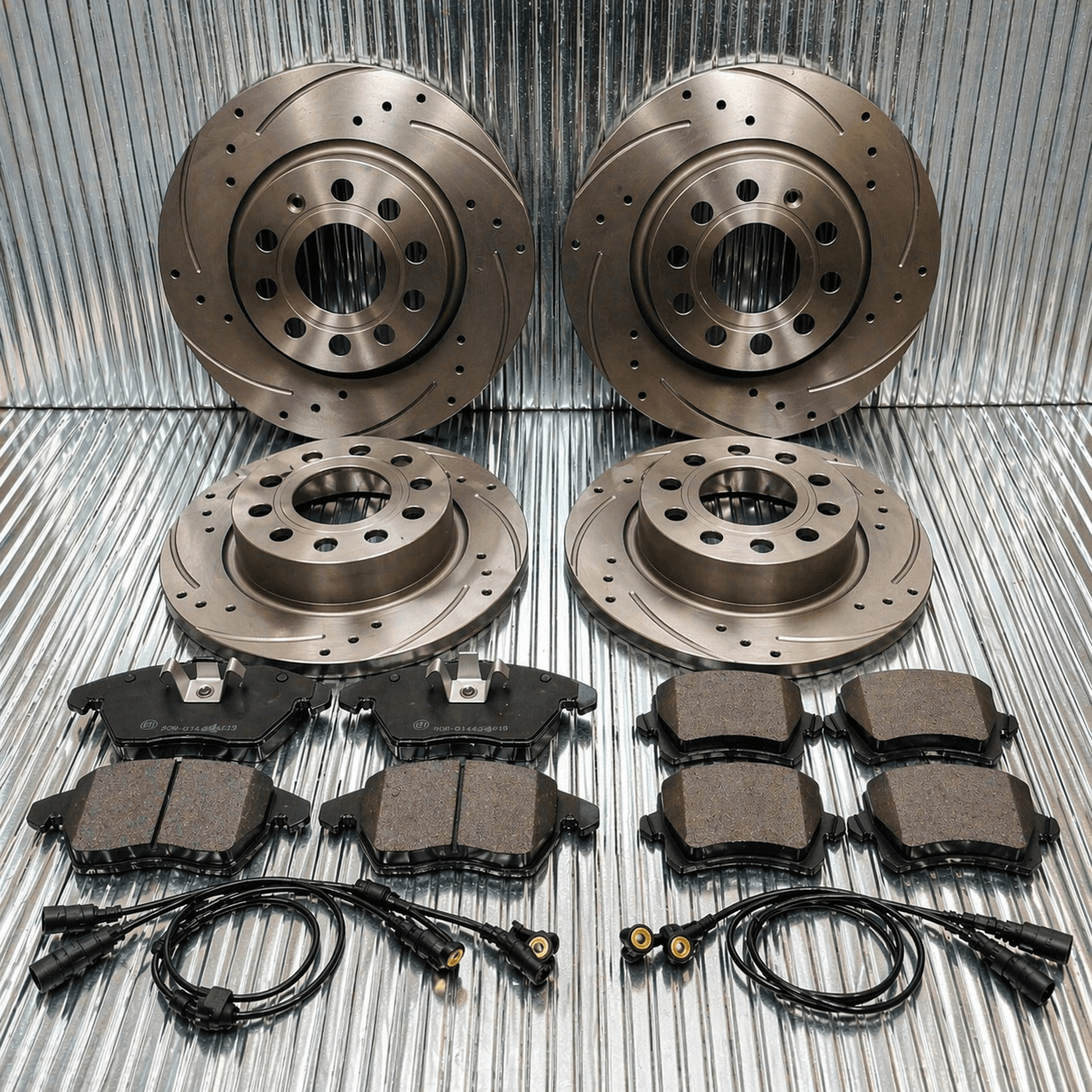
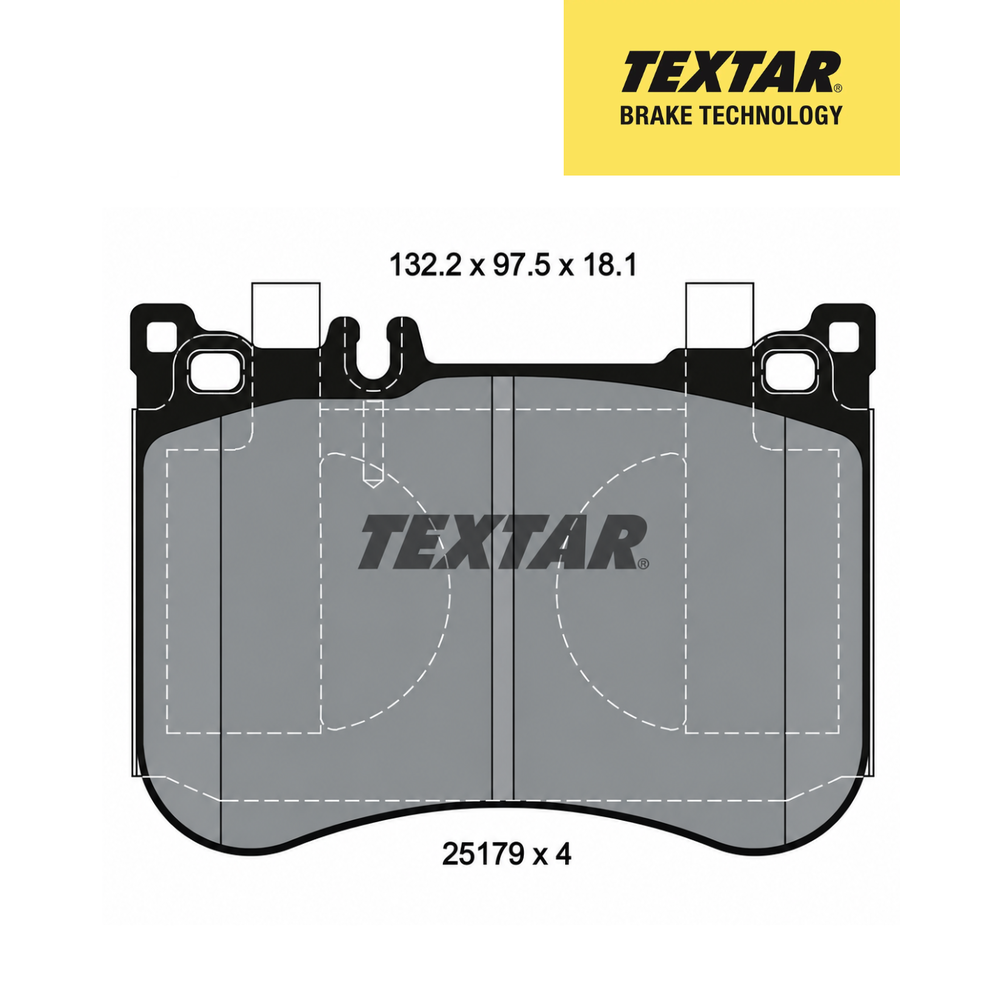
Textar 2517901 front brake pads are a premium set of four front brake pads designed for compatible Mercedes-Benz S-Class W222 petrol models using the corresponding front braking system. This brake pad set is associated with Mercedes-Benz OEM references A0084200920, A0084203320, A0064209320 and A0064205020 and should be selected only where the vehicle’s brake specification matches the applicable OE reference. The Mercedes-Benz S-Class W222 is a large luxury sedan combining substantial vehicle weight, powerful petrol engines, high-speed capability and sophisticated electronic braking systems, making the quality and correct fitment of the front brake pads extremely important. The front axle normally handles a major proportion of the braking load because vehicle weight transfers forward during deceleration, particularly during stronger braking. Textar specializes in friction and braking technology and produces braking components for premium European vehicles where braking refinement, friction consistency and predictable pedal response are important. Textar 2517901 is designed to provide controlled braking response during normal city traffic, highway driving and long-distance use when correctly installed with serviceable brake discs and properly functioning calipers. The package contains four front brake pads, normally providing the pads required for the left and right front wheels. Replacing all four pads together helps maintain balanced braking characteristics across the complete front axle. Customers should not assume that every S-Class W222 petrol model uses the same front brake pad because Mercedes-Benz may fit different brake systems depending on engine specification, production date, equipment package and brake configuration. The vehicle VIN, existing brake pad number or Mercedes-Benz OEM reference should therefore be checked before purchase. The front brake discs should also be inspected during replacement for excessive wear, deep grooves, heat damage, cracks or minimum-thickness limits. Caliper pistons, guide components and pad contact surfaces should operate correctly, while brake wear sensors should be inspected where applicable. Correct professional installation and proper bedding after replacement are important for obtaining smooth and consistent braking performance. For compatible Mercedes-Benz S-Class W222 petrol models requiring the listed OEM references, Textar 2517901 provides a premium front brake pad replacement designed to support the refined braking behavior expected from an S-Class.
Which Mercedes-Benz vehicles are compatible with Textar 2517901 front brake pads?
Textar 2517901 front brake pads are intended for compatible Mercedes-Benz S-Class W222 petrol models fitted with the corresponding front braking system and matching Mercedes-Benz OE references A0084200920, A0084203320, A0064209320 or A0064205020. Although the product is listed for S-Class W222 petrol applications, exact fitment must still be checked because the W222 generation includes several petrol engine derivatives and different braking configurations may be fitted depending on vehicle specification. Engine output, vehicle weight, production date, optional brake packages and market specification can all influence which front brake pads are required. This means that selecting pads only because the vehicle is a petrol-powered W222 S-Class is not sufficient for guaranteed fitment. The safest approach is to verify the vehicle identification number and compare the required Mercedes-Benz OE brake pad number with the references associated with Textar 2517901. The existing brake pad markings can also help where they remain readable, although heat, corrosion and accumulated brake dust can make older markings difficult to identify accurately. A professional workshop can additionally check the caliper design, brake disc dimensions and pad shape, but visual comparison should be treated as supporting information rather than the primary method of confirmation. Textar 2517901 is specifically intended for the front axle and should not be confused with the rear brake pad specification used on the same S-Class. Front brake pads normally experience considerably greater braking loads because of forward weight transfer during deceleration. Correct friction characteristics and pad dimensions are therefore important for maintaining predictable stopping performance and brake balance. Mercedes-Benz may also supersede older part numbers with newer OE references during the vehicle’s service life, which explains why multiple Mercedes-Benz numbers can correspond with one Textar reference. Buyers should therefore check current VIN-based fitment information whenever there is uncertainty. The Mercedes-Benz OEM references A0084200920, A0084203320, A0064209320 and A0064205020 provide important cross-reference information for identifying compatible applications. Once the correct OE number is confirmed, Textar 2517901 can be evaluated as the corresponding premium replacement. Accurate fitment verification helps prevent incorrect orders and ensures that the brake pads are suitable for the exact Mercedes-Benz S-Class W222 petrol braking configuration.
Which Mercedes-Benz OEM numbers cross-reference with Textar 2517901?
Textar 2517901 front brake pads are associated with Mercedes-Benz OEM references A0084200920, A0084203320, A0064209320 and A0064205020 for compatible S-Class W222 petrol applications. These OEM references are particularly useful because brake pad selection based only on vehicle model can be inaccurate where multiple brake systems were fitted within the same model generation. Mercedes-Benz can revise, update or supersede part numbers throughout a vehicle’s production and service life, meaning an earlier W222 may show one OE reference while later Mercedes-Benz parts information identifies another replacement number. Textar uses the reference 2517901 to identify its corresponding brake pad specification across the compatible OE applications. If the Mercedes-Benz electronic parts catalogue or VIN-based lookup identifies A0084200920, A0084203320, A0064209320 or A0064205020 as the required front brake pad reference, Textar 2517901 can then be checked as the corresponding replacement. Customers can sometimes find the OE number on the removed brake pads or previous workshop invoices, but VIN verification remains preferable because a previously installed component may not necessarily have been correct. Buyers should also avoid confusing brake pad part numbers with the numbers for discs, wear sensors or brake calipers because each component has its own separate reference. The S-Class W222 petrol range includes powerful luxury variants, making correct front brake system identification especially important. A pad that looks similar can still differ in dimensions, friction material thickness or backing-plate geometry and may therefore not fit or operate correctly. During replacement, the technician should inspect both front brake discs for thickness, surface condition, heat damage and excessive scoring. Brake caliper pistons and guide mechanisms should also be checked because uneven movement can cause irregular pad wear. If one removed pad is significantly thinner than the others, the underlying cause should be investigated before new components are fitted. Wear sensors should also be checked and renewed where necessary. Using Textar 2517901 together with Mercedes-Benz OEM references A0084200920, A0084203320, A0064209320 and A0064205020 provides a much more accurate basis for identifying the correct premium front brake pad application for compatible Mercedes-Benz S-Class W222 petrol models.
Why should Mercedes-Benz S-Class W222 petrol owners choose Textar front brake pads?
Mercedes-Benz S-Class W222 petrol owners should consider Textar front brake pads when they want a premium replacement designed around the braking characteristics of high-end European vehicles. The W222 petrol range combines luxury, substantial vehicle mass and powerful engine performance, which places considerable demands on the front braking system. During braking, weight transfers toward the front axle and increases the workload of the front brake pads and discs. This makes stable friction performance, temperature resistance, pad construction and predictable brake response especially important. Textar is a specialist in automotive friction technology and is strongly associated with braking components for European vehicles. Textar 2517901 is designed to provide a balanced combination of braking performance, comfort, wear characteristics and refined pedal response for compatible applications. This balance is particularly valuable in an S-Class because the vehicle is expected to deliver strong stopping capability without compromising luxury and smoothness during routine driving. A suitable replacement brake pad should respond progressively when the driver applies the pedal, perform consistently during repeated braking and remain predictable across normal changes in operating temperature. Textar brake pads are designed with these requirements in mind. Brake refinement is also important because excessive squealing, harshness or vibration can noticeably reduce the premium driving experience. However, the final braking behavior depends on the entire brake assembly. Even high-quality pads can become noisy or wear unevenly if the discs are damaged, calipers are sticking or pad contact surfaces have not been properly cleaned during installation. The condition of the front discs should therefore be checked whenever Textar 2517901 is installed. Deep grooves, heavy corrosion, heat spots and minimum-thickness issues should be addressed before new pads are fitted. Caliper guide mechanisms and pistons should operate smoothly, and brake wear sensors should be inspected or replaced where necessary. Correct bedding of the new pads against the brake discs is also important for establishing an even friction interface. Compatibility should be verified through OEM numbers A0084200920, A0084203320, A0064209320 or A0064205020 and preferably the vehicle VIN. When correctly matched and professionally installed, Textar 2517901 provides a strong combination of premium friction engineering, braking refinement and dependable performance for compatible Mercedes-Benz S-Class W222 petrol models.
How many brake pads are included in the Textar 2517901 set?
The Textar 2517901 package contains a complete set of four front brake pads for compatible Mercedes-Benz S-Class W222 petrol models. In a conventional front disc-brake arrangement, each front wheel uses two pads positioned on either side of the brake disc, with one inner pad and one outer pad. Therefore, two pads are required for the left front wheel and two pads for the right front wheel, giving a total of four brake pads for a complete front axle replacement. Brake pads should normally be replaced as a complete axle set rather than changing only one side or an individual pad. Replacing all four front pads together helps maintain balanced friction characteristics and braking response between the left and right sides of the vehicle. This is particularly important on a high-performance luxury sedan such as the Mercedes-Benz S-Class W222, where the front axle handles a large portion of the total braking force. When the old pads are removed, their wear pattern should be examined carefully. Significant differences between the inner and outer pad thickness can indicate a sticking caliper piston, restricted guide mechanism or another mechanical issue. Differences between the left and right sides can similarly suggest a fault that should be diagnosed before the new Textar pads are installed. Simply replacing the pads without correcting the underlying issue can cause the new set to wear prematurely. The front brake discs should also be inspected and measured during the service. If the discs are below the minimum permissible thickness, badly scored, cracked or heat damaged, replacement may be required. Where front discs need replacement, both sides should normally be renewed together to provide comparable braking surfaces. Buyers should understand that “set of 4” refers specifically to the four front brake pads and does not automatically include brake discs, wear sensors or additional hardware unless separately stated in the product package. Brake wear sensors should be checked and ordered separately where required. Textar 2517901 fitment should be confirmed using Mercedes-Benz OEM references A0084200920, A0084203320, A0064209320 or A0064205020 together with the VIN or exact brake specification. Once compatibility is confirmed, the four-pad set provides the normal components required to replace the front brake pads across both sides of the axle.
When should the front brake pads on a Mercedes-Benz S-Class W222 petrol model be replaced?
Front brake pads on a Mercedes-Benz S-Class W222 petrol model should be replaced when the friction material approaches its minimum service limit, when the vehicle displays a brake wear warning, when inspection reveals excessive or uneven wear, or when braking symptoms indicate that the front brake system requires attention. Front pads often experience significant wear because the front axle performs a major proportion of the braking work. During deceleration, weight transfers forward and increases the load on the front brakes, particularly in a large and powerful petrol S-Class. Brake pad life cannot be determined from mileage alone because it varies substantially according to traffic conditions, driving style, vehicle load, highway use, brake disc condition and caliper operation. Frequent stop-and-go city driving generally causes more brake wear than steady cruising because the pads are applied repeatedly and undergo constant heating and cooling. High-speed driving followed by repeated braking can also generate considerable thermal load. A Mercedes-Benz brake pad warning should therefore not be ignored. Once a wear sensor has activated, the brakes should be inspected promptly. Continuing to drive until the friction material is exhausted can allow the metal backing plate to contact the brake disc, producing a grinding sound and potentially damaging the disc. Other warning signs include persistent squealing, vibration, reduced braking response, pulling to one side or an unusual pedal feel. However, these symptoms can also be caused by disc or caliper problems, so physical inspection is required. Both inner and outer front pads should be checked because uneven caliper movement can cause one pad to wear significantly faster than the other. The left and right sides should also be compared. If Textar 2517901 is confirmed for the vehicle through Mercedes-Benz OEM A0084200920, A0084203320, A0064209320 or A0064205020, all four front brake pads should be replaced together as a complete axle set. The brake discs should be measured for minimum thickness and inspected for deep grooves, heat cracks, corrosion and runout at the same time. Wear sensors should be replaced where activated or damaged. After installation, the brake pedal should be restored to normal pressure before the vehicle is driven, and the pads should undergo an appropriate bedding process. Regular brake inspection during routine servicing remains the best way to identify pad wear before it causes disc damage or compromises braking performance.
Are Textar 2517901 front brake pads suitable for daily driving and highway use in Mercedes-Benz S-Class W222 petrol models?
Yes, Textar 2517901 front brake pads are suitable for compatible Mercedes-Benz S-Class W222 petrol models used in normal city traffic, highway driving and long-distance touring. The W222 is a large and powerful luxury sedan, so the front braking system must cope with substantial vehicle weight, higher engine performance and repeated braking loads while still maintaining the smooth and refined response expected from an S-Class. Textar 2517901 is designed as a premium OE-oriented replacement for applications matching Mercedes-Benz OEM references A0084200920, A0084203320, A0064209320 and A0064205020. During city driving, frequent stop-and-go braking repeatedly heats and cools the pads and discs, while highway driving may require stronger braking from considerably higher speeds. A suitable brake pad therefore needs to provide stable friction characteristics across these changing conditions. Textar specializes in friction technology and develops braking products for European vehicles where progressive pedal response, comfort and predictable stopping performance are important. The front brakes normally handle a large proportion of the vehicle's braking force because weight transfers toward the front axle during deceleration. This makes front pad quality particularly important in the S-Class W222. Textar 2517901 is designed to provide controlled braking rather than an excessively aggressive response, helping preserve the luxury-car driving character during everyday use. Correct fitment remains essential because different W222 petrol variants may use different brake configurations. Customers should verify the VIN, existing brake pad number or one of the listed OE references before installation. The front brake discs should also be inspected for minimum thickness, deep scoring, cracks, heat damage or excessive wear. Caliper pistons, guide mechanisms and wear sensors should be checked at the same time. If the braking system is properly maintained and Textar 2517901 is correctly matched to the vehicle, the pads are well suited to city commuting, highway journeys and regular long-distance use in a Mercedes-Benz S-Class W222 petrol model.
Do Textar 2517901 front brake pads provide smooth and low-noise braking for Mercedes-Benz S-Class W222 petrol models?
Textar 2517901 front brake pads are designed to provide smooth, progressive and refined braking characteristics suitable for compatible Mercedes-Benz S-Class W222 petrol models. Noise control and braking comfort are particularly important in the S-Class because owners expect the vehicle to maintain a high level of refinement during both low-speed and high-speed operation. Textar focuses specifically on friction-material technology and designs its brake pads to balance stopping performance, pedal feel, wear characteristics, vibration control and braking comfort. However, brake noise is influenced by the entire braking system rather than the pad alone. The condition of the discs, calipers, shims, pad contact surfaces and fitting hardware can all contribute to squealing, vibration or harshness. Even a premium brake pad can become noisy if fitted to a badly worn or uneven brake disc. Before installing Textar 2517901, the front discs should therefore be inspected for deep grooves, corrosion, excessive lips, heat spots, cracks and minimum-thickness limits. The caliper carrier and pad contact areas should also be cleaned correctly so the pads can move freely. A pad that binds in the carrier may remain partially applied against the disc, creating heat, noise and premature wear. Caliper guide mechanisms should operate smoothly and any damaged components should be repaired before fitting new pads. Friction surfaces must also remain free from grease, oil and other contaminants. Proper bedding after installation is equally important. New pads require controlled initial braking so that the friction surfaces establish even contact with the brake discs. Repeated aggressive braking immediately after installation can create excessive heat and uneven deposits, which may later contribute to vibration or brake noise. Some minor brake sound can still occur under conditions such as cold starts, humidity, light surface rust after parking or very low-speed braking, and this does not automatically indicate defective pads. Persistent grinding, strong vibration or continuous squealing should nevertheless be investigated. Textar 2517901 should be fitted only where Mercedes-Benz OEM references A0084200920, A0084203320, A0064209320 or A0064205020 correspond with the vehicle. When correctly installed with healthy discs and calipers, Textar 2517901 can provide the smooth and refined braking behavior expected from a Mercedes-Benz S-Class W222 petrol model.
Do Textar 2517901 front brake pads produce less brake dust on Mercedes-Benz S-Class W222 petrol models?
Textar 2517901 front brake pads are premium friction components, but brake dust is a normal result of the braking process and should not be used as the only measure of brake pad quality. Every time the brake pads contact the discs, friction converts the vehicle's movement into heat and microscopic particles from both the pad and disc surfaces are released. These particles eventually collect on the alloy wheels as visible brake dust. The amount of dust generated depends on several factors including friction compound, vehicle weight, driving style, traffic conditions, brake disc condition and how frequently the brakes are used. The Mercedes-Benz S-Class W222 petrol range includes large and powerful vehicles, and the front braking system carries a significant share of the stopping load. Frequent urban braking or repeated high-speed stops can therefore naturally increase wear and visible dust. Textar develops its friction materials to balance braking performance, refinement, temperature stability and wear rather than concentrating only on producing the lowest possible amount of dust. This is important because stopping performance and consistency should take priority over wheel cleanliness. Driving style also affects dust levels. Repeated aggressive braking generally increases both pad and disc wear, while smoother and more progressive braking may reduce unnecessary frictional wear. Brake disc condition is another important factor. Rough, deeply scored or heavily corroded discs can abrade the pads more aggressively and produce greater dust. A sticking caliper can also keep one pad partially applied and create excessive heat and unusually heavy dust on one front wheel. If one wheel becomes much dirtier than the other, the brake system should therefore be inspected for uneven wear rather than immediately blaming the pad compound. Regular cleaning of alloy wheels can help prevent brake dust from becoming difficult to remove. Suitable wheel-cleaning products should be used, particularly on painted, polished or diamond-cut finishes. Textar 2517901 should primarily be selected because it provides correct fitment and premium friction performance for compatible vehicles. Mercedes-Benz OEM references A0084200920, A0084203320, A0064209320 and A0064205020 should be verified before installation. When used with healthy brake discs and correctly operating calipers, Textar 2517901 offers a strong balance of braking performance, refinement, durability and normal dust characteristics for compatible Mercedes-Benz S-Class W222 petrol models.
Should Textar 2517901 front brake pads be installed with new brake discs on Mercedes-Benz S-Class W222 petrol models?
Textar 2517901 front brake pads do not automatically require new front brake discs every time they are replaced, but the existing discs must be inspected carefully before deciding whether they can remain in service. Brake pads and discs operate together as a friction pair, so the condition of the disc directly influences how well the new pads can bed in and perform. If the existing Mercedes-Benz S-Class W222 front discs remain above their minimum thickness specification and the surfaces are smooth, even and free from serious damage, it may be acceptable to replace only the brake pads. However, if the discs are deeply scored, cracked, excessively corroded, heat damaged, distorted or below the minimum service thickness, they should be replaced together with the new pads. Installing premium Textar pads against badly worn discs can reduce the effective contact area and may cause vibration, noise, poor bedding or premature pad wear. Disc thickness should therefore be measured using suitable equipment rather than estimated only by appearance. If one front brake disc requires replacement, both front discs should normally be renewed as a pair so that the left and right sides have comparable braking surfaces. When new discs are installed, the hub mounting surfaces should be cleaned thoroughly because corrosion or debris between the hub and disc can create lateral runout. Excessive runout can later contribute to brake judder. The caliper carrier, guide mechanisms and pad contact areas should also be cleaned and inspected. Caliper pistons should move correctly, and any uneven wear found on the old pads should be diagnosed before the new components are fitted. Brake wear sensors should also be replaced where necessary. After installation, the brake pedal should be restored to normal pressure before the vehicle is moved. A suitable bedding process should then be followed to help the new pads and discs establish an even friction interface. Textar 2517901 should only be used where the vehicle matches Mercedes-Benz OEM references A0084200920, A0084203320, A0064209320 or A0064205020. New discs are therefore not mandatory in every brake pad replacement, but worn or damaged discs should not be reused merely to reduce repair cost because doing so can compromise the performance and refinement of the new Textar pads.
Why are Textar 2517901 brake pads considered a strong choice for Mercedes-Benz S-Class W222 petrol models compared with Brembo brake pads?
Textar and Brembo are both respected names in the braking industry, but each brand has particular strengths and product positioning. Textar is strongly associated with friction-material development and OE-oriented replacement brake pads for European vehicles, while Brembo is known globally for a much broader braking portfolio that includes brake pads, discs, calipers, high-performance systems and motorsport components. For a Mercedes-Benz S-Class W222 petrol owner looking for a premium front brake pad replacement that emphasizes smooth road behavior, controlled friction and luxury-car refinement, Textar 2517901 is a particularly strong option. The product can be cross-referenced with Mercedes-Benz OEM numbers A0084200920, A0084203320, A0064209320 and A0064205020 for compatible applications. Textar's key strength in this type of application is its focus on creating balanced friction behavior. The S-Class W222 is engineered around comfort, stability and refined performance, so the ideal replacement pad should provide progressive braking without introducing unnecessary harshness during normal road use. Textar 2517901 is designed around this type of OE-style braking behavior, making it well suited to everyday city driving, highway use and long-distance luxury touring. Brembo also manufactures excellent replacement brake pads and has an exceptional reputation in braking engineering, especially in performance and motorsport environments. For drivers looking to upgrade several parts of the braking system together, including high-performance discs, calipers and pads, Brembo's broader performance ecosystem can be particularly attractive. However, a more performance-focused braking product is not automatically the better choice for every S-Class owner. A pad designed with a stronger performance bias may offer different pedal response, noise, dust or operating-temperature characteristics from an OE-oriented replacement. For a standard S-Class W222 petrol model used mainly for road driving, comfort and predictable braking response may be more important than aggressive initial bite. Textar 2517901 is designed to provide a strong balance of stopping performance, refinement, wear characteristics and everyday usability. Both Textar and Brembo products still depend on correct installation and the condition of the complete braking system. A premium pad from either brand can perform poorly if installed on badly worn discs, sticking calipers or contaminated friction surfaces. Brake noise and dust also vary according to the specific compound, driving conditions and installation quality rather than simply the brand name. Accurate fitment remains essential because Mercedes-Benz S-Class W222 petrol models can use different front brake specifications. The VIN, Textar reference and Mercedes-Benz OEM number should therefore be verified before purchase. For owners prioritizing OE-style braking response, smooth luxury-car behavior and specialist friction engineering, Textar 2517901 is an excellent choice. Brembo remains an excellent alternative, especially where the customer wants a broader performance-oriented braking setup.

Reviews
There are no reviews yet.