Cart0items

Cart

Hello GuestFor better experience login
Login

Buy Toyota Parts, Volkswagen Parts, Honda Parts, Jaguar Parts, BMW Parts, Audi Parts, Skoda Parts, Volvo Parts, Mahindra Parts, Mini Parts and more - Buy Car Parts Online!

  • 00
  • 00
  • 00
  • 00
0
0
Cart0items

Cart

HomeShopFiltersAir FiltersMercedes-Benz S-Class (W220, V220) S 320 CDI (220.025, 220.125) Air Filter – A 611 094 02 04 (1998 – 2005)

Description

Buy Mercedes S320 CDI Air Filter A6110940204 Genuine OEM | JK Automotive

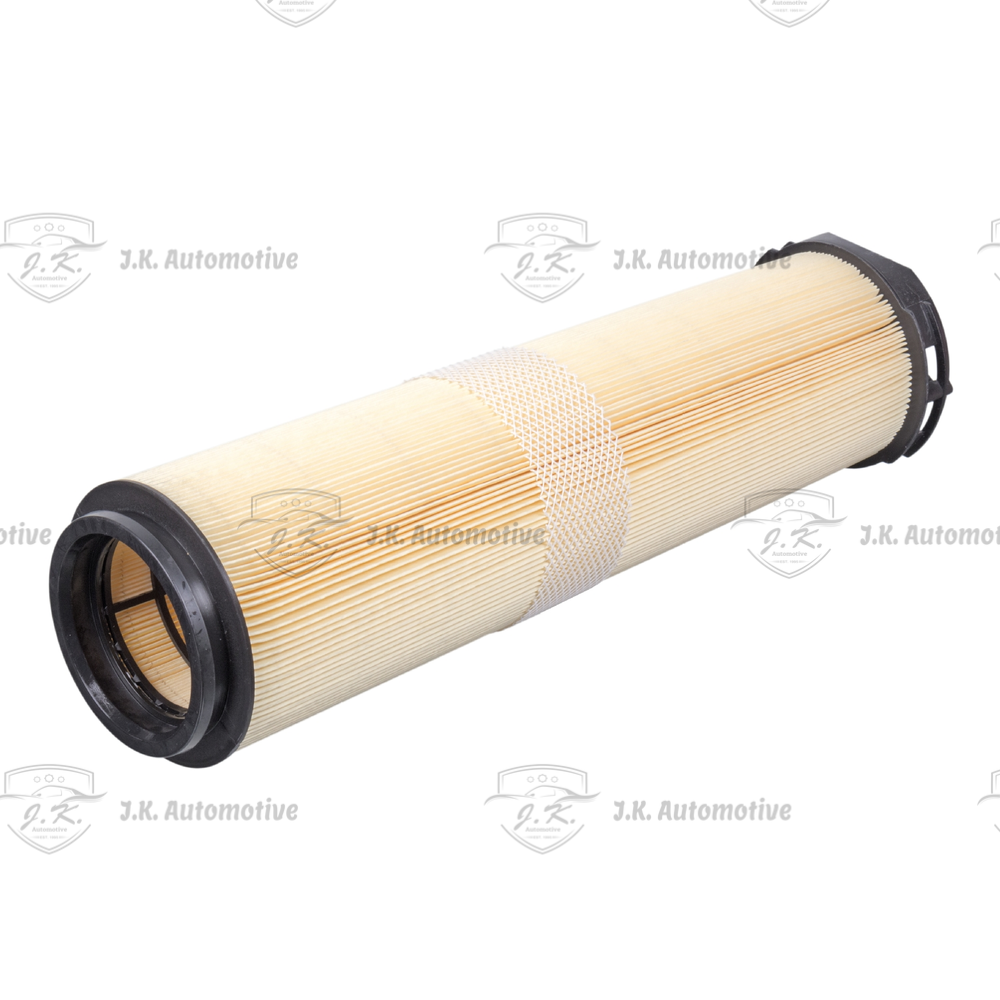
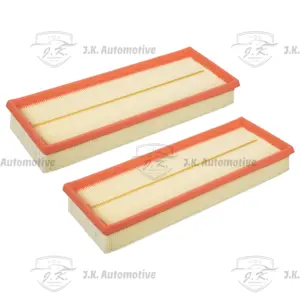
Mercedes S320 CDI Air Filter A6110940204 is a genuine Mercedes-Benz OEM replacement air filter specifically designed for Mercedes-Benz S-Class (W220, V220) S 320 CDI (220.025, 220.125) (1998 – 2005). It is fully compatible with OEM part number A 611 094 02 04, ensuring precise fitment and dependable factory-level performance.

The premium multi-layer filter media effectively captures dust, dirt, pollen, sand and other airborne contaminants before they reach the engine intake system. It maintains optimum airflow for efficient combustion while protecting critical engine components.

Mercedes S320 CDI Air Filter A6110940204 improves combustion efficiency, turbocharger response, throttle response and fuel economy. It also delivers smoother acceleration and consistent engine performance while protecting the OM611 turbo diesel engine from premature wear.

Routine replacement of the air filter helps safeguard the turbocharger, mass airflow sensor, intake manifold, intake valves and cylinders from harmful contaminants. Clean intake air contributes to longer engine life, improved reliability and lower maintenance costs.

Choosing a Genuine Mercedes-Benz OEM air filter guarantees factory-quality fitment, superior filtration efficiency and long-lasting durability. It is manufactured to Mercedes-Benz specifications for reliable performance under all driving conditions.

Buy Mercedes S320 CDI Air Filter A6110940204 from JK Automotive for 100% genuine Mercedes-Benz OEM spare parts, competitive prices, expert technical assistance, secure packaging and fast shipping across India.
Compatible vehicles

ManufacturerModelYear-Range
Mercedes-BenzS-Class LWB (V220)1999–2005

Reviews

There are no reviews yet.

Be the first to review “Mercedes-Benz S-Class (W220, V220) S 320 CDI (220.025, 220.125) Air Filter – A 611 094 02 04 (1998 – 2005)”

Your email address will not be published. Required fields are marked *

Questions and Answers

Why is part number A 611 094 02 04 specifically specified for the OM613 and OM648 inline-six diesel engines in the W220 S 320 CDI?

The Mercedes-Benz W220 S 320 CDI is powered by the high-torque OM613 and OM648 turbocharged 3.2-liter inline-six diesel engines, which utilize a cylindrical filter housing mounted on the side of the engine bay. Air filter part number A 611 094 02 04 features a heavy-duty cylindrical pleated design engineered to match the precise internal dimensions and flow dynamics required by these turbocharged inline engines. Unlike the flat dual air filter panels used in naturally aspirated petrol V6 and V8 engines of the same era, this cylindrical air filter element provides 360-degree surface area filtration to handle intense, continuous suction vacuum generated by the variable-geometry turbocharger. The high-density synthetic micro-fiber media is supported by rigid internal radial supports and hot-melt stabilization bands to prevent pleat collapsing or deformation under high boost conditions. Furthermore, the elastomeric end caps and flexible sealing lip on part number A 611 094 02 04 ensure an airtight, vibration-proof seal against the housing end cap, preventing unfiltered ambient air from bypassing the filter media and entering the intake tract. Installing this exact factory-specified filter guarantees that incoming air is cleaned of abrasive micro-particles down to 3 microns before reaching the turbocharger compressor, preserving low-end torque, throttle response, and overall engine durability over thousands of kilometers.

What structural design characteristics distinguish this cylindrical diesel air filter from flat panel filters, and how does it protect the turbocharger?

The cylindrical design of air filter A 611 094 02 04 offers significant structural and functional advantages over flat panel air filters when applied to heavy-duty turbo diesel engines like the OM613 and OM648. The round, tubular geometry distributes intake air pressure evenly across the entire circumferential surface area of the pleats, eliminating localized high-velocity pressure points that could otherwise tear flat filter paper. High-performance diesel turbochargers draw vast volumes of air at high velocity, which can pull moisture, road grit, and fine diesel soot into the air intake system. To counter these harsh conditions, part number A 611 094 02 04 utilizes water-resistant synthetic blend filtration media that retains its structural rigidity even when exposed to high ambient humidity or damp road spray in the airbox. The rigid molded end seals keep the filter element perfectly aligned inside the housing cylinder, forming a complete seal that prevents raw, unfiltered silica sand from leaking past the filter edges. Protecting the turbocharger compressor wheel from sand particles, known as turbo dusting, is critical because abrasive particle impact erodes the delicate leading edges of the aluminum compressor blades over time, causing boost pressure loss and turbo imbalance. Installing a genuine specification cylindrical filter ensures that clean air flows smoothly into the intake system, preserving turbocharger longevity and ensuring consistent boost delivery across the entire rpm range.

What are the main operational symptoms of a clogged air filter on an S 320 CDI, and what long-term mechanical risks arise if replacement is delayed?

When air filter A 611 094 02 04 on a Mercedes-Benz W220 S 320 CDI becomes saturated with road dust, soot, and organic debris, the engine experiences severe air starvation that manifests through clear performance issues and long-term mechanical risks. The initial symptom noticed by the driver is a distinct loss of throttle responsiveness and low-end torque, making the heavy S-Class feel sluggish during initial acceleration and creating noticeable turbo lag during highway overtaking. Because the engine control unit constantly calculates fuel injection quantities based on incoming air mass, restricted airflow causes incomplete combustion of diesel fuel inside the cylinders. Incomplete combustion produces excessive carbon soot, which manifests as thick black exhaust smoke under acceleration and accelerates soot accumulation in the exhaust gas recirculation valve and catalytic converter. If a heavily clogged filter is left unserviced, the extreme intake vacuum generated by the turbocharger can cause low-quality or aged filter media to collapse, tear, or pull away from its end caps. Once the filter breaks down, unfiltered abrasive dust is drawn straight into the turbocharger inlet, destroying the compressor wheel blades and depositing grime on the downstream hot-film Mass Air Flow sensor element. Severe sensor contamination leads to erratic idling, stalling, and check engine light illumination, eventually forcing the engine computer into protective limp home mode.

Why is an electronic Air Filter Adaptation Reset strongly recommended after replacing air filter A 611 094 02 04 on a W220 S 320 CDI?

Performing a digital Air Filter Adaptation Reset using a Mercedes-Benz STAR or XENTRY diagnostic scanner or professional OBD2 tool is a strongly recommended service procedure after replacing the air filter on a W220 S 320 CDI. The engine control unit governing the OM613 and OM648 diesel engines utilizes adaptive, self-learning software routines that continually track and compensate for the gradual restriction of the air filter as dirt accumulates over time. As air intake resistance slowly increases, the computer incrementally recalibrates its stored compensation memory tables for Mass Air Flow sensor baseline values, turbocharger boost pressure control, and exhaust gas recirculation rates to maintain smooth operation. If a brand-new, completely unrestricted air filter is installed without clearing these stored adaptation values from memory, the engine computer briefly continues operating under out-of-date high-restriction parameters. This mismatch between physical fresh airflow and old electronic calibration data can cause rough engine idling, delayed automatic transmission gear shifts, and momentary power surges during hard acceleration. In many cases, the sudden jump in fresh air volume detected by the sensitive Mass Air Flow sensor exceeds the computer learned variance limits for aged filters, causing the computer to register an airflow implausibility error and illuminate the check engine light. Resetting the air filter adaptation clears these outdated memory tables, allowing the ECU to immediately re-establish accurate baseline reference values for fresh airflow and optimize fuel combustion right away.

What is the recommended service interval for air filter A 611 094 02 04 on the W220 S 320 CDI, and how do real-world driving conditions alter it?
The standard factory-recommended replacement interval for air filter A 611 094 02 04 on the Mercedes-Benz W220 S 320 CDI under normal highway driving conditions is every 60,000 kilometers or every 3 to 4 years, typically aligned with a major Service B maintenance schedule. However, because air filter longevity depends directly on the ambient environment and total volume of air processed by the turbocharged engine, service intervals should be adjusted based on real-world operating conditions. Driving frequently in dry, dusty climates, on unpaved gravel roads, or through active construction zones significantly accelerates the rate at which dust and sand particles fill the filter pleats, reducing effective airflow much earlier than expected. Similarly, daily commuting in dense urban stop-and-go traffic where airborne diesel soot, rubber dust, and industrial soot particulates are prevalent will saturate the filter media quickly. Under severe or dusty driving conditions, it is strongly advised to inspect the cylindrical air filter element every 15,000 to 20,000 kilometers and replace the filter every 30,000 kilometers to ensure uninhibited engine breathing. Regularly inspecting and replacing the air filter is one of the most cost-effective preventive maintenance habits for preserving the longevity of the 3.2L inline-six diesel engine. Maintaining clean, unrestricted airflow keeps turbocharger operating temperatures lower, minimizes carbon soot accumulation in the intake manifold, and maximizes fuel economy over the lifespan of your S-Class diesel.
What structural quality features distinguish genuine specification A 611 094 02 04 cylindrical filters from low-cost aftermarket alternatives on the W220 S 320 CDI?

Genuine specification cylindrical air filter elements designed for the Mercedes-Benz W220 S 320 CDI utilize multi-layered synthetic micro-fiber filtration media engineered to capture microscopic airborne silica dust and diesel soot down to 3 microns while maintaining low airflow resistance. Low-cost aftermarket filters often rely on cheap, low-density paper media that easily absorbs ambient moisture in damp weather, causing the pleats to swell, soften, and deform under the heavy suction vacuum of the OM613 and OM648 turbo diesel engines. When filter pleats swell or collapse together, the usable surface area of the filter is drastically reduced, restricting clean air flow to the intake manifold, increasing turbocharger lag, and causing higher fuel consumption. Furthermore, genuine specification filters feature rigid, heat-stable polyurethane end caps and precision-molded internal support cages that maintain structural integrity during sudden high-velocity boost spikes. A soft or poorly molded end cap seal on cheap aftermarket filters can distort under engine bay heat cycles, creating gaps between the filter end cap and the airbox housing cover through which unfiltered air bypasses the media entirely. Unfiltered ambient air drawn past poor filter seals carries abrasive sand directly onto the spinning turbocharger compressor blades, causing severe blade erosion, turbo imbalance, and early turbocharger failure. Additionally, premium filters incorporate evenly spaced hot-melt stabilization lines around the circumference of the pleats to ensure uniform airflow distribution and prevent pleat bunching. Investing in high-quality air filters that meet OEM specification A 611 094 02 04 ensures sustained dust-holding capacity, protects expensive turbocharger and sensor components, and maintains peak power delivery throughout the service life of your S-Class diesel.

What are the most common installation mistakes when replacing cylindrical air filter A 611 094 02 04 on the W220 S 320 CDI, and how can mechanics prevent intake leaks?
Replacing the cylindrical air filter on the Mercedes-Benz W220 S 320 CDI requires proper technique to ensure the side-mounted airbox is sealed correctly and free of debris. A primary installation error is failing to clean out the bottom of the cylindrical airbox housing before inserting the new filter element; road sand, leaves, and dried mud often settle at the base of the airbox and can drop straight into the clean air outlet tube if not thoroughly vacuumed or wiped clean first. Another frequent mistake is improperly aligning the cylindrical filter element on its central mounting guide post inside the airbox; if the filter is forced or misaligned, the elastomeric end seal will not seat flush against the intake manifold neck, allowing unfiltered air to bypass the filter media completely. Mechanics should also inspect the outer rubber housing sealing ring and retention latches on the airbox lid before closure, ensuring that no wires, vacuum hoses, or air intake ducts are pinched between the housing halves. Over-tightening or misaligning the airbox lid latches can crack the aged plastic housing tabs or cause the cover seal to buckle, creating permanent intake leaks downstream that draw hot engine bay air instead of cool ambient air. Additionally, care must be taken when handling the intake ducting attached to the Mass Air Flow sensor housing, as forcing rigid plastic pipes can crack brittle breather fittings or strain electrical sensor connectors. To guarantee a perfect installation, vacuum out the lower airbox housing cavity, carefully press the new filter element onto its center guide until firmly seated, secure all housing latches evenly, inspect all duct connections for air-tightness, and perform a diagnostic air filter adaptation reset upon completion.

Still have questions?

Ask a question

Recently viewed products