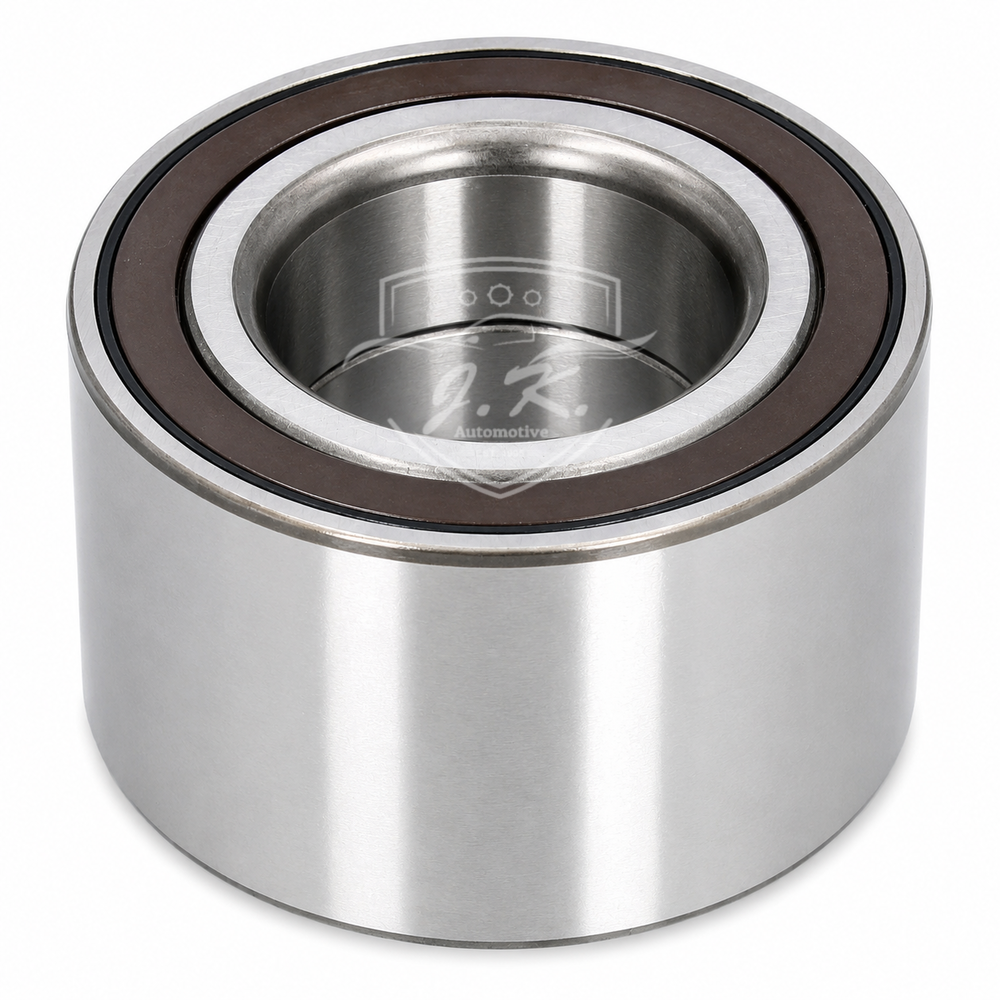
What is the Mercedes-Benz GLE W166 Rear Wheel Bearing A1669810006?
Mercedes-Benz GLE W166 Rear Wheel Bearing with OEM cross reference A1669810006 is a critical rotating support component for the supplied Mercedes-Benz GLE W166 application covering 2011–2019. The rear wheel bearing is installed within the rear wheel and hub assembly and allows the wheel to rotate smoothly while supporting substantial radial and axial loads generated during normal driving. Every time the vehicle accelerates, brakes, corners or travels over uneven road surfaces, forces are transferred through the tyre, wheel, hub and bearing into the suspension structure. The bearing must therefore maintain smooth rotational movement while keeping the wheel accurately supported under changing road and vehicle loads. Its internal rolling elements and precisely manufactured raceways are designed to operate with very low friction while maintaining correct alignment between rotating and stationary components. On a premium SUV such as the Mercedes-Benz GLE W166, bearing condition can directly influence wheel rotation, road noise, vibration and overall driving refinement. As mileage accumulates, repeated load cycles, impacts from potholes, contamination, deterioration of internal lubrication or damage associated with surrounding components can contribute to bearing wear. A deteriorating rear wheel bearing may initially produce a faint humming or droning sound that becomes more noticeable as road speed increases. As wear progresses, the noise can become louder and may change when vehicle load shifts during cornering. Vibration or roughness may also develop, while excessive bearing play can affect the stability of the wheel and hub assembly. These symptoms should be professionally diagnosed because tyre wear, wheel imbalance, brake components, driveshaft-related issues and other rear suspension parts can sometimes create similar noises or vibrations. OEM cross reference A1669810006 should be checked carefully when identifying the replacement component. The existing bearing or associated component identification, vehicle information and VIN should be verified where necessary before ordering. Professional installation is recommended because correct removal, fitting procedure and final inspection are important for bearing service life and safe wheel operation.
What does OEM cross reference A1669810006 mean for the Mercedes-Benz GLE W166 rear wheel bearing?
OEM cross reference A1669810006 is the supplied reference number used to identify this rear wheel bearing application for the Mercedes-Benz GLE W166 covering the supplied 2011–2019 period. This number provides an important search and compatibility reference when customers, workshops or parts professionals are trying to identify the correct replacement bearing. Buyers may search using descriptions such as Mercedes GLE W166 Rear Wheel Bearing, Mercedes W166 Wheel Bearing, Mercedes GLE Rear Hub Bearing, Mercedes Rear Wheel Bearing A1669810006, A1669810006 Wheel Bearing or Mercedes-Benz Rear Bearing. These search variations can help locate the general product type, but the supplied OEM cross reference should remain unchanged when checking this particular listing. A wheel bearing is a precision component, and visually similar bearings can potentially differ in important dimensions or intended vehicle application. Therefore, purchasing a replacement only because another bearing appears similar in a photograph is not recommended. Before ordering, compare OEM cross reference A1669810006 with the available identification information for the existing component and confirm the exact vehicle application. VIN verification should be used whenever compatibility remains uncertain. Physical dimensions and installation configuration should also be compared where appropriate because a correctly selected bearing must correspond with the wheel hub and surrounding assembly without modification. The bearing should never require grinding, machining or alteration simply to make it fit. Correct identification is also separate from fault diagnosis. The presence of a humming or droning sound from the rear of the vehicle does not automatically prove that the bearing requires replacement. Tyres can generate road-speed-related noise, particularly when tread wear becomes irregular. Brake components, wheel imbalance and drivetrain or suspension issues can also produce sounds or vibration that may be mistaken for bearing failure. A technician can inspect the wheel for abnormal play or roughness, evaluate the noise during a road test and examine related components before replacement. Once bearing failure is confirmed, OEM cross reference A1669810006, the supplied Mercedes-Benz GLE W166 application and VIN information where necessary provide important checkpoints for selecting the correct replacement.
What are the symptoms of a bad rear wheel bearing on a Mercedes-Benz GLE W166?
Symptoms of a bad rear wheel bearing on a Mercedes-Benz GLE W166 can include humming, droning, rumbling or growling noise from the rear wheel area, noise that becomes more noticeable as vehicle speed increases, rotational roughness, vibration or abnormal movement within the wheel and hub assembly. Wheel-bearing deterioration often develops progressively, which means the earliest symptom may be a relatively mild sound that is difficult to distinguish from normal tyre or road noise. Because the bearing rotates in relation to wheel speed, a bearing-related sound will commonly change in frequency or intensity as road speed increases or decreases. This is different from many engine-related noises that primarily follow engine RPM. As bearing wear progresses, the driver may notice that the sound becomes more pronounced at medium or higher road speeds. The noise can sometimes change during cornering because lateral forces shift vehicle load between the left and right wheel assemblies. A change in sound when turning can provide useful diagnostic information, but it should not be considered definitive proof of which side is defective because vehicle dynamics and noise transmission can make the apparent source difficult to identify accurately from the driver’s seat. A workshop should therefore inspect both rear wheel assemblies. With the vehicle safely supported using correct procedures, a technician can check for abnormal wheel movement, rotational roughness, unusual sound or other indications of bearing deterioration. The surrounding hub, wheel, tyre and brake components should also be inspected because these parts can influence the symptoms. Irregular or cupped tyre wear is particularly important because it can produce a humming or droning sound that closely resembles bearing noise. Wheel imbalance can create speed-related vibration, while brake components can generate scraping, rubbing or rotational sounds. Driveshaft, differential and suspension-related problems can also transmit noise toward the wheel area. Diagnosis should therefore separate these possibilities before a bearing is replaced. A bearing that has developed significant wear should not simply be ignored because progressive deterioration can affect rotational smoothness and wheel support. If excessive movement or severe roughness is present, professional attention becomes particularly important. The bearing’s condition should be evaluated together with the associated hub and mounting components because surrounding damage may need correction during the same repair. Once the rear wheel bearing is confirmed as the source of the problem, OEM cross reference A1669810006 should be checked against the required replacement for the supplied Mercedes-Benz GLE W166 2011–2019 application. VIN verification should be used where necessary, and professional installation is recommended to ensure that the replacement bearing is fitted using appropriate tools and procedures.
Why does my Mercedes-Benz GLE W166 make a humming or growling noise from the rear while driving?
A humming, droning, rumbling or growling noise from the rear of a Mercedes-Benz GLE W166 while driving can be associated with rear wheel bearing deterioration, especially when the sound becomes progressively louder or changes frequency as vehicle speed increases, but the complete wheel area should be diagnosed before concluding that the bearing is responsible. A wheel bearing contains precision rolling elements that move against carefully manufactured raceways while supporting the weight and dynamic forces acting through the wheel assembly. When these internal surfaces are in good condition, rotation should remain smooth and relatively quiet. If wear, surface damage or deterioration develops, the rolling elements may no longer travel smoothly across the raceways, potentially generating a repetitive humming, rumbling or growling sound as the wheel rotates. Because bearing rotational speed follows wheel speed, the resulting noise can become more noticeable as the vehicle accelerates. In some cases, the sound may also change when the vehicle turns because lateral loading changes the forces acting through the left and right wheel bearings. A technician may use this change as one diagnostic clue, but cornering behaviour alone should not be used to decide which bearing requires replacement. Sound can travel through the vehicle structure and make a noise from one area appear to originate somewhere else. Tyres are one of the most important alternative causes of rear humming because uneven tread wear, cupping, incorrect wear patterns or certain tyre conditions can produce road-speed-related sounds that closely resemble a worn bearing. Wheel imbalance can also produce vibration that increases with speed. Brake discs, pads, shields or related brake components can create rotational rubbing or scraping sounds, while drivetrain components can generate humming that may appear to originate near a rear wheel. Suspension bushes, links and other components should also be considered if additional knocking or movement is present. A proper diagnosis can include a controlled road test, tyre inspection, wheel and hub examination and checking the bearing for abnormal play, roughness or sound with the vehicle safely supported. Comparing both sides can help identify meaningful differences. If the bearing is confirmed as the source, the surrounding hub and mounting area should be checked for damage before installing the replacement. OEM cross reference A1669810006 should then be compared with the required component for the supplied Mercedes-Benz GLE W166 2011–2019 application, with VIN verification where necessary. Correct diagnosis prevents unnecessary replacement of a good bearing when the actual noise originates from a tyre, brake or drivetrain component and helps ensure that the correct repair addresses the original complaint.
What causes a Mercedes-Benz GLE W166 rear wheel bearing to wear or fail?
A Mercedes-Benz GLE W166 rear wheel bearing can wear because it continuously operates under vehicle weight, wheel rotation, cornering forces, acceleration, braking loads and impacts transmitted through the tyre and wheel from the road surface. During every journey, the internal rolling elements and raceways complete an enormous number of rotational cycles while simultaneously supporting changing loads. Normal long-term wear can therefore occur as mileage accumulates even when no single external event damages the bearing. Road conditions can also influence bearing life because severe potholes, broken road surfaces, kerb impacts and repeated shock loads transmit additional force through the wheel and hub assembly. A strong impact does not always cause an immediately obvious failure; in some cases, internal damage may contribute to noise or roughness that becomes noticeable later. Wheel bearings rely on accurate internal surfaces, controlled clearances, effective sealing and suitable lubrication to operate smoothly. If sealing effectiveness deteriorates and moisture or contamination reaches the internal bearing surfaces, corrosion or accelerated wear can potentially develop. Loss or deterioration of lubrication can similarly increase friction and internal surface damage. Installation quality is another important factor in bearing service life. A precision bearing should be removed and installed using suitable workshop equipment and the correct procedure. Applying installation force through an inappropriate area of the bearing, damaging the component while pressing it into position or using unsuitable impact methods can potentially damage internal raceways before the vehicle is returned to service. The hub and surrounding mounting surfaces should therefore be inspected before a new bearing is installed. Corrosion, deformation or physical damage in related components can interfere with proper seating and may contribute to premature problems. Wheel or suspension damage caused by an accident or severe road impact should also be considered if bearing wear appears unusual. Tyre and wheel condition can influence loads and vibration transmitted through the assembly, so these components should be checked during diagnosis. A worn bearing may produce humming, growling, rough rotation or abnormal movement, but these symptoms should be confirmed because tyres, brakes, drivetrain components and suspension parts can produce similar complaints. Once bearing deterioration has been professionally diagnosed, OEM cross reference A1669810006 should be used as an important identification point for the supplied Mercedes-Benz GLE W166 2011–2019 application. VIN verification should be completed whenever compatibility is uncertain, and professional installation should be used to reduce the risk of damaging the replacement component during fitting.
How do I confirm fitment of Mercedes-Benz GLE W166 Rear Wheel Bearing A1669810006 before ordering?
Fitment of Mercedes-Benz GLE W166 Rear Wheel Bearing A1669810006 should be confirmed using the supplied OEM cross reference, exact vehicle application, available identification information, relevant physical specifications and VIN verification where necessary rather than selecting the replacement only because it appears visually similar to the existing bearing. Start by confirming the vehicle information as the supplied Mercedes-Benz GLE W166 application with the supplied 2011–2019 year range. OEM cross reference A1669810006 should then be compared carefully with the available reference information associated with the existing component or the vehicle’s parts data. Wheel bearings are precision components, and even relatively small dimensional differences can determine whether a bearing is suitable for a particular hub and wheel-support arrangement. For this reason, appearance alone should never be considered sufficient fitment confirmation. Where available, relevant dimensions, mounting relationship and compatibility with the associated hub should be checked. VIN verification is recommended whenever there is uncertainty regarding the exact vehicle specification or when the existing component reference cannot be confirmed clearly. The removed bearing can also be physically compared with the replacement as part of the repair process, although bearing removal should generally be undertaken with appropriate workshop equipment because removal can affect the component and it may not be suitable for reuse. During disassembly, the hub, bearing seat and surrounding wheel-support components should be inspected for corrosion, wear, deformation or impact damage. Installing a correct new bearing into a damaged mounting area may not provide a satisfactory repair. The replacement should correspond with the intended installation without grinding, machining, alteration or other modification. Correct fitment confirmation should also remain separate from fault diagnosis. A vehicle can produce humming, growling or vibration from the rear for reasons unrelated to the bearing. Tyres should be inspected for irregular or cupped tread wear, wheels should be checked for imbalance or damage, brake components should be examined for rotational contact, and relevant suspension or drivetrain components should be considered where symptoms indicate them. A technician can also check the wheel and hub assembly for abnormal movement or roughness and perform a controlled road test to compare the sound with vehicle speed and cornering load. Once bearing failure has been confirmed, the supplied Mercedes-Benz GLE W166 application, OEM cross reference A1669810006 and VIN information where necessary should be used together to identify the appropriate replacement. Professional installation is recommended because correct tool selection, bearing support and installation technique are important for avoiding premature damage and achieving reliable service life.
Can a bad Mercedes-Benz GLE W166 rear wheel bearing cause vibration while driving?
Yes, a worn Mercedes-Benz GLE W166 rear wheel bearing can potentially contribute to vibration while driving, particularly when internal wear, roughness or excessive movement has developed within the bearing and hub assembly, but vibration alone should not be treated as confirmation that the wheel bearing is defective. The rear wheel bearing supports the rotating wheel and hub while allowing them to turn smoothly under vehicle weight, acceleration, braking, cornering and road-impact loads. Inside the bearing, precision rolling elements travel along accurately manufactured raceways with controlled clearances and lubrication. When these internal surfaces remain in good condition, rotation should be smooth with minimal unwanted movement. As wear develops, the rolling surfaces can become rough or damaged and the bearing may no longer rotate with the same smoothness. The driver may then notice vibration, humming, droning, rumbling or a rough sensation that changes with vehicle speed. In more advanced cases, abnormal movement within the wheel and hub assembly may also become detectable during inspection. However, vibration is one of the most common symptoms shared by several wheel, tyre, brake, suspension and drivetrain problems. Wheel imbalance is an especially important alternative cause because an imbalanced wheel can create vibration that becomes stronger within particular speed ranges. A bent or damaged wheel can produce similar behaviour. Tyres with uneven wear, internal damage, incorrect inflation or deformation can also generate vibration and road noise that may initially be mistaken for bearing failure. Brake components should be considered if the vibration is most noticeable during braking, while driveshaft and drivetrain components may require inspection if the vibration changes significantly under acceleration or deceleration. Suspension bushes, arms and related components can also influence wheel movement and vibration. A professional diagnosis should therefore evaluate the complete rear wheel area rather than replacing OEM cross reference A1669810006 solely because vibration is present. The technician can inspect tyre and wheel condition, check wheel balance, examine brake components, evaluate the hub assembly and check for abnormal bearing movement or rotational roughness with the vehicle safely supported. A controlled road test can also help determine whether the vibration follows road speed, engine speed, braking input or drivetrain load. If the rear bearing is confirmed as the source, OEM cross reference A1669810006 should be checked against the supplied Mercedes-Benz GLE W166 2011–2019 application, with VIN verification where necessary before replacement. Correct professional installation is important because an incorrectly fitted new bearing can itself develop premature noise, roughness or reduced service life.
Can I continue driving my Mercedes-Benz GLE W166 with a noisy rear wheel bearing?
Driving a Mercedes-Benz GLE W166 for an extended period with a rear wheel bearing that has been professionally diagnosed as worn is not advisable because bearing deterioration can progress and the component performs an important structural and rotational role within the wheel and hub assembly. A mild humming or droning noise may be the first noticeable indication of wear, but the condition of the internal rolling elements and raceways cannot be judged accurately from cabin noise alone. As bearing surfaces deteriorate, rotational roughness and internal clearance can potentially increase, resulting in louder humming, rumbling or growling, vibration and abnormal movement within the wheel-support assembly. The bearing continuously supports substantial radial and axial forces created by vehicle weight, road impacts, braking and cornering, so its condition is important to stable wheel rotation. There is no universal distance that can safely be recommended once bearing deterioration has been identified because the rate of progression depends on the actual internal damage, driving conditions, road quality, vehicle loading and other factors. A bearing producing only a faint sound can still require professional inspection, while a bearing showing significant roughness, movement or rapidly increasing noise requires particularly prompt attention. The correct response is therefore diagnosis rather than attempting to estimate how many kilometres the vehicle can continue to be driven. It is also important to confirm that the sound actually comes from the wheel bearing before replacement. Irregular tyre tread wear can generate humming or droning that closely resembles bearing noise, and wheel imbalance can create speed-related vibration. Brake components can produce rotational scraping or rubbing sounds, while drivetrain and suspension components can transmit noise into the rear wheel area. A workshop can conduct a controlled road test and inspect tyres, wheels, brakes, hub components and the bearing itself. With the vehicle safely supported, technicians can evaluate abnormal wheel movement, rotational roughness and noise. If bearing failure is confirmed, unnecessary driving should be avoided and replacement should be arranged using the correct component. OEM cross reference A1669810006 should be checked against the supplied Mercedes-Benz GLE W166 2011–2019 application, with VIN verification where required. The hub, bearing mounting area and surrounding components should also be inspected during replacement because existing damage or corrosion may need correction before the new bearing is installed. Professional fitting with appropriate tools and procedures helps avoid damaging the replacement during installation and allows the complete wheel assembly to be checked before the vehicle returns to normal use.
Does a Mercedes-Benz GLE W166 rear wheel bearing need wheel alignment after replacement?
Replacing a Mercedes-Benz GLE W166 rear wheel bearing does not automatically mean that every vehicle will require wheel alignment solely because a bearing has been changed, but alignment should be considered whenever the repair procedure involves disturbing suspension geometry, removing or loosening alignment-sensitive components, or when the vehicle already shows symptoms of incorrect alignment. The rear wheel bearing is part of the wheel and hub support system, and the exact workshop procedure used to access and replace it determines which surrounding components need to be removed or loosened. If the repair can be completed without altering components that establish rear-wheel geometry, alignment settings may remain unchanged. However, if suspension arms, mounting points or other geometry-related parts are disconnected or adjusted during the repair, checking wheel alignment after reassembly is a sensible professional step. Alignment should also be considered if the vehicle displays uneven tyre wear, steering behaviour concerns, an off-centre steering wheel, instability or other indications that geometry may already be incorrect. The condition of the surrounding suspension should be inspected during bearing replacement because worn bushes, control arms, ball joints or other components can affect wheel position and tyre wear independently of the bearing. A new bearing cannot correct an existing suspension geometry problem. Likewise, an alignment cannot repair a mechanically worn bearing, so the mechanical fault should be corrected before final geometry adjustments are performed. The technician should also inspect the tyre and wheel because irregular tyre wear can create noise that may have originally been mistaken for bearing failure. If the bearing has developed excessive play, it is sensible to ensure that the wheel and hub assembly is mechanically secure before relying on alignment measurements. After OEM cross reference A1669810006 has been installed, the wheel should rotate smoothly without abnormal roughness or movement, and all removed components should be correctly reassembled according to the appropriate workshop procedure. If suspension geometry has been disturbed or tyre wear indicates a potential alignment issue, a four-wheel alignment check can help verify the final wheel angles. Any necessary adjustments should be made only after worn suspension components have been addressed. OEM cross reference A1669810006 should be confirmed against the supplied Mercedes-Benz GLE W166 2011–2019 application before installation, with VIN verification where necessary. Professional replacement followed by inspection of the hub, suspension, tyre condition and alignment where appropriate provides a more complete repair than treating the bearing as an isolated component.
What precautions should be followed when replacing Mercedes-Benz GLE W166 Rear Wheel Bearing A1669810006?
Replacement of Mercedes-Benz GLE W166 Rear Wheel Bearing A1669810006 should be performed using appropriate workshop procedures and bearing-installation equipment because a wheel bearing is a precision component that can be damaged during fitting if force is applied incorrectly or surrounding components are not properly inspected. Before disassembly, the vehicle should be securely supported and the wheel, brake and hub area should be inspected for visible damage, corrosion or other conditions that may influence the repair. The technician should confirm OEM cross reference A1669810006 and the supplied Mercedes-Benz GLE W166 2011–2019 application before fitting the replacement, with VIN verification where necessary. Once the existing assembly is accessible, the surrounding hub and bearing mounting surfaces should be inspected carefully. Corrosion, deformation, impact damage or excessive wear in associated components can prevent the replacement bearing from seating correctly and may contribute to premature failure if left unresolved. The old bearing should be removed using appropriate tools and controlled force rather than uncontrolled hammering that can damage nearby components. During installation, force should be applied only through the appropriate bearing area according to the required procedure because transmitting installation force incorrectly through the rolling elements can damage internal raceways before the vehicle is even driven. The new component should be kept clean and protected from dirt, moisture and workshop contamination during handling. A precision bearing should never be ground, machined or physically modified to make it fit. If the component does not correspond correctly with the mounting arrangement, fitment should be rechecked rather than forcing installation. Related wheel and hub components should be examined for damage, and the tyre should be inspected for irregular wear because tyre noise may have contributed to the original complaint. Brake components removed during the repair should be reassembled correctly, and all relevant fasteners should be tightened according to the appropriate workshop procedure and specifications. If suspension components are disturbed while accessing the bearing, their condition and final installation should also be checked. After assembly, the wheel should rotate smoothly without abnormal roughness, binding or excessive movement. A road test can then be used to confirm that the original humming, growling or vibration has been corrected. If suspension geometry was disturbed during the repair or abnormal tyre wear is present, wheel alignment should be checked where appropriate. Professional installation is strongly recommended because correct component identification, tool selection, installation force and final inspection can significantly influence bearing performance and service life.
How do I know which rear wheel bearing is bad on my Mercedes-Benz GLE W166?
Determining which rear wheel bearing is bad on a Mercedes-Benz GLE W166 requires more than simply listening for noise from the driver’s seat because wheel-bearing sounds can travel through the suspension and vehicle structure and may appear to originate from the opposite side or a different area. A worn rear bearing commonly produces humming, droning, rumbling or growling that changes with road speed, and the sound may become more noticeable as the bearing deteriorates. During a controlled road test, a technician may observe whether the noise changes when the vehicle follows gentle left or right curves because cornering transfers lateral load between the wheel assemblies. A change in sound under different loading conditions can provide a useful diagnostic clue, but it should not be treated as absolute proof that one particular side is defective. The safest approach is to combine road-test observations with a physical inspection of both rear wheel assemblies. With the vehicle securely supported according to correct workshop procedures, each wheel can be checked for abnormal movement, roughness or unusual rotational noise. The technician can compare the left and right sides to identify differences in smoothness and condition. Excessive bearing play may be detectable in more advanced cases, but the absence of obvious looseness does not necessarily mean that the bearing is healthy because internal raceway damage can produce noise before significant movement develops. Tyres should be inspected at the same time because cupping, feathering or irregular tread wear can create humming that closely resembles a wheel bearing. If possible and appropriate, tyre-related noise should be separated from bearing noise during diagnosis rather than replacing parts based solely on sound. Wheel balance and wheel condition should also be considered if vibration is present. Brake components can generate scraping or rotational noises, while driveshaft, differential and suspension-related components can transmit sounds toward the rear wheel area. Diagnostic equipment and workshop listening tools may provide additional information where available, but mechanical inspection remains important. Once the defective bearing position has been confidently identified, the replacement should be selected using the correct vehicle information rather than assuming both sides automatically require replacement. For this supplied product, OEM cross reference A1669810006 should be checked against the Mercedes-Benz GLE W166 2011–2019 application, with VIN verification where necessary. The hub and surrounding mounting area should be inspected during replacement, and professional fitting should be used to avoid damaging the new bearing. After installation, a road test should confirm that the original road-speed-related noise has been eliminated and that the wheel rotates smoothly without abnormal vibration or movement.

Reviews
There are no reviews yet.