Is Genuine Honda Stabilizer Link 51320-TG2-T01 compatible with my Honda Jazz?
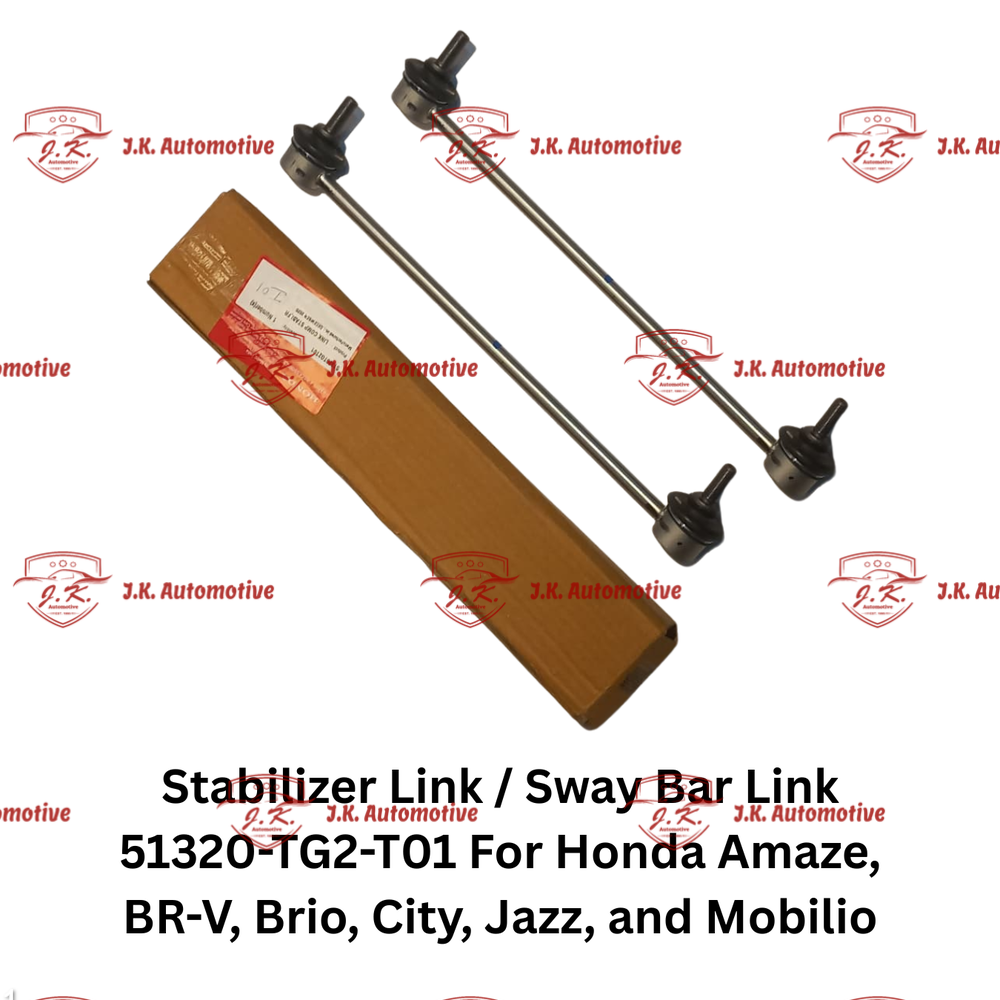
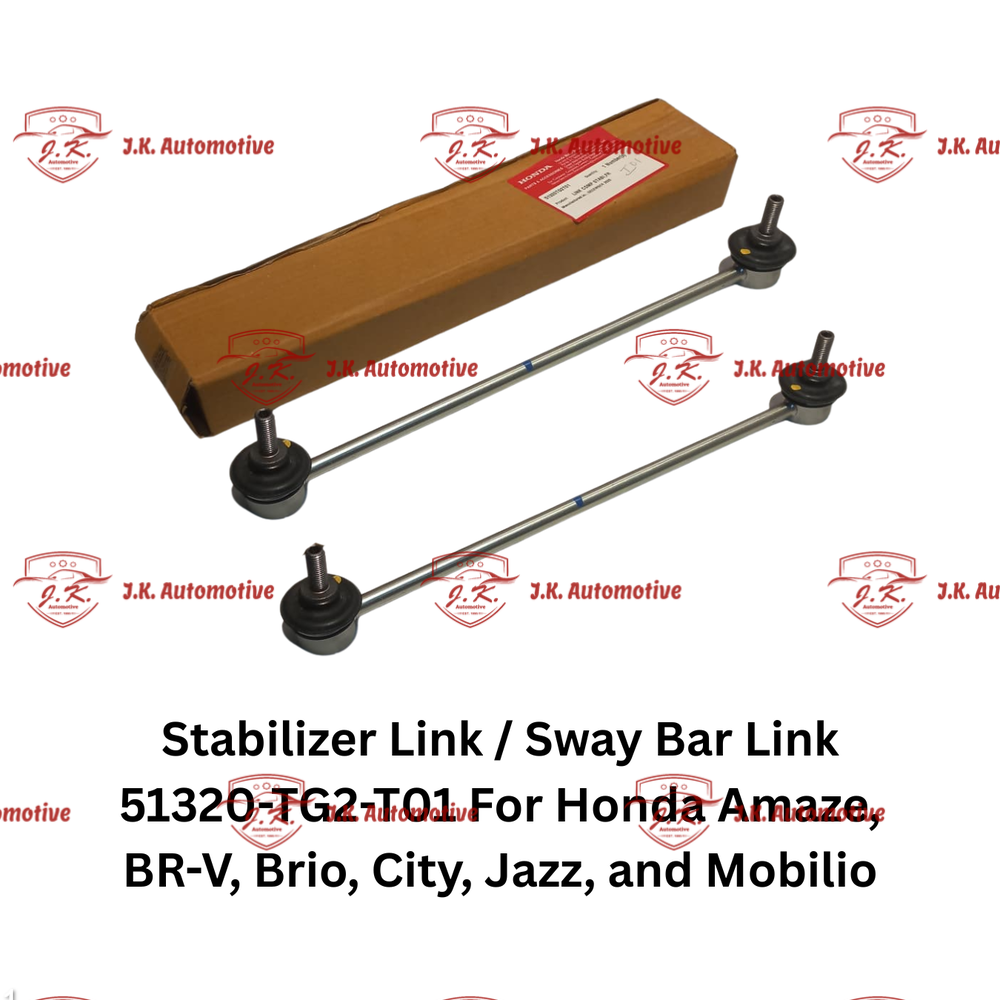
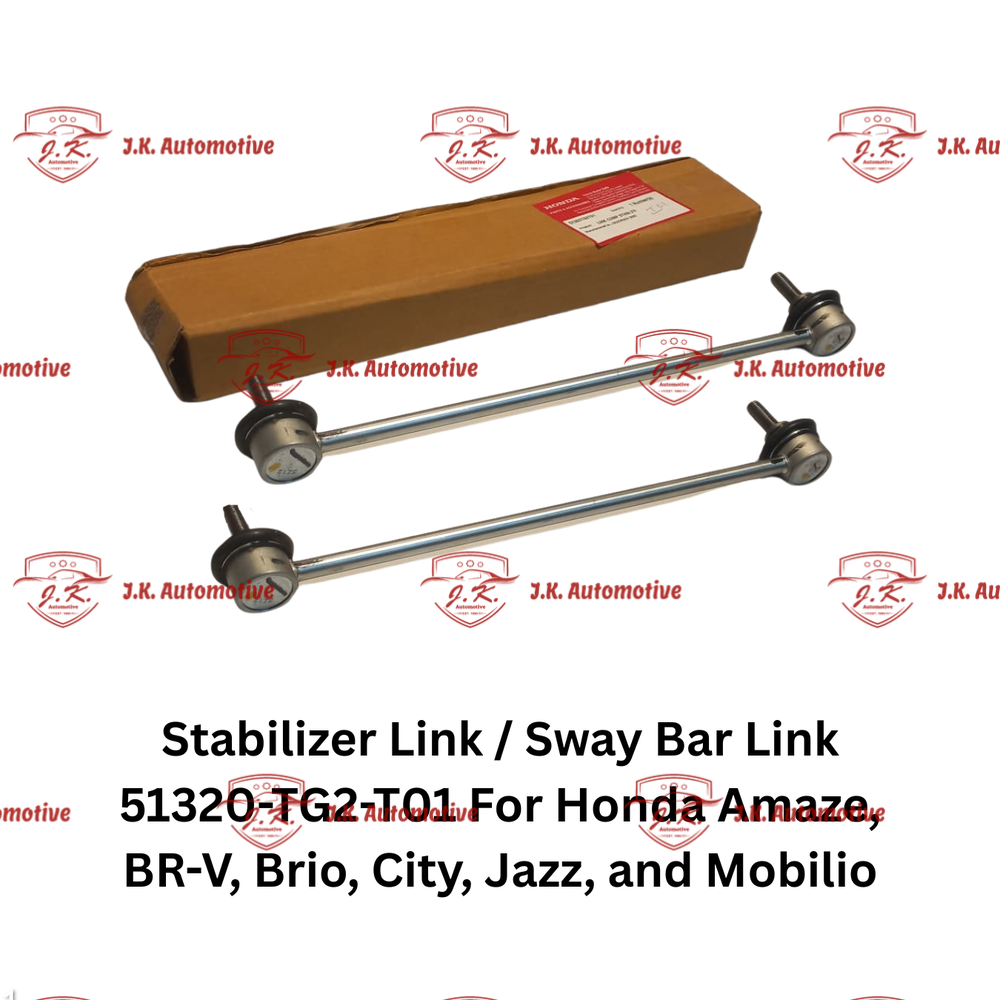
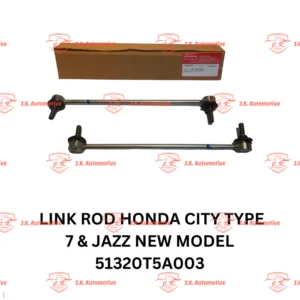
Yes. Genuine Honda Stabilizer Link / Sway Bar Link 51320-TG2-T01 is specifically engineered for compatible Honda Jazz models manufactured between 2015 and 2020. It is an original Honda OEM suspension component designed according to Honda's strict factory engineering standards to provide precise fitment, smooth suspension articulation and dependable long-term durability. The stabilizer link connects the anti-roll bar (sway bar) to the suspension assembly, helping distribute cornering forces evenly between both sides of the vehicle. This significantly reduces body roll, improves steering stability and enhances vehicle control while cornering, braking and driving on uneven roads. Over time, continuous exposure to rough roads, potholes, water and dust can wear the internal ball joints and protective boots. A worn stabilizer link may produce knocking noises from the suspension, loose steering feel, excessive body roll, uneven tyre wear and poor handling. Genuine Honda 51320-TG2-T01 is manufactured using high-strength steel, precision ball joints and durable rubber dust boots for exceptional strength and long service life. Replacing worn stabilizer links restores factory suspension performance, improves ride comfort and protects other suspension components from unnecessary stress. Before purchasing, always verify your VIN number or compare OEM part number 51320-TG2-T01 installed on your vehicle. Purchasing Genuine Honda suspension components from JK Automotive guarantees authentic OEM quality, exact fitment, expert technical guidance and dependable after-sales support.
What is the exact function of the Stabilizer Link (51320-TG2-T01) in a Honda Jazz (2015 – 2020)?
The stabilizer link, commonly referred to as the front sway bar link, functions as an essential connecting mechanism that bridges the gap between your front suspension strut assembly and the central anti-roll bar on your Honda Jazz. During vehicle movement, whenever your car encounters a curve, takes a sharp turn, or travels over uneven road surfaces, kinetic energy creates unequal vertical displacement between the left and right front wheels, causing body roll. The primary duty of the 51320-TG2-T01 stabilizer link is to instantaneously transfer these rotational and vertical forces from the lower suspension directly into the anti-roll bar. The bar then twists to resist this motion, forcing the inner wheel down and keeping the outer wheel firmly anchored to the pavement to minimize body lean. Inside each link are two precision ball joint studs housed in synthetic grease and protected by durable neoprene rubber boots, allowing smooth multi-axis articulation as the wheel moves up and down. Without a properly functioning stabilizer link, the anti-roll bar becomes completely isolated on one or both sides, rendering your anti-sway system ineffective and severely compromising your vehicle's stability during sudden evasive maneuvers. High-quality replacement links ensure that body movement remains controlled, steering input remains linear, and lateral tire grip is maximized across all driving conditions. In addition, functioning links prevent excessive weight transfer from overloading your front shocks, preserving suspension balance and preventing premature tire edge wear across both front wheels. Replacing worn units with the exact factory specification returns your steering feedback to factory-new levels while maintaining ride comfort across all pavement types.
Which vehicle models and manufacturing years are compatible with OEM Part 51320-TG2-T01?
The 51320-TG2-T01 stabilizer link is engineered as a direct original equipment replacement component tailored specifically for the 3rd Generation Honda Jazz (GK chassis) produced between 2015 and 2020 across both 1.2L i-VTEC petrol and 1.5L i-DTEC diesel powertrain options. Because Honda utilizes shared global platform architecture, this exact part number also cross-references and offers direct bolt-on compatibility with several companion models built on the same front subframe layout. These include the Honda City Type 5 (2009–2014), Honda Brio (2011–2018), Honda Amaze (2013–2018), Honda Mobilio (2014–2017), and select variants of the Honda BR-V depending on regional axle specifications. The overall link length, ball stud diameter, thread pitch, and joint articulation angles are manufactured to match original Honda factory assembly dimensions without requiring modifications, adapters, or custom alignment tweaks. Using this precise part number guarantees that the sway bar remains mounted at its designed operational geometry, preventing contact with the drive shafts, brake lines, or inner fender wells during full suspension compression. Before purchasing, vehicle owners should cross-check their chassis prefix or existing part stampings, as using incorrect aftermarket lengths can preload the sway bar artificially and impair handling response. Ensuring exact fitment protects your investment and ensures that steering geometry, turning radius, and wheel clearance remain fully compliant with factory engineering standards.
What are the primary symptoms of a failing front sway bar link in a Honda Jazz?
A failing front stabilizer link presents several clear diagnostic warning signs that indicate immediate attention is required to maintain vehicle safety and suspension integrity. The single most common symptom is a distinct, low-frequency metallic clunking, knocking, or rattling noise emanating directly from the front wheel arches when driving at low speeds over speed bumps, expansion joints, or unpaved roads. This noise occurs because the internal ball stud has worn down its socket seat, creating play that allows metal components to slam together whenever the wheel moves vertically. Another prominent symptom is noticeable excessive body roll and sway when taking corners or switching lanes on the highway, making the car feel unusually floaty, disconnected, or unstable through turns. Drivers may also notice a loose or delayed steering wheel response, where the vehicle feels sluggish to respond to initial steering inputs due to lost motion across the damaged joint sockets. Additionally, a severely degraded link with a torn dust boot will leak grease onto surrounding components, allowing road dirt and moisture to accelerate internal rusting and complete joint binding. In extreme cases of complete stud separation, the unattached link will hang free and potentially strike the front axle shaft or brake hose during sharp turns, creating hazardous conditions. Left unaddressed, the continuous vibration and unmitigated suspension movement accelerate wear on your front shock absorbers, lower control arm bushings, tie rod ends, and front tire treads, turning a simple repair into a costly multi-component suspension overhaul.
Why is it strongly recommended to replace stabilizer links in pairs (Left and Right)?
Automotive suspension engineers and professional mechanics strongly advise replacing front stabilizer links in pairs—both left and right sides simultaneously—to ensure symmetrical performance, safety, and longevity. Both front links operate under identical environmental conditions, carrying equal cornering stresses, bearing the same vehicle weight, and enduring every pothole and road bump over the exact same mileage interval. Therefore, when one stabilizer link develops excessive play, suffers a torn rubber boot, or fails completely, the opposite link has inevitably experienced equal wear and is approaching the end of its operational lifespan. Replacing only the broken side leaves an old, weakened component on the opposite side, creating an unequal distribution of torsional stiffness across the anti-roll bar during turns and emergency braking maneuvers. This imbalance forces the newly installed link to absorb a disproportionate share of the suspension load, which drastically accelerates its wear rate and often leads to premature failure within just a few thousand kilometers. Furthermore, mismatched link resistance causes predictable handling issues, where the vehicle may roll or react differently depending on whether you are making a left-hand or right-hand turn. Installing a pair of brand-new 51320-TG2-T01 links restores balanced factory damping and anti-roll characteristics across the entire front axle while saving you time and labor costs associated with repeated repair shop visits. Doing the job once for both sides provides complete peace of mind, consistent tire wear, and optimal stability across all road conditions.
What causes OEM stabilizer links to fail over time in a Honda Jazz?
The primary root cause of stabilizer link degradation and ultimate failure is the inevitable breakdown of its protective rubber dust boots combined with relentless mechanical shock loads over time. Modern sway bar links rely on hardened steel ball studs operating inside high-density plastic or composite sockets, lubricated permanently with synthetic heavy-duty grease and sealed tightly by rubber dust boots. Over years of regular driving, constant exposure to extreme ambient heat, road debris, engine bay temperatures, salt, and water causes the rubber boots to dry out, crack, or tear open. Once the airtight seal is compromised, high-pressure grease escapes from the socket assembly during suspension travel, while grit, sand, and water enter the joint chamber. The abrasive mixture acts like sandpaper against the polished ball stud, grinding down the metal surfaces, creating internal clearance, and introducing the looseness that generates loud knocking noises over bumps. Beyond environmental contamination, aggressive driving over severe potholes, high speed bumps, or unpaved surfaces exerts extreme tensile and compressive forces that stretch or deform the steel link body. In cold climates or coastal regions, road salt accelerates surface corrosion, rusting the threaded studs and weakening the structural joint housing until it eventually snaps under load. Choosing replacement links manufactured with UV-resistant neoprene boots, zinc-coated anticorrosive hardware, and premium synthetic grease ensures maximum durability and protects against premature wear caused by harsh driving conditions.
How can I verify that part number 51320-TG2-T01 is the correct fit for my specific Honda Jazz?
Confirming exact fitment for part number 51320-TG2-T01 before ordering guarantees seamless installation without unexpected mechanical delays or returning incompatible components. The most foolproof method is to inspect your vehicle's original factory part directly, as Honda typically stamps or prints the 10-digit OEM part code onto the metal shaft or packaging tag of factory-installed suspension hardware. Alternatively, you can locate your car's 17-digit Vehicle Identification Number (VIN) / Chassis Number—engraved on the engine firewall, vehicle registration document, or lower corner of the front windshield—and share it with your auto parts supplier. Automotive databases cross-reference this unique identifier with factory build sheets to confirm exact suspension codes, engine specifications, and model year trim levels. It is also helpful to measure the physical attributes of your existing link during routine maintenance, checking the center-to-center length between the ball studs, the bolt diameter, and the angle orientation of the upper and lower mounting studs. Beware of generic aftermarket cross-references that list one universal link for multiple unrelated car brands, as small variations in stud length can cause interference with the front brake lines or drive shafts during full steering lock. Verifying your Honda Jazz's production year (2015–2020) and chassis generation (GK) ensures that the 51320-TG2-T01 stabilizer link will bolt on cleanly, align precisely, and restore optimal suspension dynamics right out of the box.
Why is regular suspension maintenance important for my Honda Jazz?
Honda Jazz Stabilizer Link Genuine maintenance is essential because the suspension system directly affects steering precision, braking stability, ride comfort and tyre life. Components such as stabilizer links, stabilizer bushes, lower control arms, ball joints, shock absorbers and suspension mountings work together to absorb road impacts while maintaining continuous tyre contact with the road surface. During everyday driving over potholes, speed breakers and uneven roads, these suspension components gradually wear, reducing handling precision and vehicle stability. Ignoring worn stabilizer links can result in knocking noises, excessive body roll, poor steering response, uneven tyre wear and increased stress on expensive suspension components. Genuine Honda Stabilizer Link / Sway Bar Link 51320-TG2-T01 is specifically engineered for the Honda Jazz to provide factory-level suspension performance, precise steering control and exceptional durability. Replacing worn stabilizer links restores proper anti-roll bar function, improves ride quality, enhances cornering stability and significantly extends the service life of the complete suspension system. Genuine Honda suspension components are manufactured using premium OEM materials and factory-tested engineering standards to deliver exceptional durability under Indian driving conditions. Purchasing Genuine Honda 51320-TG2-T01 from JK Automotive guarantees 100% genuine OEM quality, exact fitment, expert technical guidance, secure packaging, fast shipping across India and dependable after-sales support, giving complete confidence every time you maintain your Honda Jazz suspension.



Reviews
There are no reviews yet.