What is SACHS 3000954585 Clutch Kit for Volkswagen Polo 1.2 Petrol?
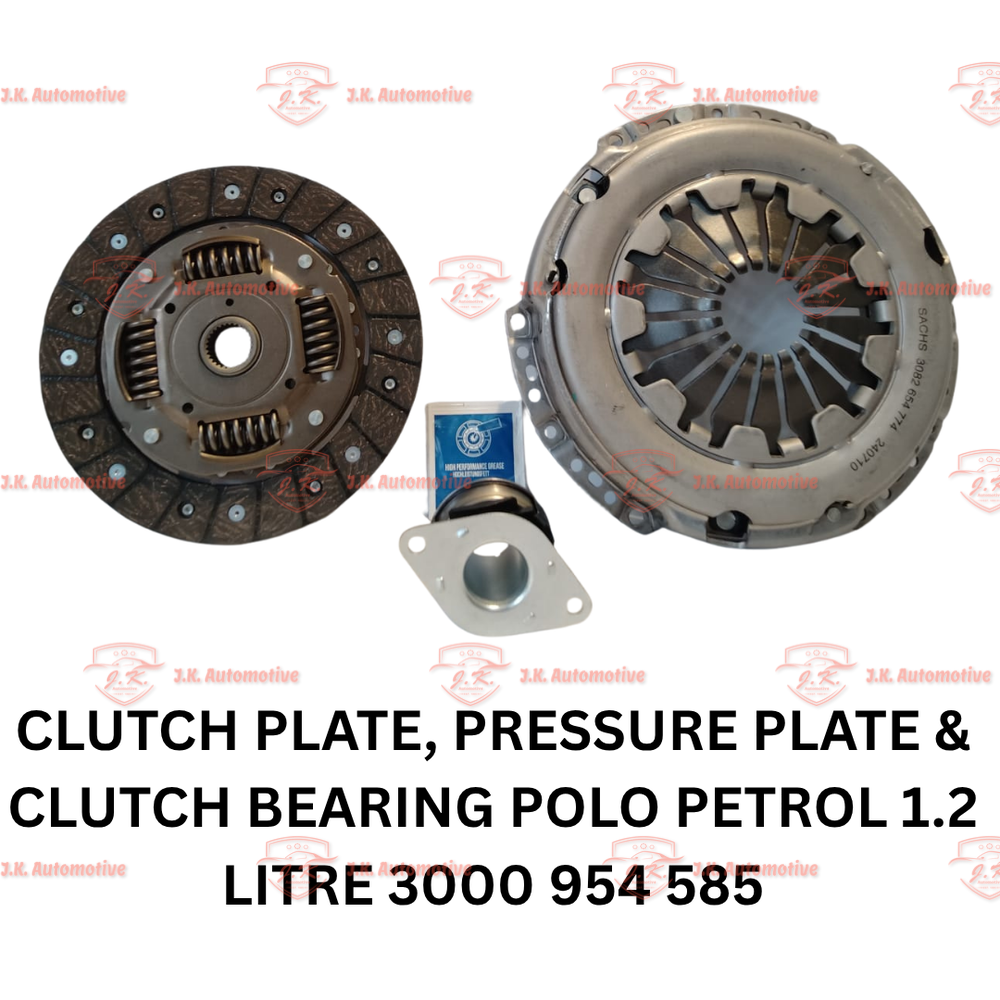
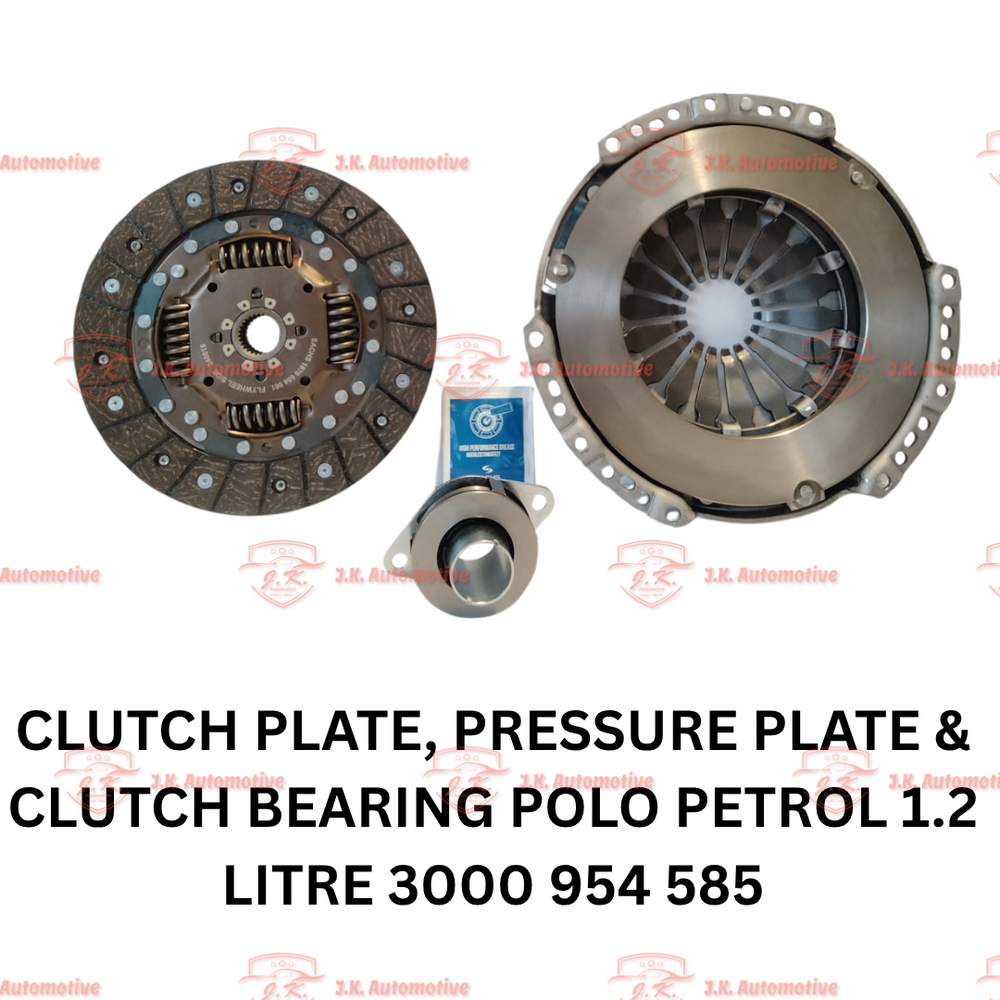
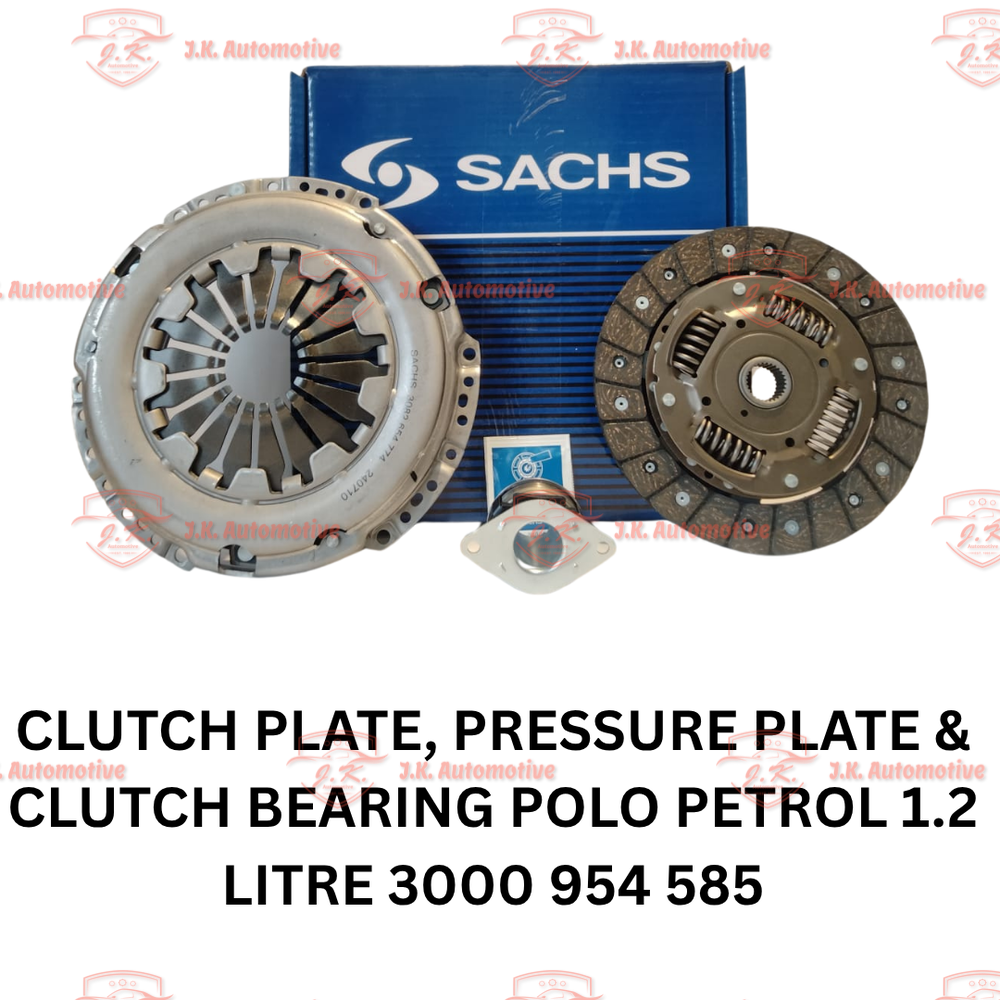
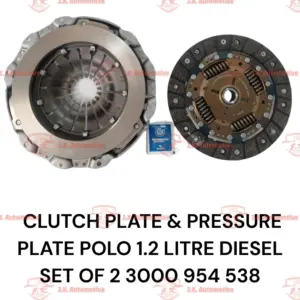
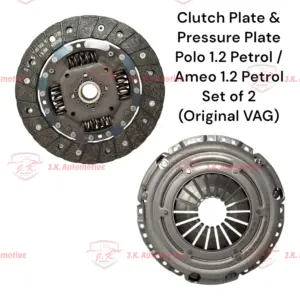
SACHS 3000954585 is a three-piece clutch kit specified here for compatible Volkswagen Polo 1.2 Petrol applications within the stated 2010–2022 period, subject to verification of the exact engine specification, gearbox configuration, production details and existing clutch references before ordering. The kit includes a clutch plate, pressure plate and release bearing, covering the principal components involved in clutch engagement and disengagement. The clutch plate, also known as the friction disc, operates between the engine flywheel and pressure plate. The pressure plate supplies the clamping force required to hold the clutch disc against the flywheel during normal driving. With the clutch pedal released, this clamping force creates the frictional connection required for engine torque to travel through the clutch toward the gearbox. When the driver presses the clutch pedal, the release mechanism moves the release bearing toward the pressure plate diaphragm spring or applicable release surface. The release bearing transfers axial force while accommodating rotational movement within the clutch mechanism. This action reduces the pressure plate's clamping force on the clutch disc. The clutch plate can then disengage sufficiently from the flywheel and temporarily interrupt engine-to-transmission torque transfer. This allows the driver to select another gear. When the clutch pedal is progressively released, the pressure plate begins restoring clamping force. The friction disc progressively reconnects with the flywheel and engine torque can again pass toward the transmission. All three components therefore perform interconnected functions during every clutch engagement and disengagement cycle. Repeated operation gradually wears the friction material on the clutch disc. The pressure plate can also experience mechanical wear, heat exposure and surface deterioration. The release bearing can develop roughness, excessive play or abnormal noise over time. Driving conditions, traffic, vehicle usage and clutch operation can influence component service life. A worn clutch may produce slipping, judder, vibration or inconsistent engagement. A deteriorated release bearing may produce whirring, rumbling, grinding or other noises that change with clutch-pedal operation. Similar symptoms can also originate from the flywheel, release mechanism, clutch actuation system or transmission. Correct diagnosis should therefore be completed before replacement. When installing SACHS 3000954585, inspect the flywheel, release mechanism and engine/transmission seals. Exact compatibility should be confirmed using the Volkswagen Polo 1.2 Petrol engine, gearbox, production information and existing clutch component references.
What are the benefits of installing SACHS 3000954585 on Volkswagen Polo 1.2 Petrol?
Installing SACHS 3000954585 can help restore the intended clutch operation of a compatible Volkswagen Polo 1.2 Petrol when diagnosis confirms that the existing clutch plate, pressure plate or release bearing requires replacement. One practical advantage of this three-piece kit is that the principal friction, clamping and release components can be replaced together during the same gearbox-removal procedure. The clutch plate provides the friction interface required to transfer engine torque. The pressure plate supplies the clamping force needed to hold the friction disc against the flywheel. The release bearing supports the disengagement process when the clutch pedal is pressed. With the pedal released, the pressure plate clamps the clutch disc against the flywheel. This establishes the mechanical connection required for engine torque to pass toward the gearbox. When the driver presses the clutch pedal, the release mechanism moves the bearing toward the pressure plate diaphragm spring or applicable release surface. The bearing transfers the axial force required to reduce pressure plate clamping. The clutch disc can then disengage sufficiently from the flywheel. Engine-to-transmission torque transfer is temporarily interrupted and another gear can be selected. Releasing the pedal progressively restores pressure plate clamping force and reconnects the drivetrain. Replacing an excessively worn clutch plate can address slipping when friction-material wear has been correctly identified as the cause. Replacing a deteriorated pressure plate can address clamping or release problems when diagnosis confirms the component is responsible. Replacing a worn release bearing can address bearing-related noise or roughness when those symptoms have been correctly diagnosed. Renewing these components together also provides an opportunity to inspect the rest of the clutch system while the transmission is removed. The flywheel should be checked for scoring, overheating and abnormal wear. Release-fork, pivot and guide components should be inspected where applicable. Engine and transmission seals should be checked for lubricant leakage because contamination can affect the replacement friction surfaces. The clutch actuation system should also be inspected for normal operation. Correct clutch alignment and gearbox installation are important during reassembly. SACHS 3000954585 should be verified against the exact Volkswagen Polo 1.2 Petrol engine, gearbox and production specification before installation.
What are the signs that the Volkswagen Polo 1.2 Petrol clutch kit may need replacement?
Several symptoms can indicate that the clutch system in a Volkswagen Polo 1.2 Petrol requires inspection, although professional diagnosis should be completed before deciding that SACHS 3000954585 needs replacement. One common clutch-related symptom is slipping during acceleration or when the engine is placed under increased load. In this condition, engine RPM may increase without a proportional increase in vehicle speed. Excessive wear of the clutch plate friction material can reduce its ability to maintain the required frictional connection. Oil or lubricant contamination can also cause slipping even when friction material remains present. Clutch judder or vibration while moving away from a standstill can indicate that the clutch system requires inspection. An inconsistent or noticeably altered engagement point may also indicate deterioration. Difficulty transferring engine torque under load can occur when the clutch disc or pressure plate cannot maintain the required connection. A deteriorated pressure plate can influence clamping or release behaviour. Gear-selection difficulty can sometimes occur if the clutch does not disengage sufficiently. Abnormal noise that changes when the clutch pedal is pressed or released can indicate possible release-bearing wear. A deteriorated bearing may produce whirring, rumbling, grinding or scraping noises during operation. However, these symptoms are not exclusive to the three components included in the clutch kit. Flywheel deterioration can cause vibration, noise or irregular engagement. Release-fork or guide-mechanism problems can interfere with clutch disengagement. Clutch actuation faults can produce incomplete release. Engine and transmission mounts can influence vibrations experienced during clutch engagement. Transmission problems can also affect gear selection and be mistaken for clutch failure. A complete diagnosis should therefore consider the entire clutch and drivetrain system. Once the gearbox is removed, inspect the clutch disc for excessive wear, glazing, contamination, cracking or heat damage. Check the pressure plate friction surface and diaphragm area for abnormal deterioration. Inspect the release bearing for roughness, excessive play or damaged contact surfaces. The flywheel should also be examined according to the applicable repair procedure. Engine and transmission seals should be inspected for leakage. If replacement is confirmed, verify SACHS 3000954585 against the exact engine, gearbox and existing clutch specifications.
Why are the clutch plate, pressure plate and release bearing important for Volkswagen Polo 1.2 Petrol?
The clutch plate, pressure plate and release bearing are important for the Volkswagen Polo 1.2 Petrol because each performs a different but interconnected function in controlling engine-to-transmission torque transfer. The clutch plate is the friction component positioned between the engine flywheel and pressure plate. Its friction surfaces provide the connection required to transfer engine torque when the clutch is engaged. The pressure plate supplies the clamping force required to hold the clutch plate against the flywheel. With the clutch pedal released, this clamping force keeps the friction disc engaged and allows torque to travel from the engine toward the transmission. The release bearing becomes particularly important when the driver needs to disengage the clutch. Pressing the clutch pedal activates the clutch release mechanism. This moves the release bearing toward the pressure plate diaphragm spring or corresponding release surface. The bearing accommodates rotational movement while transferring the axial force required to operate the pressure plate. The pressure plate then reduces its clamping force on the clutch disc. The friction disc can disengage sufficiently from the flywheel. Engine-to-transmission torque transfer is temporarily interrupted and another gear can be selected. When the driver progressively releases the clutch pedal, the release mechanism returns. The pressure plate begins restoring clamping force. The clutch disc progressively reconnects with the flywheel and torque transfer resumes. This engagement and disengagement process occurs repeatedly throughout normal vehicle operation. Wear in any of these components can influence clutch behaviour. Excessive friction-disc wear may contribute to slipping. Pressure plate deterioration can affect clamping or release characteristics. Release-bearing wear can cause roughness or abnormal noise during clutch operation. The flywheel is also important because it provides one of the operating surfaces for the clutch disc. Release-fork, guide and actuation components must also function correctly. Lubricant contamination from leaking seals can adversely affect the friction surfaces. These related components should therefore be inspected when installing SACHS 3000954585. Exact Volkswagen Polo 1.2 Petrol compatibility should be confirmed before ordering.
Is SACHS 3000954585 suitable for Volkswagen Polo 1.2 Petrol models from 2010–2022?
SACHS 3000954585 is specified here for compatible Volkswagen Polo 1.2 Petrol applications within the stated 2010–2022 period, but the year range should be treated as an application guide rather than the sole method of determining compatibility. Vehicle manufacturers can use different clutch specifications according to engine version, gearbox configuration, production period and other mechanical variations. The exact 1.2 Petrol engine specification should therefore be confirmed before ordering the kit. Gearbox identification is particularly important because the clutch disc and release components must correspond correctly with the transmission fitted to the individual vehicle. Production information may also influence compatibility if clutch or gearbox specifications changed during the model lifecycle. Registration year alone should not be considered definitive proof that a particular clutch kit will fit. Previous clutch or transmission repairs should also be considered because replacement components may have been installed during earlier service work. Where possible, references from the existing clutch assembly should be compared with SACHS 3000954585. Vehicle identification details and suitable parts-catalogue information can provide additional confirmation. Visual similarity alone should not be used as proof of interchangeability. The clutch plate must have the appropriate dimensions, hub and spline configuration for the application. The pressure plate must correspond with the applicable flywheel and release system. The release bearing must also match the release arrangement used by the gearbox. Once compatibility is confirmed, the flywheel should be inspected before installing the new clutch kit. Its friction surface should be checked for scoring, overheating and abnormal deterioration. Release-fork and guide components should also be examined where applicable. Engine and transmission seals around the bellhousing should be inspected for leakage. Any source of clutch contamination should be corrected before installation. Professional installation is recommended because clutch replacement normally requires transmission removal, accurate clutch alignment and careful reassembly. Confirm the exact Volkswagen Polo 1.2 Petrol engine, gearbox, production details and existing component references before purchasing SACHS 3000954585.
How does SACHS 3000954585 support clutch engagement, disengagement and gear changing in Volkswagen Polo 1.2 Petrol?
SACHS 3000954585 supports clutch engagement and disengagement in compatible Volkswagen Polo 1.2 Petrol applications through the coordinated operation of its clutch plate, pressure plate and release bearing. When the clutch pedal is released, the pressure plate applies clamping force to the clutch plate and holds it against the engine flywheel. The friction generated between these surfaces allows engine torque to pass through the clutch toward the gearbox. This engaged condition provides the mechanical connection required for the transmission to receive engine power. When the driver presses the clutch pedal to change gears, the clutch actuation mechanism moves the release bearing toward the pressure plate diaphragm spring or applicable release surface. The release bearing accommodates rotational movement while transmitting the axial force required to operate the pressure plate. The pressure plate then reduces its clamping force on the friction disc. This allows the clutch plate to disengage sufficiently from the flywheel. Engine-to-transmission torque transfer is temporarily interrupted while the driver selects another gear. When the clutch pedal is progressively released, the release mechanism returns and the pressure plate begins restoring clamping force. The clutch plate progressively reconnects with the flywheel. Engine torque can then pass through the clutch toward the gearbox again. Controlled friction during this transition also allows the vehicle to move progressively from a standstill. The clutch plate, pressure plate and release bearing therefore function as an interconnected system. Excessive friction-disc wear can reduce the clutch's ability to transfer torque effectively. Pressure plate deterioration can influence clamping and release characteristics. Release-bearing deterioration can produce noise, roughness or other symptoms during pedal operation. Flywheel condition can also significantly influence clutch engagement and should be inspected during replacement. Release-fork, guide and actuation components should be checked at the same time. Any lubricant leakage around the bellhousing should be corrected before installing the replacement components. Correct clutch alignment, gearbox installation and applicable adjustment procedures are important during reassembly. SACHS 3000954585 should be installed only after confirming the exact engine, gearbox and application details for the Volkswagen Polo 1.2 Petrol.
Why should a worn clutch kit be replaced on Volkswagen Polo 1.2 Petrol?
A worn clutch kit should be replaced on a Volkswagen Polo 1.2 Petrol when proper diagnosis confirms excessive clutch plate wear, pressure plate deterioration, release-bearing damage, slipping or another problem affecting normal clutch operation. SACHS 3000954585 contains the clutch plate, pressure plate and release bearing, which work together during clutch engagement and disengagement. When the clutch pedal is released, the pressure plate applies clamping force to the clutch plate and holds it against the flywheel. This creates the frictional connection required to transfer engine torque toward the gearbox. As the clutch plate accumulates operating cycles, its friction material can gradually wear. Excessive friction-material wear can reduce the clutch's ability to maintain effective torque transfer under load. A common symptom can be clutch slipping, where engine RPM increases without a proportional increase in vehicle speed. The pressure plate also experiences repeated mechanical and thermal loading throughout its service life. Deterioration of the pressure plate can influence the clamping force applied to the friction disc. Heat-related wear or surface deterioration may also affect clutch engagement characteristics. The release bearing performs a different but equally important function. When the clutch pedal is pressed, the bearing transfers axial release force toward the pressure plate diaphragm spring or applicable release surface. A worn bearing may develop roughness, excessive play or abnormal noise. Whirring, rumbling, grinding or scraping sounds that change with clutch-pedal operation can justify further inspection. Clutch judder, vibration, inconsistent engagement or an altered engagement point can also indicate that the system requires diagnosis. These symptoms should not automatically be attributed to the three components in the clutch kit. Flywheel deterioration, release-fork wear, clutch actuation faults, lubricant contamination or transmission-related problems can produce similar symptoms. Correct diagnosis is therefore important before replacement. Once the gearbox is removed, the flywheel should be inspected for scoring, overheating and abnormal wear. Release-fork, pivot and guide components should be checked where applicable. Engine and transmission seals around the bellhousing should also be inspected for leakage. Any contamination source should be corrected before the new friction components are installed. SACHS 3000954585 should be verified against the exact Volkswagen Polo 1.2 Petrol engine, gearbox and production specification before installation.
How does SACHS 3000954585 help support smooth clutch operation in Volkswagen Polo 1.2 Petrol?
SACHS 3000954585 helps support normal clutch operation in compatible Volkswagen Polo 1.2 Petrol applications by combining the clutch plate, pressure plate and release bearing responsible for the main friction, clamping and release functions of the clutch system. The clutch plate operates between the flywheel and pressure plate and provides the friction interface required for engine-to-transmission torque transfer. The pressure plate applies the clamping force needed to hold the clutch disc against the flywheel. When the clutch pedal is fully released, these components establish the mechanical connection between the engine and gearbox. Engine torque can then travel through the clutch toward the transmission. When the driver presses the clutch pedal, the clutch actuation mechanism moves the release bearing toward the pressure plate diaphragm spring or applicable release surface. The release bearing accommodates rotational movement while transferring the axial force required for disengagement. This action reduces the pressure plate's clamping force on the clutch disc. The friction disc can then disengage sufficiently from the flywheel. Engine-to-transmission torque transfer is temporarily interrupted, allowing the driver to select another gear. When the clutch pedal is progressively released, the pressure plate begins restoring clamping force. The clutch plate progressively reconnects with the flywheel and torque transfer resumes. Controlled engagement is particularly important when moving away from a standstill and during normal gear changes. A serviceable clutch plate supports the required frictional connection. A correctly functioning pressure plate supplies the necessary clamping force. A serviceable release bearing supports controlled operation of the release mechanism. Overall clutch behaviour, however, also depends on the condition of the flywheel and associated actuation components. Oil or transmission-fluid contamination can adversely affect the friction surfaces. Release-fork, pivot or guide wear can interfere with normal clutch disengagement. Engine and gearbox mounts can also influence vibrations experienced during clutch engagement. These related components should therefore be inspected when the clutch kit is replaced. Correct clutch alignment and gearbox installation are important during reassembly. Before fitting SACHS 3000954585, verify the exact Volkswagen Polo 1.2 Petrol engine, gearbox and production specifications.
Should the flywheel and other clutch components be inspected when replacing SACHS 3000954585 on Volkswagen Polo 1.2 Petrol?
Yes, the flywheel and other related clutch components should be inspected when replacing SACHS 3000954585 on a Volkswagen Polo 1.2 Petrol because gearbox removal provides direct access to components that can influence the operation and service life of the replacement clutch plate, pressure plate and release bearing. The flywheel provides one of the principal friction surfaces against which the clutch disc operates. Its condition can therefore directly influence clutch engagement, friction behaviour and torque transfer. The flywheel should be inspected for scoring, overheating, abnormal surface deterioration, cracking or other damage according to the applicable repair procedure. It should not automatically be reused simply because a new clutch kit is being installed. The clutch release mechanism should also be inspected carefully. Although SACHS 3000954585 includes a release bearing, other release-system components may have accumulated significant wear. The release fork should be examined for damaged or worn contact areas where applicable. Pivot points and guide surfaces should also be inspected because deterioration can interfere with normal bearing movement. The clutch actuation system should be checked to ensure that it provides the movement required for proper disengagement. Relevant hydraulic or mechanical actuation components should be inspected according to the vehicle configuration. Engine and transmission seals around the bellhousing should also be checked carefully. Oil or transmission lubricant reaching the clutch friction surfaces can contribute to slipping, judder or contamination. Any leakage should therefore be corrected before the replacement clutch components are installed. The transmission input area should also be examined where appropriate. The removed clutch plate should be inspected because its wear pattern may provide useful information about the previous clutch condition. The old pressure plate should be checked for heat damage, friction-surface deterioration and abnormal diaphragm wear. The removed release bearing should be examined for roughness, excessive play or unusual contact marks. Inspecting these components can help identify the underlying cause of the original clutch problem. It can also reduce the possibility of installing a new clutch kit while leaving another deteriorated component unaddressed. Correct application of SACHS 3000954585 should be confirmed against the exact engine, gearbox and vehicle production details before final installation.
Is professional installation recommended for SACHS 3000954585 Volkswagen Polo 1.2 Petrol Clutch Kit?
Professional installation is strongly recommended for SACHS 3000954585 because replacement of a Volkswagen Polo 1.2 Petrol clutch kit normally requires gearbox removal, accurate clutch alignment, inspection of related drivetrain components and careful reassembly according to the applicable vehicle procedure. Before beginning the repair, compatibility of SACHS 3000954585 should be confirmed using the engine specification, gearbox configuration, production details and existing clutch references. The vehicle should be safely supported and the transmission prepared for removal using appropriate workshop equipment. Once the gearbox has been separated from the engine, the existing clutch assembly can be inspected directly. The old clutch plate should be checked for excessive friction-material wear, glazing, contamination, cracking or heat-related deterioration. The pressure plate should be inspected for scoring, overheating, abnormal friction-surface wear and diaphragm deterioration. The existing release bearing should also be checked for roughness, excessive play or physical damage. The flywheel should be carefully inspected before installation of the new clutch components. Engine and transmission seals around the bellhousing should be checked for leakage. Any source of lubricant contamination should be corrected before fitting the replacement clutch plate. The release fork, pivot points and guide mechanism should also be examined where applicable. During installation, the clutch disc must be correctly oriented and accurately aligned. The pressure plate should be installed using the applicable tightening sequence and procedure. Correct clutch alignment is important so the gearbox input shaft can enter the assembly without damaging the replacement components. The new release bearing must also be correctly positioned within the release mechanism. Lubrication should only be applied where specified and excessive lubricant should not reach the clutch friction surfaces. During gearbox refitting, the transmission should be properly aligned with the engine rather than being forced into position using mounting bolts. Applicable fasteners should be tightened according to the vehicle-specific repair procedure. Any required clutch actuation, hydraulic bleeding or adjustment procedure should then be completed. After reassembly, clutch engagement, disengagement and gear selection should be checked before normal vehicle operation.
Why is SACHS considered a strong choice for Volkswagen Polo 1.2 Petrol clutch kit replacement compared with Bilstein?
SACHS and Bilstein are both established German automotive brands, but their principal product specializations are different, which is particularly relevant when selecting replacement components for a Volkswagen Polo 1.2 Petrol clutch system. SACHS has extensive product coverage in clutch and drivetrain categories, including clutch plates, pressure plates, complete clutch kits, release components and flywheel-related applications. Bilstein, in comparison, is principally associated with suspension damping products such as shock absorbers, struts and performance suspension components. SACHS 3000954585 is directly relevant to this repair because it is a three-piece clutch kit containing a clutch plate, pressure plate and release bearing for compatible applications. The clutch plate provides the friction interface required to transfer engine torque. The pressure plate supplies the clamping force needed to hold the friction disc against the flywheel. The release bearing transfers the force required to operate the pressure plate release mechanism when the clutch pedal is pressed. With the clutch engaged, the pressure plate holds the friction disc against the flywheel and allows torque to travel toward the gearbox. When the driver presses the clutch pedal, the release bearing acts on the pressure plate mechanism. The pressure plate reduces its clamping force and allows the clutch disc to disengage sufficiently from the flywheel. Engine-to-transmission torque transfer is then temporarily interrupted so the driver can change gears. These are specialized clutch and drivetrain functions. Bilstein's principal suspension products perform a different mechanical function by controlling suspension movement and damping. A Bilstein shock absorber or suspension strut is therefore not a direct alternative to SACHS 3000954585 for this clutch-system repair. The useful comparison between SACHS and Bilstein in this application is based on their respective product-category specialization rather than suggesting that either manufacturer is universally superior. For Volkswagen Polo clutch replacement, correct engine application, gearbox compatibility, clutch dimensions and component specification remain more important than general brand reputation alone. SACHS 3000954585 provides a specific clutch-kit reference that can be checked against the vehicle and existing clutch components. The flywheel and associated release mechanism should also be inspected during replacement. Engine and transmission seals should be checked for leakage before installing the new friction components. Exact Volkswagen Polo 1.2 Petrol engine, gearbox and production details should be verified before ordering.

Reviews
There are no reviews yet.