What are Jaguar XJ X351 Front Lower Arms and what is their main function?
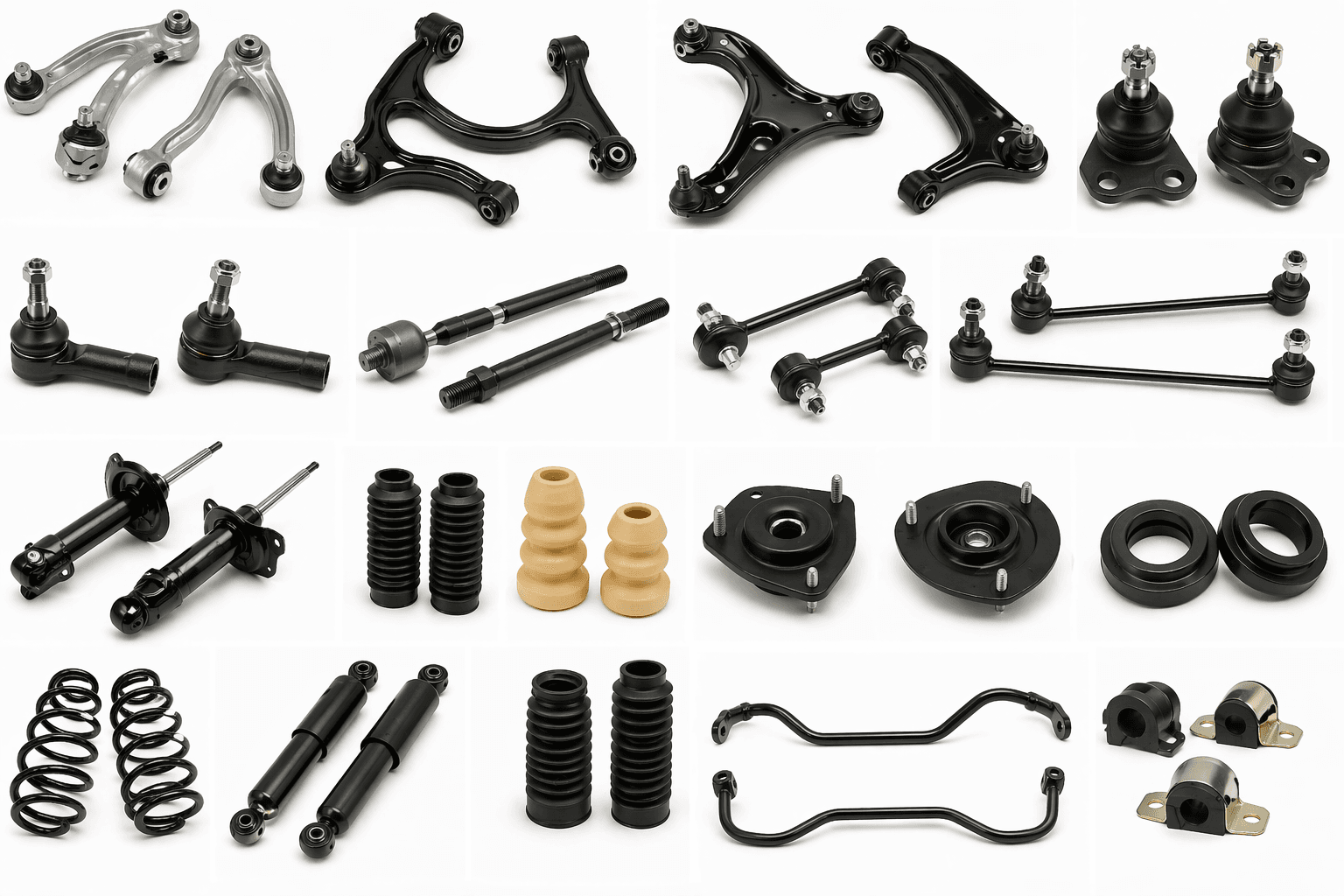
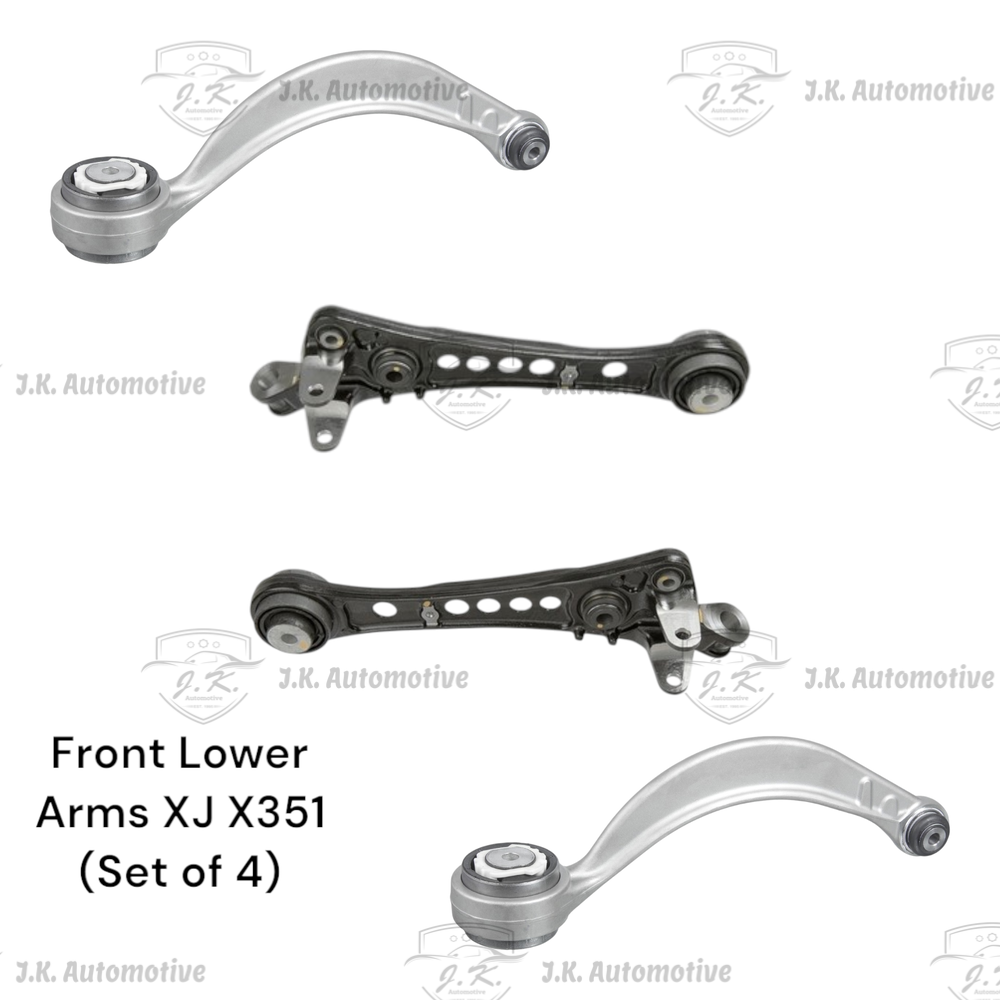
Jaguar XJ X351 Front Lower Arms are important components of the front steering and suspension system that help control wheel movement, maintain suspension geometry and support stable steering during everyday driving. This set of 4 is intended for Jaguar XJ X351 models from 2010–2019 and corresponds with the supplied OEM reference numbers C2D1537, C2D49934 and C2D1536. These suspension components are also commonly called lower control arms, wishbone arms or suspension arms because they form part of the connection between the wheel-side suspension assembly and the vehicle chassis. While driving, the front wheels continuously move as the vehicle passes over normal road surfaces, potholes, speed breakers and uneven sections. The control arms help guide this movement while restricting unwanted forward, backward or sideways movement that could affect steering response and road stability. The arms and their bushes also experience substantial mechanical forces during acceleration, braking and cornering. Suspension bushes provide controlled flexibility so that the suspension can absorb movement and vibration without allowing excessive movement of the wheel assembly. Over time, repeated road impacts, vehicle mileage, heat, ageing and normal suspension movement can cause bushes and associated mounting areas to deteriorate. When significant wear develops, the driver may begin to notice knocking or clunking noises, vibration through the steering wheel, vague steering response, movement during braking, reduced road stability or uneven tyre wear. Replacing components that have been professionally confirmed as worn can help reduce unwanted movement and restore more controlled suspension operation. These arms work together with shock absorbers, ball joints, steering tie rod ends, wheel bearings, Sway bar links, Sway links, Anti roll link rods, Stabiliser sway links and other suspension bushes. Because several suspension components can produce similar symptoms, a complete inspection is recommended before replacing parts. The OEM references C2D1537, C2D49934 and C2D1536 should also be compared with the existing components or appropriate VIN/chassis-based parts information before ordering. Correct professional installation is important because control arms influence wheel position and suspension geometry. A wheel alignment check is recommended after replacement to help maintain accurate steering, straight-line stability, predictable handling and balanced tyre wear.
Which Jaguar XJ models are compatible with Front Lower Arms C2D1537, C2D49934 and C2D1536?
This Front Lower Arms Set of 4 is intended for the supplied Jaguar XJ X351 application covering model years 2010–2019 and carries OEM cross-reference numbers C2D1537, C2D49934 and C2D1536. Customers searching for Jaguar XJ X351 Front Lower Arms, Jaguar XJ lower control arms, X351 wishbone arms or Jaguar XJ suspension arms should use the model designation, X351 chassis information, production details and supplied OEM references together when checking compatibility. Correct identification is particularly important with steering and suspension components because different versions can sometimes look very similar while having differences in dimensions, bush positions, mounting points or other fitment characteristics. Customers should therefore avoid selecting replacement arms based only on appearance or photographs. The OEM numbers should be compared with the vehicle's existing components or suitable VIN/chassis-based parts information before ordering. This four-piece set is intended to provide multiple replacement components within the front suspension arrangement rather than functioning as one individual arm. The suspension arms help locate the wheels while allowing controlled movement when the vehicle accelerates, brakes, corners or passes over uneven road surfaces. With increasing age and mileage, the bushes and mounting areas can gradually deteriorate and allow excessive movement. This may contribute to knocking noises, vibration, vague steering response, movement during braking or uneven tyre wear. However, these symptoms can also originate from other steering or suspension components, which is why professional diagnosis is recommended before replacement. Ball joints, shock absorbers, tie rod ends, wheel bearings, Sway bar links, Sway links, Anti roll link rods, Stabiliser sway links and surrounding suspension bushes should also be inspected. Correct compatibility becomes particularly important when purchasing a complete set because each component must correspond with its intended suspension position. Customers should verify C2D1537, C2D49934 and C2D1536 against the particular Jaguar XJ X351 before installation. Once compatibility has been confirmed, professional fitting followed by a wheel alignment check is recommended to help maintain correct suspension geometry, steering accuracy, road stability and balanced tyre wear.
What OEM numbers are included in the Jaguar XJ X351 Front Lower Arms Set of 4?
The Jaguar XJ X351 Front Lower Arms Set of 4 corresponds with the supplied OEM reference numbers C2D1537, C2D49934 and C2D1536 for the stated 2010–2019 application. OEM reference numbers are extremely useful when searching for replacement steering and suspension components because they help customers and technicians identify the intended application more accurately than visual appearance alone. A complete suspension set can contain different arms for different positions, and individual components may have different part numbers even though they appear broadly similar when viewed in photographs. For this reason, C2D1537, C2D49934 and C2D1536 should remain part of the product information and should be checked carefully before ordering. Customers should compare these references with the existing suspension components or use suitable VIN/chassis-based parts information to confirm compatibility with the particular Jaguar XJ X351. Vehicle production changes and suspension specifications can affect fitment, so matching only the vehicle name or year is not always sufficient for every possible configuration. The four-piece set is designed to provide multiple components within the front suspension arrangement. These components help guide wheel movement while supporting suspension geometry and stable steering behaviour. During normal operation, they experience repeated loads from braking, acceleration, cornering, vehicle weight and road impacts. The bushes incorporated within the suspension arrangement allow controlled flexibility while helping prevent excessive wheel movement. As bushes age, they may crack, soften, deform, separate or develop excessive play. This can contribute to knocking noises, steering vibration, vague handling, unwanted movement or irregular tyre wear. However, correct diagnosis should be performed before replacement because similar symptoms may be produced by shock absorbers, ball joints, tie rod ends, wheel bearings, Sway bar links, Sway links, Anti roll link rods, Stabiliser sway links or other bushes. If the existing arms are confirmed as worn and the OEM references match, this set provides a practical option for replacing multiple front suspension components. Professional installation and a wheel alignment check are recommended after replacement to help maintain accurate wheel positioning and predictable road behaviour.
What are the common symptoms of worn Jaguar XJ X351 Front Lower Arms?
Common symptoms of worn Jaguar XJ X351 Front Lower Arms can include knocking or clunking sounds from the front suspension, steering-wheel vibration, loose or vague steering response, reduced stability, unusual movement during braking and uneven or premature tyre wear. Lower control arms and wishbone assemblies operate continuously whenever the vehicle is moving and experience substantial forces from acceleration, braking, cornering and road impacts. The suspension bushes incorporated into these assemblies are designed to provide controlled flexibility while maintaining the position of the wheel assembly relative to the chassis. Over time, rubber bushes can deteriorate because of age, mileage, repeated movement, heat and road conditions. They may crack, soften, deform, separate from their mounting areas or develop excessive play. When this happens, the wheel assembly can move more than intended as loads change during braking or cornering. One of the first symptoms may be an occasional knocking or clunking sound while travelling over potholes, rough surfaces or speed breakers. If deterioration becomes more significant, steering response may feel less precise and vibration may become noticeable through the steering wheel. The vehicle may also feel less settled during braking or directional changes. Excessive suspension movement can affect how consistently the wheels remain positioned, potentially contributing to irregular tyre wear. However, these symptoms should not automatically be treated as proof that the control arms are defective. Worn ball joints, steering tie rod ends, shock absorbers, wheel bearings, Sway bar links, Sway links, Anti roll link rods, Stabiliser sway links and other suspension bushes can create similar noises or handling problems. Tyre damage, incorrect tyre pressure, wheel imbalance and incorrect alignment can also contribute to vibration and abnormal tyre wear. A professional suspension inspection is therefore recommended before purchasing replacement components. If wear is confirmed in the relevant arms, this set of 4 with OEM references C2D1537, C2D49934 and C2D1536 provides a replacement option for the stated Jaguar XJ X351 2010–2019 application. Correct OEM compatibility should be verified before professional installation, followed by a wheel alignment check.
What are the benefits of replacing Jaguar XJ X351 Front Lower Arms as a complete set of 4?
Replacing Jaguar XJ X351 Front Lower Arms as a set of 4 can provide a more comprehensive suspension repair when professional inspection confirms significant wear across several corresponding control arm or wishbone components. This four-piece set is intended for Jaguar XJ X351 models from 2010–2019 and corresponds with OEM references C2D1537, C2D49934 and C2D1536. Multiple suspension arms within the same front axle operate under similar driving conditions and experience repeated mechanical loads from vehicle weight, acceleration, braking, cornering, potholes and uneven road surfaces. Although individual components do not necessarily wear at exactly the same rate, deterioration can develop across several bushes or arms as mileage increases. If inspection confirms significant wear in multiple corresponding components, replacing the required arms during the same repair can help restore more consistent suspension behaviour. Healthy suspension arms help guide wheel movement and restrict unwanted displacement, while worn bushes can allow excessive movement that may contribute to knocking, vibration, vague steering response or uneven tyre wear. Replacing confirmed worn components can therefore help reduce unwanted movement and support more predictable steering and suspension operation. A complete four-piece set may also be convenient during a planned front suspension overhaul because several related components can be addressed during the same workshop visit. However, parts should not be replaced unnecessarily simply because they are supplied together. A qualified technician should inspect the vehicle and determine which components require attention. Shock absorbers, ball joints, tie rod ends, wheel bearings, Sway bar links, Sway links, Anti roll link rods, Stabiliser sway links and surrounding bushes should also be checked because deterioration in these components can affect overall suspension performance. The supplied OEM numbers C2D1537, C2D49934 and C2D1536 should be verified against the specific vehicle before purchase. Correct installation is essential because the arms contribute directly to wheel location and suspension geometry. Professional fitting followed by wheel alignment can help maintain accurate steering, straight-line stability, balanced tyre contact and predictable road handling.
Can replacing worn Jaguar XJ X351 Front Lower Arms improve steering stability, handling and driving comfort?
Why are good-quality Jaguar XJ X351 Front Lower Arms important for suspension performance, steering control and road stability?
Jaguar XJ X351 Front Lower Arms are important components within the front suspension system because they help control wheel movement, maintain suspension geometry and support predictable steering behaviour during normal driving. This set of 4 is intended for Jaguar XJ X351 models from 2010–2019 and corresponds with the supplied OEM reference numbers C2D1537, C2D49934 and C2D1536. Lower control arms and wishbone assemblies form an important mechanical connection between the wheel-side suspension components and the vehicle chassis. During everyday driving, the front wheels need to move vertically when passing over potholes, speed breakers, uneven roads and changing road surfaces, but this movement must remain properly controlled. The suspension arms help guide the wheels through this movement while restricting excessive forward, rearward or lateral displacement that could negatively affect steering precision. These components also experience considerable mechanical forces during acceleration, braking and cornering. When the vehicle brakes, loads are transferred through the front suspension, while cornering creates lateral forces that must be controlled by the suspension structure. Bushes within the arm assemblies provide controlled flexibility and help absorb vibration while maintaining the required relationship between the wheel assembly and chassis. With age and mileage, bushes can crack, soften, deform, separate or develop excessive play. When this occurs, wheel positioning may become less consistent and symptoms such as knocking, clunking, steering vibration, vague handling, movement during braking or uneven tyre wear can develop. Using correctly matched replacement components after professional diagnosis can help reduce excessive suspension movement and restore more consistent steering and handling behaviour. Correct fitment is particularly important because suspension arms must match the required mounting points, dimensions and vehicle configuration. OEM references C2D1537, C2D49934 and C2D1536 should therefore be verified against the existing components or appropriate VIN/chassis-based parts information before ordering. The surrounding suspension system should also be inspected, including shock absorbers, ball joints, tie rod ends, wheel bearings and suspension bushes. Sway bar links, Sway links, Anti roll link rods and Stabiliser sway links can also produce noises or affect suspension behaviour when worn. Professional installation is recommended because correct positioning and tightening procedures are important. After installation, a wheel alignment check should be completed to help maintain accurate suspension geometry, straight-line stability, predictable steering and balanced tyre wear.
Should wheel alignment be performed after replacing Jaguar XJ X351 Front Lower Arms?
Yes, a professional wheel alignment check is strongly recommended after replacing Jaguar XJ X351 Front Lower Arms because control arms and wishbone assemblies are suspension locating components that influence wheel positioning and the overall geometry of the front suspension. This set of 4 is intended for Jaguar XJ X351 models from 2010–2019 and corresponds with OEM references C2D1537, C2D49934 and C2D1536. When existing control arm bushes become significantly worn, they may allow the wheel assembly to move beyond its intended controlled range. This additional movement can make wheel positioning less consistent during braking, acceleration and cornering and can sometimes contribute to irregular tyre wear or vague steering behaviour. Once worn components are removed and correctly matched replacement arms are installed, excessive movement caused by deteriorated bushes should be reduced. A professional alignment check allows a technician to measure the vehicle's wheel geometry after the suspension work and determine whether adjustment is required. Incorrect alignment can contribute to an off-centre steering wheel, pulling toward one side, reduced straight-line stability, inconsistent steering response and accelerated tyre wear. Alignment is especially useful after several suspension arms are replaced together because multiple suspension mounting points may have been disturbed during the repair. Before alignment is carried out, all replacement components should be correctly installed and tightened according to the appropriate repair procedure. Remaining steering and suspension components should also be inspected because excessive movement in another worn part can prevent an accurate alignment. Ball joints, tie rod ends, wheel bearings, shock absorbers and other suspension bushes should therefore be checked. Sway bar links, Sway links, Anti roll link rods and Stabiliser sway links should also be inspected when front suspension noises or handling problems are present. Tyre pressure, tyre condition and wheel balance should be considered because these can also influence steering feel and tyre wear. Correct product compatibility should be established before installation by checking C2D1537, C2D49934 and C2D1536 against the particular vehicle. After correct fitting, professional wheel alignment provides an important final stage of the suspension repair and can help maintain predictable steering response, balanced tyre contact, straight-line stability and consistent tyre wear.
Can worn Jaguar XJ X351 Front Lower Arms cause knocking sounds, steering vibration, loose handling and uneven tyre wear?
Yes, worn Jaguar XJ X351 Front Lower Arms can contribute to knocking or clunking sounds, steering vibration, loose or vague handling and uneven tyre wear when significant deterioration develops in their bushes, joints or mounting areas. Suspension arms operate continuously whenever the vehicle is moving and experience changing mechanical loads depending on driving conditions. Braking transfers considerable forces through the front suspension, acceleration changes the load on suspension components, cornering introduces lateral forces and rough roads generate repeated impacts. Rubber bushes within the suspension arrangement provide controlled flexibility so that the suspension can absorb movement while preventing excessive displacement of the wheel assembly. With age and mileage, these bushes can crack, harden, soften, deform, separate or develop excessive movement. A driver may initially notice a knocking or clunking sound when passing over a pothole, speed breaker or rough road. As deterioration increases, additional movement may become noticeable through the steering wheel as vibration or reduced steering precision. The vehicle may also feel less settled when braking or changing direction. Because suspension arms help maintain wheel position, excessive movement can influence how consistently the tyre contacts the road and may contribute to irregular or premature tyre wear. However, these symptoms do not automatically mean that C2D1537, C2D49934 or C2D1536 suspension arms require replacement. Several other components can create very similar symptoms. Ball joints, steering tie rod ends, wheel bearings, shock absorbers and surrounding suspension bushes should be inspected. Worn Sway bar links, Sway links, Anti roll link rods and Stabiliser sway links can also create knocking noises, especially on uneven roads. Tyre damage, incorrect tyre pressure, wheel imbalance and incorrect alignment can contribute to vibration or uneven tyre wear. A professional inspection is therefore important before purchasing replacement components. If significant wear is confirmed in the relevant arms and the supplied OEM references match the vehicle, this four-piece set provides a replacement option for the stated Jaguar XJ X351 2010–2019 application. Correct professional installation should be followed by a wheel alignment check to help restore controlled suspension geometry, stable steering and balanced tyre wear.
Why should worn Jaguar XJ X351 Front Lower Arms be replaced at the correct time instead of continuing to drive with damaged bushes?
Worn Jaguar XJ X351 Front Lower Arms should be replaced when professional inspection confirms significant bush deterioration, excessive movement, physical damage or another defect that prevents the suspension assembly from controlling the wheel correctly. These components are subjected to repeated mechanical loads throughout the life of the vehicle. Vehicle weight, braking forces, acceleration, cornering and road impacts all place stress on the arms, bushes and mounting points. Although suspension bushes are designed to tolerate continuous movement, they gradually deteriorate with age and mileage. Frequent use on damaged roads, repeated pothole impacts and harsh road conditions can place additional stress on these components. Early wear may appear as occasional knocking or clunking noises, particularly while travelling over uneven surfaces. As deterioration becomes more significant, excessive suspension movement may contribute to vague steering, vibration, reduced stability during braking or irregular tyre wear. Continuing to use a vehicle with significant suspension play can make it more difficult for the wheel assembly to maintain consistent positioning during changing driving loads. Replacement should nevertheless be based on proper inspection rather than age or mileage alone. A qualified technician should inspect the bushes, arms, mounting areas and surrounding suspension components to identify the actual source of the problem. Ball joints, tie rod ends, shock absorbers, wheel bearings and other bushes can produce similar symptoms. Sway bar links, Sway links, Anti roll link rods and Stabiliser sway links should also be checked when investigating knocking noises. If the required arms are confirmed as worn, this set of 4 corresponds with the supplied OEM references C2D1537, C2D49934 and C2D1536 for the stated Jaguar XJ X351 2010–2019 application. These references should be compared with the specific vehicle before ordering because correct compatibility is essential. Professional installation is recommended to ensure that the components are positioned and tightened correctly. A wheel alignment check should follow the replacement because suspension locating components can influence wheel geometry. Correct alignment helps maintain straight-line stability, predictable steering response, consistent tyre contact and balanced tyre wear.
Why is Stokes Germany a European-quality alternative to Lemförder, FEBI, Meyle and other established brands for Jaguar XJ X351 Front Lower Arms?

Reviews
There are no reviews yet.