How does engine air filter LR161843 specifically interact with the 3.0-liter Ingenium AJ300 P360 MHEV engine, electric supercharger (eSupercharger), twin-scroll turbocharger, 48V BiSG torque assist, and Terrain Response 2 AWD system in the Land Rover Discovery V (L462)?
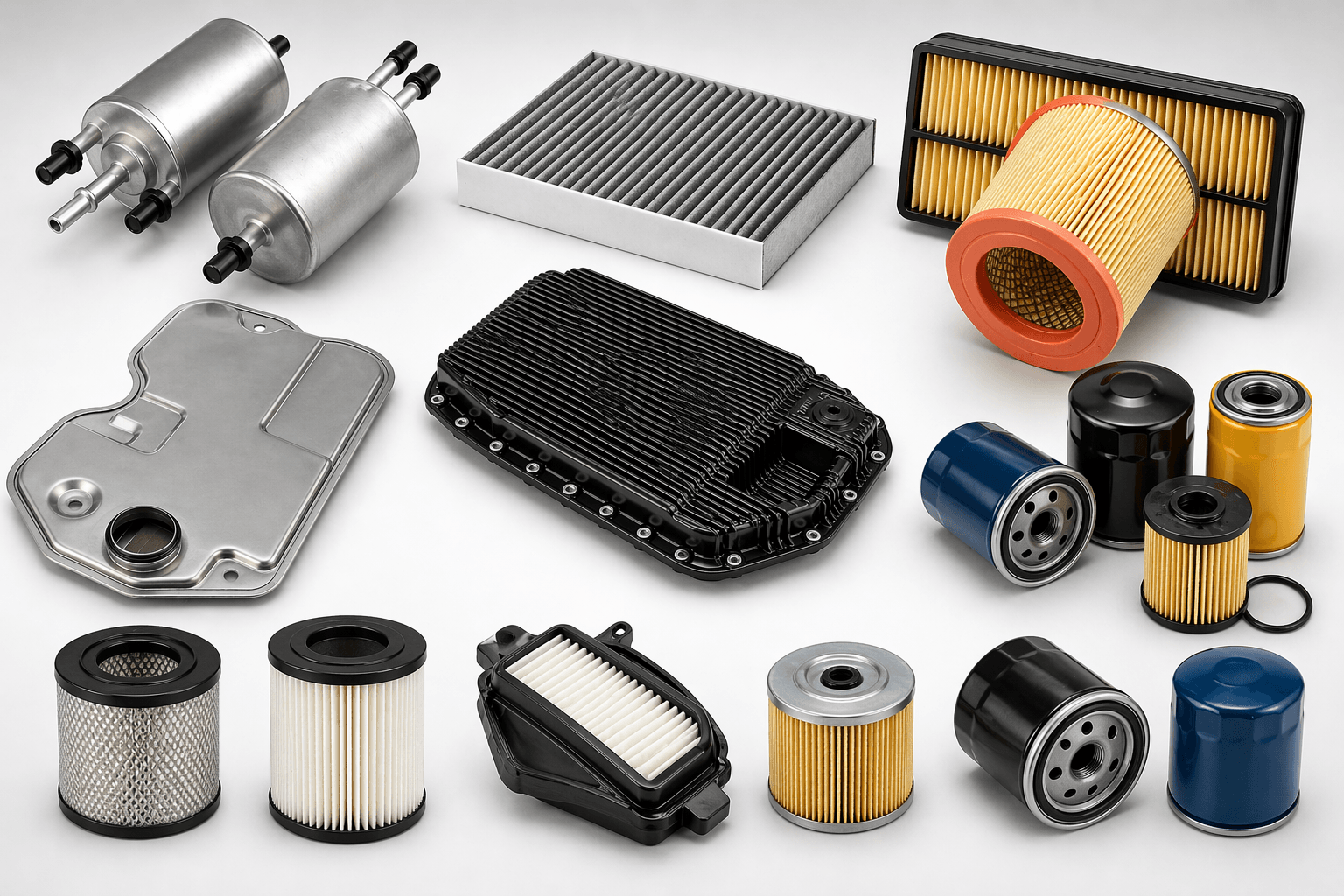
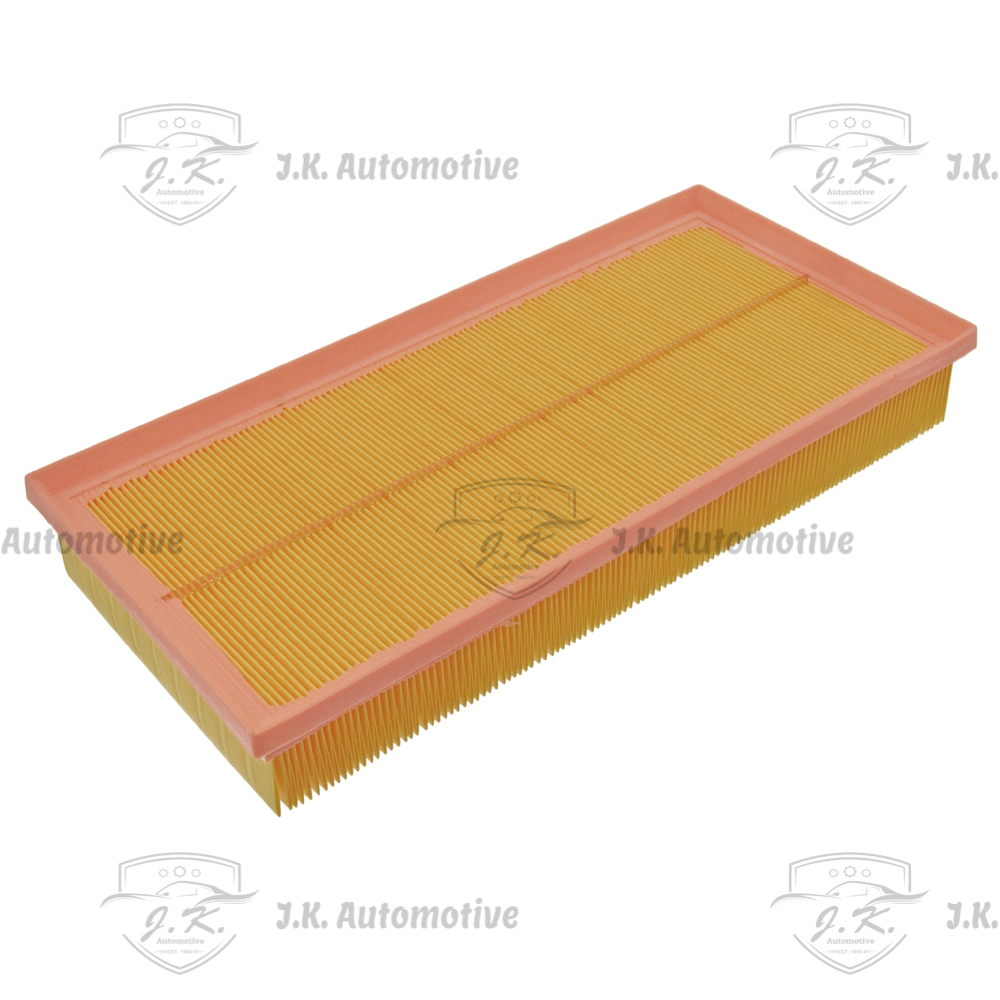
The Land Rover Discovery V (L462 chassis) produced from 2017 through 2026 equipped with the advanced 3.0-liter straight-six Ingenium P360 Mild Hybrid Electric Vehicle (MHEV) gasoline engine (AJ300 powertrain generating 360 PS and 500 Nm of torque) relies on a high-capacity, laminar, and thermally dense induction air supply to feed its dual-stage forced induction architecture—comprising a 48V electric supercharger (eSupercharger) capable of spooling to 120,000 RPM in under 0.5 seconds to eliminate low-end lag, a large twin-scroll turbocharger for high-RPM power, a 48V Belt-integrated Starter Generator (BiSG), 250+ bar direct injection, and full-time 4X4 Terrain Response 2 with twin-speed transfer box. Because a 2.3-ton luxury 7-seater operating under demanding off-road conditions—such as trail dust, fine silica sand dunes, mud ruts, and deep water wading up to 900 mm—operates under intense induction depression vacuum when both the eSupercharger and twin-scroll turbocharger demand massive air volume under heavy throttle application, part number LR161843 (interchangeable with engineering cross-references LR011593, AH42-9610-AA, and Jaguar reference C2Z15039) specifies a heavy-duty engine panel air filter element engineered specifically for the longitudinal airbox assembly in the L462 engine bay. Constructed with deep-pleated synthetic microfiber filtration media held at precise geometric intervals by transverse hot-melt stabilization lines, a rigid composite structural perimeter frame, and a high-density elastomeric perimeter sealing ring, this filter element is engineered to resist severe intake depression vacuum without pleat collapse, warping, or media deformation during rapid 48V eSupercharger spooling or low-range crawler gear operation. The precision elastomeric perimeter gasket compresses 100 percent flush into the plastic airbox seating channel, forming a dust-tight, vibration-isolated compression seal that prevents unmetered highway grit, fine silica sand, water vapor from deep 900 mm wading, and environmental soot from bypassing the media directly into the 48V eSupercharger and main turbocharger compressor inlets. By delivering clean, uniform, high-density airflow directly into the forced-induction tract, filter LR161843 prevents high-speed compressor blade micro-erosion, avoids thermal and voltage telemetry drift on the downstream hot-wire Mass Air Flow (MAF) sensor grid, preserves charge air intercooler heat transfer efficiency, and enables the Bosch MED17 powertrain control module (PCM) to seamlessly blend 48V electric torque fill with twin-scroll boost, execute precise closed-loop direct injection, and deliver smooth power through the 8-speed ZF automatic transmission across all driving surfaces without risking premature mechanical wear on internal engine components.
What advanced live parameter shifts, diagnostic trouble codes, and driving symptoms signal severe intake air restriction on air filter LR161843 in the Land Rover Discovery V (L462) P360 MHEV 4X4?
Diagnosing a restricted, saturated, or physically compromised engine air filter element under part number LR161843 on a Land Rover Discovery V (L462) P360 MHEV 4X4 requires evaluating physical vehicle driving characteristics alongside real-time live parameter logs using Land Rover Pathfinder, TOPIx Cloud, or advanced OBD-II diagnostic scan tools, as airborne silica dust, highway soot, pollen, mud splatter, and trail dust progressively pack the synthetic microfiber pleats and increase static suction resistance across the airbox housing over extended service intervals. Mechanically, because the forced-induction 360 PS AJ300 engine relies heavily on immediate air availability to feed both the 48V electric supercharger and main twin-scroll turbocharger while coordinating with 48V BiSG torque assist under load, a clogged filter starves the compressors of vital air volume, manifesting as pronounced off-the-line throttle hesitation, sluggish transient mid-range acceleration, delayed boost buildup during overtaking under heavy payload demand, an audible deep groaning induction strain from under the hood, a premature drop-off in top-end torque near redline, elevated fuel consumption as the driver presses deeper on the gas pedal to compensate for lost performance, and noticeable engine surging under steep incline climbing or heavy trailer towing up to 3,500 kg. Diagnostically, the Bosch MED17 powertrain control module (PCM) continuously monitors measured airflow mass via MAF/MAP sensor readings relative to charge pressure targets, eSupercharger speed, electronic wastegate actuator duty cycle, throttle valve angle, variable valve timing position, and engine speed. When measured air mass falls below expected theoretical targets during forced induction spooling, the PCM automatically scales back fuel injection pulse widths, limits eSupercharger activation duty cycles, and pulls back total boost targets to maintain safe combustion stoichiometry and avoid engine knocking, directly trimming total engine torque output. Sustained intake restriction will illuminate the Check Engine Light, trigger an amber "OK to drive with care" warning, or display a "Restricted Performance" message on the digital driver display while storing diagnostic trouble codes such as P0101 (Mass Air Flow Sensor Signal Implausible), P0299 (Turbocharger Underboost Regulation Limit Not Reached), P2279 (Intake Air System Leak), or positive long-term fuel trim corrections such as P0171 (System Too Lean Bank 1), signaling the technician to inspect and replace filter element LR161843 immediately to restore full factory performance.
How does replacing air filter LR161843 protect the 48V electric supercharger (eSupercharger), main twin-scroll turbocharger compressor wheel, Gasoline Direct Injection (GDI) intake valves, and Positive Crankcase Ventilation (PCV) system in the Land Rover Discovery V (L462) P360 MHEV 4X4?
Maintaining an unrestricted, high-flow air filter under part number LR161843 plays a vital role in protecting sensitive dual-stage forced-induction, intake, and emissions hardware on the 3.0-liter AJ300 Ingenium engine in the Land Rover Discovery V (L462) P360 MHEV, including the ultra-high-speed 48V electric supercharger, delicate aluminum main turbocharger compressor wheel, direct injection intake valves, and Positive Crankcase Ventilation (PCV) pressure-regulating valve. When air filter LR161843 is neglected and becomes choked with fine dust or dried mud crusts, the eSupercharger and main turbocharger create an abnormally high depression vacuum inside the inlet pipe between the airbox and compressor housings, pulling microscopic airborne silica dust through micro-gaps or degraded housing seals at extreme velocities. As these abrasive sand particles strike the high-speed rotating compressor blades of the eSupercharger (spinning up to 120,000 RPM) and the main turbocharger, they cause severe blade edge pitting, micro-erosion, and rotational unbalance, which accelerates shaft bearing wear, damages dynamic oil seals, and eventually leads to catastrophic forced-induction failure. Furthermore, severe intake vacuum downstream of a clogged filter places an extreme suction load on the PCV pressure-regulating valve integrated inside the engine valve cover assembly, causing the delicate internal rubber diaphragm to stretch, tear, or rupture prematurely, which pulls raw oil mist straight out of the crankcase into the charge air piping and intercooler where excess oil coats internal cooling fins, degrades thermal heat transfer efficiency, softens rubber boost hoses until structural blow-outs occur, and bakes into carbon sludge. Additionally, on direct-injection gasoline engines, fuel is injected directly into the combustion chamber rather than over the intake valves, meaning fuel never washes the intake valve ports; excessive oil mist pulled past a compromised PCV system under high intake vacuum combines with fine dust particles to form heavy, stubborn carbon crusts on intake valve stems, causing rough idling, cold-start misfires, sticking valves, and loss of cylinder compression over time, proving that timely replacement of filter element LR161843 is essential for long-term AJ300 engine health.
How does regular replacement of air filter LR161843 preserve charge air intercooler cooling efficiency, prevent thermal heat-soak power loss, and maintain target boost pressure under 48V MHEV assist in the Land Rover Discovery Sport / Discovery V (L462) P360 MHEV 4X4 during hot summer driving or 900 mm water wading?
The forced-induction 3.0-liter AJ300 engine in the Land Rover Discovery V (L462) P360 MHEV 4X4 relies heavily on its front-mounted charge air intercooler assembly to rapidly reduce intake manifold air temperatures after air exits the 48V eSupercharger and main twin-scroll turbocharger compressor at high pressure and temperature, ensuring maximum volumetric efficiency, air density, and oxygen content for cylinder combustion during heavy off-road crawling, sand dune climbing, high-ambient summer highway driving, or 900 mm water wading. When the engine panel air filter under part number LR161843 (and cross-references LR011593 / AH42-9610-AA) is neglected and becomes choked with accumulated trail dust, airborne silica sand particles, organic pollen, and highway exhaust soot, fine micro-particulates migrate past micro-gaps and enter the compressor inlet tract at ultra-high suction velocities. As the compressors spin at extreme rotational speeds to maintain target manifold boost pressures under heavy vehicle payloads, towing, or steep incline climbs while harmonizing with 48V Belt-integrated Starter Generator (BiSG) electric boost fill, they compress this contaminated intake air, blasting abrasive silica dust and trail grit downstream through the aluminum charge air piping directly into the delicate intercooler cooling channels. Over extended overland journeys, these abrasive micro-particulates mix with trace oily blow-by vapors recirculating from the Positive Crankcase Ventilation (PCV) system, forming a dense, sticky, thermal-insulating sludge that bakes directly onto the tightly spaced internal cooling fins of the intercooler assembly. This heavy internal sludge coating drastically degrades thermal conductivity and heat-exchange capability across the intercooler cores, causing intake manifold charge air temperatures to spike rapidly during sustained low-speed high-load off-roading, heavy towing, or high-speed summer highway cruising. When charge air temperatures exceed safe operational thresholds, oxygen density drops significantly, forcing the Bosch MED17 powertrain control module (PCM) to scale back fuel injection pulse widths, retard ignition timing advance maps, and bleed off wastegate boost pressure via the electronic wastegate actuator to prevent severe engine knocking, elevated exhaust gas temperatures (EGTs), and piston crown thermal stress. Furthermore, high-velocity silica grit blasted through the compressor housings causes abrasive surface pitting on internal aluminum intercooler channels, eventually leading to micro-fractures, boost pressure leaks, audible whistling under load, and costly intercooler assembly replacement. Routinely replacing engine air filter LR161843 keeps the compressors and charge air piping pristine, preserving maximum intercooler heat transfer efficiency, maintaining low charge air temperatures, and guaranteeing full 360 PS factory horsepower and 500 Nm torque output even under extreme hot-weather or demanding 4X4 overland conditions.
What specific fluid dynamic impact does a restricted air filter LR161843 have on ZF 8-speed automatic shift schedules, calculated engine load vectors, 48V MHEV torque fill integration, Electronic Air Suspension (EAS) load leveling, and Terrain Response 2 AWD power distribution in the Land Rover Discovery V (L462) P360 MHEV 4X4?
The Bosch MED17 powertrain control module (PCM), ZF 8HP 8-speed automatic transmission control unit (TCU), 48V MHEV BiSG controller, Electronic Air Suspension (EAS) module, and Terrain Response 2 all-wheel-drive control architecture in the Land Rover Discovery V (L462) P360 MHEV operate in continuous closed-loop communication across the vehicle's high-speed FlexRay/CAN bus network, relying on real-time mass airflow and manifold pressure telemetry supplied by the hot-wire Mass Air Flow (MAF) sensor grid to calculate instant engine load, calculated torque output, and precise shift points for the 8-speed automatic transmission, twin-speed transfer box, and Active Driveline AWD system. When air filter element LR161843 becomes restricted by heavy dirt accumulation or dried mud crusts, actual mass airflow passing through the intake ducting drops significantly below theoretical targets expected by the PCM for a given throttle valve angle and driver pedal request. Because the PCM calculates total engine torque vectors directly from Mass Air Flow and Manifold Absolute Pressure readings, an under-calculated airflow signal causes the computer architecture to miscalculate actual engine load, underestimating total combustion torque delivery during driving. This calculated torque telemetry error severely corrupts the ZF TCU's adaptive gear-shift algorithms and disrupts 48V MHEV electric torque fill integration, leading to gear hunting, jerky transitions between electric assist and combustion power, delayed or harsh downshifts during transient overtaking acceleration, unnatural torque converter lockup engagement, and sluggish low-speed throttle response as the transmission and MHEV system struggle to reconcile physical vehicle momentum with artificial torque calculations. Under heavy off-road vehicle loading, low-range crawling, or steep dune climbing where high engine torque output is demanded, the transmission may hold lower gears unnecessarily long or hunt erratically between gears because the air-starved engine cannot achieve its target mid-range torque curve. Furthermore, the Terrain Response 2 controller relies on accurate engine torque data to pre-charge the electro-hydraulic multi-plate center and rear active differential clutch packs before traversing obstacles; an under-calculated torque vector causes delayed differential lockup, leading to unexpected wheel spin, loss of momentum, and traction control intervention on loose sand, mud, or wet grass. Installing a fresh, unrestricted OEM air filter under part number LR161843 restores linear airflow signals to the sensor grid, enabling the PCM to calculate engine torque vectors with high precision, which immediately smoothes out ZF 8-speed shift schedules, harmonizes 48V MHEV torque fill, eliminates gear hunting, and optimizes Terrain Response 2 power distribution across both axles for sharp, predictable off-road and on-road 4X4 performance.
How does maintaining a fresh air filter LR161843 prevent Mass Air Flow (MAF) sensor contamination, prevent erratic fuel trims, and eliminate low-speed engine stumbles under 48V MHEV assist in the Land Rover Discovery V (L462) P360 MHEV 4X4?
The hot-wire Mass Air Flow (MAF) sensor positioned along the intake ducting in the Land Rover Discovery V (L462) P360 MHEV utilizes exposed, highly sensitive platinum sensing elements to measure the precise mass, pressure, and temperature of air entering the 3.0-liter Ingenium AJ300 engine. When engine air filter LR161843 is neglected, becomes saturated with fine trail dust, or suffers structural seal degradation along its outer elastomeric gasket, fine airborne silica particles, atmospheric soot, and oily road grime bypass the filter media and coat the delicate sensor grid with a sticky thermal barrier. This microscopic contamination layer insulates the heated wire from incoming airflow, preventing the sensor from accurately detecting changes in air density and causing it to transmit corrupted, lower-than-actual air mass signals to the Bosch MED17 powertrain control module (PCM). Believing that less air is entering the engine than is physically present in the intake plenum, the PCM artificially reduces direct fuel injection quantities, forcing the engine into an oxygen-starved, fuel-trimmed operating state during low-speed off-road maneuvering, stop-and-go city driving, or low-RPM 48V Belt-integrated Starter Generator (BiSG) electric assist transitions. This condition triggers erratic short-term and long-term fuel trim corrections (STFT/LTFT), causes noticeable off-the-line throttle hesitation, induces low-speed idle stumbles during engine auto-restart handover, and eventually illuminates the Check Engine Light, an amber "OK to drive with care" warning, or a "Restricted Performance" message with diagnostic codes such as P0101 (Mass Air Flow Sensor Signal Implausible) or P0171 (System Too Lean Bank 1). Replacing air filter LR161843 at recommended service intervals ensures that only clean air passes over the MAF sensor grid, preserving accurate telemetry, stabilizing closed-loop direct injection fuel trims, and eliminating low-speed engine stumbles across all driving conditions.
How do acoustic dampening, cabin refinement, 900 mm wading capability, and cold-air intake charge density differ between genuine OEM filter LR161843 and aftermarket open-element intake kits on the Land Rover Discovery V (L462) P360 MHEV 4X4?
The Land Rover Discovery V (L462) P360 MHEV is engineered as a full-size, premium 7-seat 4X4 luxury SUV designed to deliver an exceptional balance of rugged capability and long-distance acoustic refinement, protecting cabin occupants from harsh engine mechanical noise, high-frequency 48V eSupercharger spool whistle, twin-scroll turbocharger surge, 48V BiSG electric motor whir, and low-frequency induction boom during highway cruising or off-road expeditions. Genuine OEM air filter part number LR161843 (along with cross-references LR011593 / AH42-9610-AA) is specifically calibrated by JLR acoustic engineers to act as a primary sound-dampening element inside the sealed factory longitudinal airbox housing on the L462 chassis, where high-density synthetic microfiber pleats and elastomeric perimeter seals absorb harsh intake pulsation waves, throttle snap noise, and compressor blade flutter. In stark contrast, replacing the factory airbox with an aftermarket open-element intake or conical filter removes the sealed acoustic housing completely, introducing loud, unrefined induction roar, harsh eSupercharger spooling sounds, and engine bay vibration directly into the passenger cabin—disrupting the vehicle's premium refinement—while also eliminating the factory airbox's water-ingress protection necessary for deep wading up to 900 mm and drawing warm, stagnant air directly from inside the crowded 3.0-liter engine compartment rather than cool ambient air channeled straight through the high-level cold-air ducting. Ingesting heated engine bay air significantly reduces intake charge density, causing the Bosch MED17 powertrain control module (PCM) to retard ignition timing, adjust eSupercharger activation profiles, and reduce overall boost targets to prevent excessive combustion thermal loads and engine knock, which results in severe thermal heat-soak power losses during warm weather, off-road crawling, or towing sessions, proving that choosing genuine filter LR161843 ensures optimal cabin quietness, maximum cold-air charge density, full 900 mm wading protection, and consistent 360 PS engine torque output under all operating conditions.
What exact step-by-step airbox housing sanitation, rubber drain valve inspection, and precision seating procedure are required when replacing air filter LR161843 on the Land Rover Discovery V (L462) P360 MHEV 4X4?
Executing an error-free, factory-grade replacement of engine air filter element LR161843 on the Land Rover Discovery V (L462) P360 MHEV requires a careful, step-by-step cleaning, inspection, and installation technique to guarantee that no off-road sand, dried mud, or trail debris enters the dual-stage forced-induction intake tract during service. First, park the vehicle on a level surface, turn off the ignition, engage the electronic parking brake, open the hood, and allow the engine bay to cool completely before beginning work to prevent accidental thermal burns from hot engine components. Locate the plastic longitudinal air filter housing box in the engine bay, use a Torx T25 driver or screwdriver to loosen the perimeter housing retaining screws, and carefully lift the upper airbox lid without placing excessive tension or strain on the attached Mass Air Flow sensor wiring harness, 48V system harness conduits, or intake ducting. Gently lift out the spent filter element along its central axis, taking extreme care not to spill trapped sand, dried mud, leaves, or loose trail grit from the dirty side into the clean compressor inlet ducting. Before introducing the fresh filter, use a shop vacuum with a narrow crevice tool to thoroughly clean out all loose sand, gravel, and organic debris resting at the bottom of the lower airbox basin, and wipe the inner plastic walls with a clean, lint-free microfiber cloth to remove oily dirt films. Inspect the rubber flutter drain valve located at the lowest point of the lower airbox tray to ensure it is clean, pliable, and free of mud blockages, allowing ingested wading water or heavy rain spray to drain out freely without soaking the filter media. Finally, align the fresh OEM air filter LR161843 into the housing tray, press its elastomeric perimeter gasket 100 percent flush into the sealing groove without twisting or binding, reassemble the airbox lid over its guide tabs, and tighten all retaining fasteners evenly in a cross-pattern to establish a dust-tight, water-resistant seal capable of withstanding demanding 4X4 off-road environments.




Reviews
There are no reviews yet.