How does OEM air filter 13718580428 / 17801-WAA02 specifically interact with the B48B20 2.0L TwinPower Turbo inline-4 engine and Valvetronic variable valve lift system in the BMW Z4 Roadster (G29) sDrive 20i?
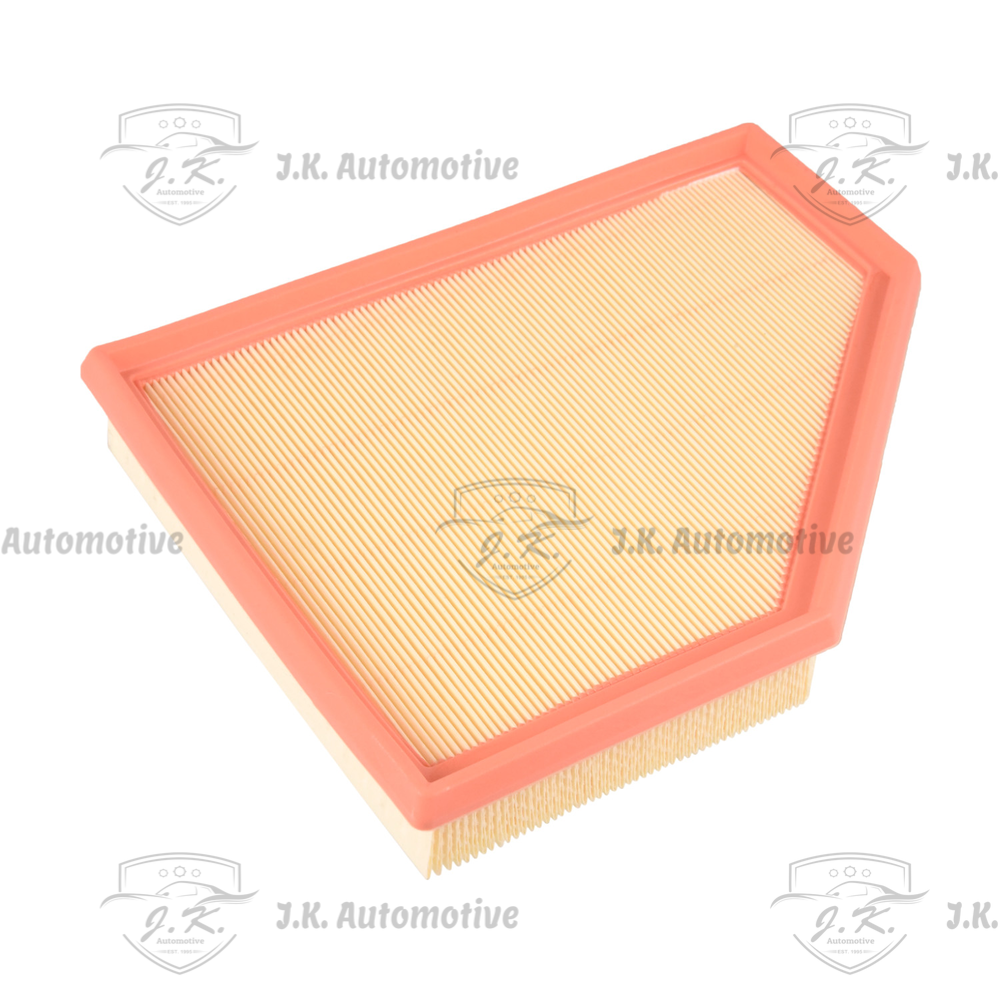
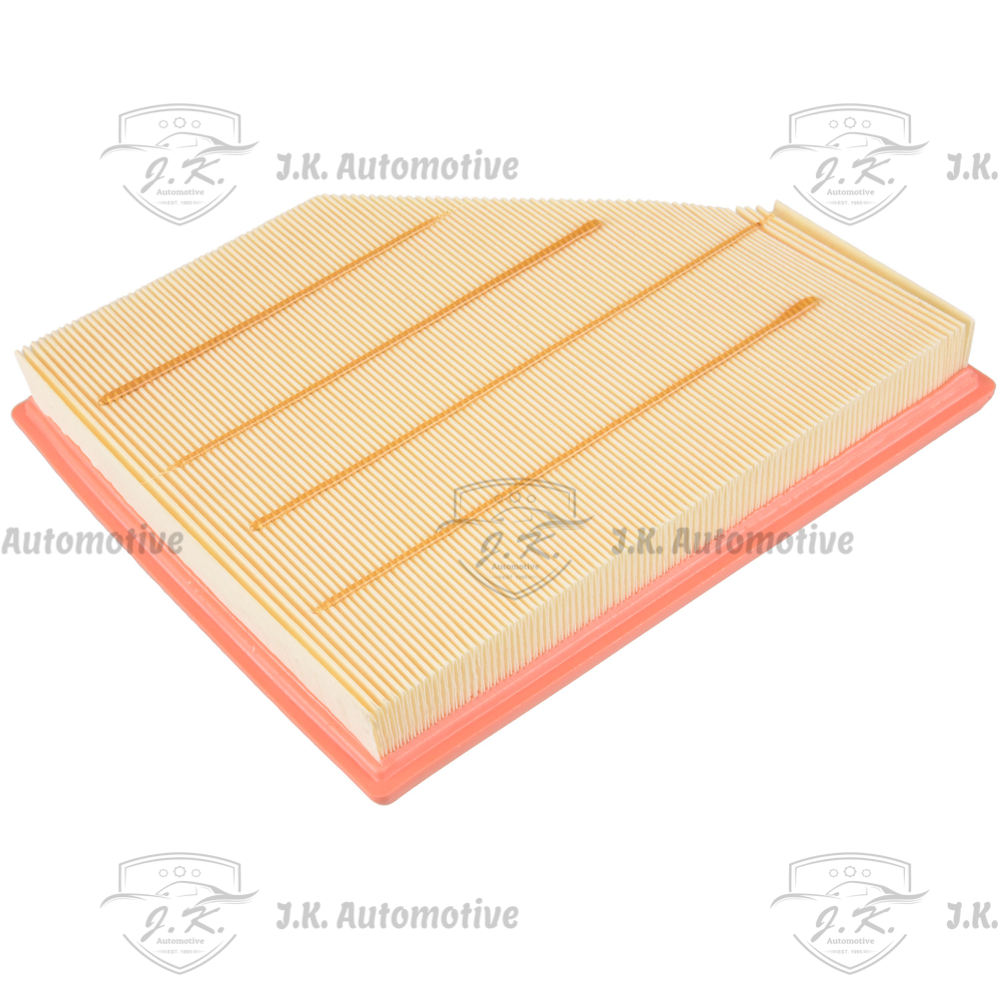
The BMW Z4 Roadster (G29) sDrive 20i produced between 2018 and 2026 is powered by the modular B48B20 2.0-liter longitudinal TwinPower Turbo inline-4 engine (producing 197 PS and 320 Nm of torque), which integrates a single twin-scroll turbocharger, direct cylinder fuel injection operating at up to 350 bar, Double-VANOS variable camshaft timing, and Valvetronic variable valve lift control. Because Valvetronic manages engine load directly at the cylinder intake ports by varying intake valve lift height from sub-millimeter depths up to maximum opening without relying on a conventional throttle body, maintaining an uninhibited, non-turbulent airflow column through the intake tract is critical for precise combustion calculations. OEM air filter part numbers 13718580428 and Toyota cross-reference 17801-WAA02 specify the trapezoidal panel filter element engineered specifically for the G29 chassis front-end packaging. Under wide-open throttle acceleration, the twin-scroll turbocharger compressor pulls severe suction vacuum across the filter media face. Part number 13718580428 features high-density synthetic micro-fiber media reinforced with transverse hot-melt stabilization beads running across the pleat crests to maintain uniform pleat geometry and prevent media flexing or pleat collapse under peak differential pressure. Furthermore, the heat-resistant elastomeric polyurethane perimeter frame compresses snugly inside the lower airbox housing tray, forming an airtight, vibration-dampened seal that prevents unmetered, unfiltered road grit from bypassing the media and entering the turbocharger compressor inlet or contaminating downstream hot-film Mass Air Flow (MAF) sensors.
What is the technical co-development origin, platform sharing continuity, and Toyota cross-reference relationship between BMW part 13718580428 and Toyota part 17801-WAA02 for the G29 Z4 Roadster?
The shared cross-reference pairing between BMW part number 13718580428 and Toyota part number 17801-WAA02 stems directly from the joint sports car architecture co-developed between BMW Group and Toyota Motor Corporation, which produced the BMW Z4 Roadster (G29) and the Toyota GR Supra (A90/J29). Manufactured by Tier-1 OEM filtration specialists such as Mann-Filter (C 28 038) and Mahle/Knecht (LX 4426), this trapezoidal panel air filter features exact physical specifications (approximately 272 mm maximum length, 228 mm width, and 42 mm height) tailored specifically for the shared front-engine, rear-wheel-drive platform airbox housing. Because the Toyota GR Supra 2.0L (DB81/DB82) utilizes the identical BMW B48 engine unit and intake airbox assembly manufactured at Magna Steyr in Graz, Austria, Toyota part number 17801-WAA02 is structurally, dimensionally, and chemically identical to BMW part number 13718580428. Both part numbers feature identical hydrophobic synthetic fiber density, hot-melt pleat stabilization lines, and elastomeric polyurethane frame memory designed to withstand intense thermal radiation inside modern turbocharged engine bays, enabling 100 percent cross-platform interchangeability across all 2018–2026 BMW Z4 (G29) sDrive 20i / sDrive 30i models and Toyota GR Supra 2.0L variants. Replacing engine air filter 13718580428 on the BMW Z4 Roadster (G29) sDrive 20i is a straightforward maintenance procedure that requires careful, methodical execution to safeguard sensitive turbocharger compressor blades and downstream intake sensors
What advanced diagnostic fault codes, live data parameters, and physical vehicle behaviors indicate severe restriction or seal degradation of air filter 13718580428 on a BMW Z4 sDrive 20i?
Diagnosing a restricted or degraded air filter element under part numbers 13718580428 or 17801-WAA02 on a BMW Z4 (G29) sDrive 20i requires analyzing physical driving dynamics alongside digital live parameter logs using BMW ISTA/D, INPA, or advanced OBD-II diagnostic tools. When the synthetic filtration media becomes clogged with environmental silica sand, road soot, or organic debris, the turbocharged B48 engine suffers from acute intake air starvation under boost. Mechanically, the driver will observe sluggish off-the-line throttle response, pronounced turbocharger lag during transient throttle applications, hesitations during high-speed overtaking, reduced top-end pulling power, and a decrease in fuel efficiency. Diagnostically, the Bosch DME 8.x Engine Control Unit continuously monitors live Mass Air Flow (MAF) sensor readings and manifold absolute pressure (MAP) sensor values against target boost maps. When measured air mass falls below expected thresholds relative to wastegate duty cycles and Valvetronic lift angles, the DME applies short-term fuel trim (STFT) and long-term fuel trim (LTFT) corrections to compensate for airflow starvation. Persistent restriction will illuminate the "Drivetrain Malfunction / Engine Fault" message on the iDrive screen and log specific diagnostic trouble codes such as 101F01 (Air Mass System, Fuel Injection Mass: Air Mass Too Low), 102001 (Air Mass Sensor, Signal: Implausible), or 120308 (Charge Pressure Control: Boost Pressure Too Low). Additionally, if an aging perimeter frame gasket hardens or shrinks due to thermal fatigue, unmetered dirty air bypasses the filter media, causing erratic idle speed hunting and lean-burn fault codes.
How does maintaining a clean air filter under part number 13718580428 protect turbocharger compressor wheel integrity, wastegate actuator duty cycles, and charge air cooling efficiency in the BMW Z4 sDrive 20i?
The twin-scroll turbocharger assembly on the B48 engine in the BMW Z4 sDrive 20i operates at rotational speeds exceeding 180,000 RPM under peak boost demand. At these immense rotational velocities, the precision-machined aluminum compressor wheel is exceptionally vulnerable to microscopic solid contaminants in the incoming airstream. When a compromised, poor-quality, or ill-fitting air filter allows fine silica dust and road sand particles to pass into the intake tract, the high-speed impact of these particles causes severe mechanical erosion on the leading edges of the compressor blades—a destructive condition known as compressor wheel dusting. Over time, blade erosion alters the aerodynamic profile of the compressor wheel, drastically reducing boost efficiency, increasing charge air temperatures, and creating high-frequency shaft vibrations that destroy internal journal bearings and dynamic oil seals. Furthermore, when the filter media is restricted by dirt, the DME is forced to increase the wastegate actuator duty cycle, keeping the wastegate valve closed longer to spin the turbocharger faster in an attempt to achieve target manifold boost pressure. Compressing air past a heavy intake restriction drastically elevates compressor discharge temperatures, overwhelming the liquid-to-air charge air cooler (intercooler) integrated into the intake manifold and raising intake air temperatures (IATs) entering the combustion chambers, which triggers ignition timing retard and thermal power losses. Maintaining a fresh OEM filter 13718580428 preserves compressor blade profile, maintains dynamic shaft balance, and optimizes charge air cooling efficiency under all driving conditions.
How does progressive silica dust loading on air filter 13718580428 alter charge air density, knock suppression, and ignition timing advancement in the BMW Z4 Roadster (G29) sDrive 20i B48 engine?
As fine silica dust, environmental soot, and road particulates accumulate across the trapezoidal synthetic media face of air filter 13718580428, the static pressure differential across the intake tract spikes significantly during wide-open throttle acceleration, forcing the twin-scroll turbocharger to operate at elevated shaft speeds to deliver the manifold absolute pressure (MAP) target requested by the Bosch DME 8.x Engine Control Unit. Compressing ambient air across an artificially high intake vacuum restriction generates extreme kinetic heat during the compression phase, causing charge air exiting the compressor discharge port to reach significantly higher temperatures before entering the liquid-to-air charge air cooler integrated within the intake manifold. Over extended performance driving cycles, this excessive heat load overburdens the indirect charge air cooling radiator loop, driving up intake air temperatures (IATs) entering the combustion chambers, which lowers total oxygen mass density and increases thermal stress across the cylinder head and valvetrain. In high-compression turbocharged engines equipped with direct fuel injection operating at up to 350 bar, elevated charge air temperatures promote destructive spark knock and pre-ignition. To protect the forged connecting rods and piston crowns from knock damage, the DME detects detonation signals via engine block sensors and immediately retards ignition timing while decreasing wastegate duty cycles, resulting in a noticeable drop in peak horsepower, sluggish throttle response, and reduced fuel efficiency.
How do crankcase ventilation (PCV) pressure dynamics and oil consumption change when running a severely restricted air filter 13718580428 in the BMW Z4 Roadster (G29) sDrive 20i?
The Positive Crankcase Ventilation (PCV) system integrated within the cylinder head cover of the B48 engine maintains a precisely regulated negative pressure inside the engine crankcase, routing blow-by gases through internal impactor oil separator channels before returning clean crankcase vapors into the intake pipe upstream of the twin-scroll turbocharger compressor inlet. When the primary air filter element becomes heavily clogged with road dirt, the turbocharger compressor pulls an unnaturally high vacuum inside the intake pipe during boost creation, placing an abnormal suction load directly on the PCV pressure regulating diaphragm inside the valve cover assembly. Over extended service intervals, this excessive vacuum force stretches, tears, or sticks the rubber PCV diaphragm in an open position, allowing liquid engine oil mist to be drawn directly out of the crankcase into the turbocharger compressor housing and charge air ducting. Vehicle owners will observe increased motor oil consumption between service intervals, blue exhaust smoke under sudden acceleration, oil pooling inside the intake manifold plenum, and accelerated carbon buildup on the intake valve stems and spark plugs. Replacing the engine air filter at recommended intervals eliminates extreme intake pipe vacuum spikes, protecting the PCV regulator diaphragm and keeping engine oil consumption within factory limits. Replacing engine air filter 13718580428 on the BMW Z4 Roadster (G29) sDrive 20i is a straightforward maintenance procedure that requires careful, methodical execution to safeguard sensitive turbocharger compressor blades and downstream intake sensors
How do acoustic dampening, cabin refinement, and intake noise suppression differ between genuine OEM panel filter 13718580428 and aftermarket open-element intake systems on the BMW Z4 Roadster (G29)?
As an open-top roadster, the BMW Z4 (G29) sDrive 20i is engineered to isolate occupants from harsh mechanical engine whine, intake induction turbulence, and pressure pulsation noise while maintaining a refined exhaust note. OEM air filter part number 13718580428 is specifically calibrated by BMW acoustic engineers to function as a noise-dampening element inside the sealed factory intake airbox, where its high-density synthetic microfiber pleats and elastomeric polyurethane perimeter frame absorb high-frequency turbocharger spool whistle, compressor surge, and pressure waves generated by Valvetronic intake valve movements. In contrast, installing an aftermarket open-element intake system removes the sealed factory housing completely, introducing loud induction roar, harsh blow-off valve hiss, and engine bay resonance directly into the open cabin space—a major source of driver fatigue during long road trips. Furthermore, open-element filters lack the thermal isolation provided by the sealed factory airbox, drawing warm air directly from inside the engine compartment rather than cool ambient air channeled from the front bumper air intakes. Ingesting hot engine bay air elevates intake charge temperatures, triggering ignition timing retard and noticeable thermal power losses during warm weather driving. Utilizing the factory-engineered panel filter 13718580428 preserves the refined acoustic balance of the Z4 Roadster while ensuring true cold-air induction performance.
Why should compressed air blow-outs and chemical solvents never be used to service synthetic air filter element 13718580428 / 17801-WAA02 on the BMW Z4 (G29)?
A common maintenance mistake is attempting to clean dirty air filter elements using high-pressure compressed air nozzles or chemical solvent sprays during routine vehicle servicing. While blowing compressed air through the clean side of filter 13718580428 may dislodge surface dust and organic debris, the high-velocity air stream (often exceeding 30 PSI) permanently ruins the microscopic filtration lattice of the synthetic microfiber media. The concentrated force of compressed air tears delicate synthetic fibers apart, expanding factory-calibrated 3-micron pore sizes up to 20 microns or larger, while breaking the transverse hot-melt stabilization beads away from the pleat crests. Once pleat geometry is disrupted and pore matrix size is enlarged, the filter can no longer trap fine silica dust or airborne road sand when reinstalled in the airbox. Reinstalling a blown-out filter allows fine abrasive grit to pass directly into the turbocharger and intake manifold, accelerating cylinder wall polishing and compressor wheel erosion. Similarly, applying chemical degreasers or cleaning solvents breaks down the synthetic binders within the media and degrades the polyurethane perimeter frame, causing the gasket to lose its elastic memory and leak raw air around the edges. Filter 13718580428 is engineered strictly as a dry, single-use replaceable component that must be discarded and replaced with a fresh element whenever dirty or restricted. Safety and Preparation: Turn off the ignition, set the electronic parking brake, and allow the B48 engine bay to cool completely so plastic airbox housings, retaining latches, and intake ducting remain flexible during handling.


Reviews
There are no reviews yet.