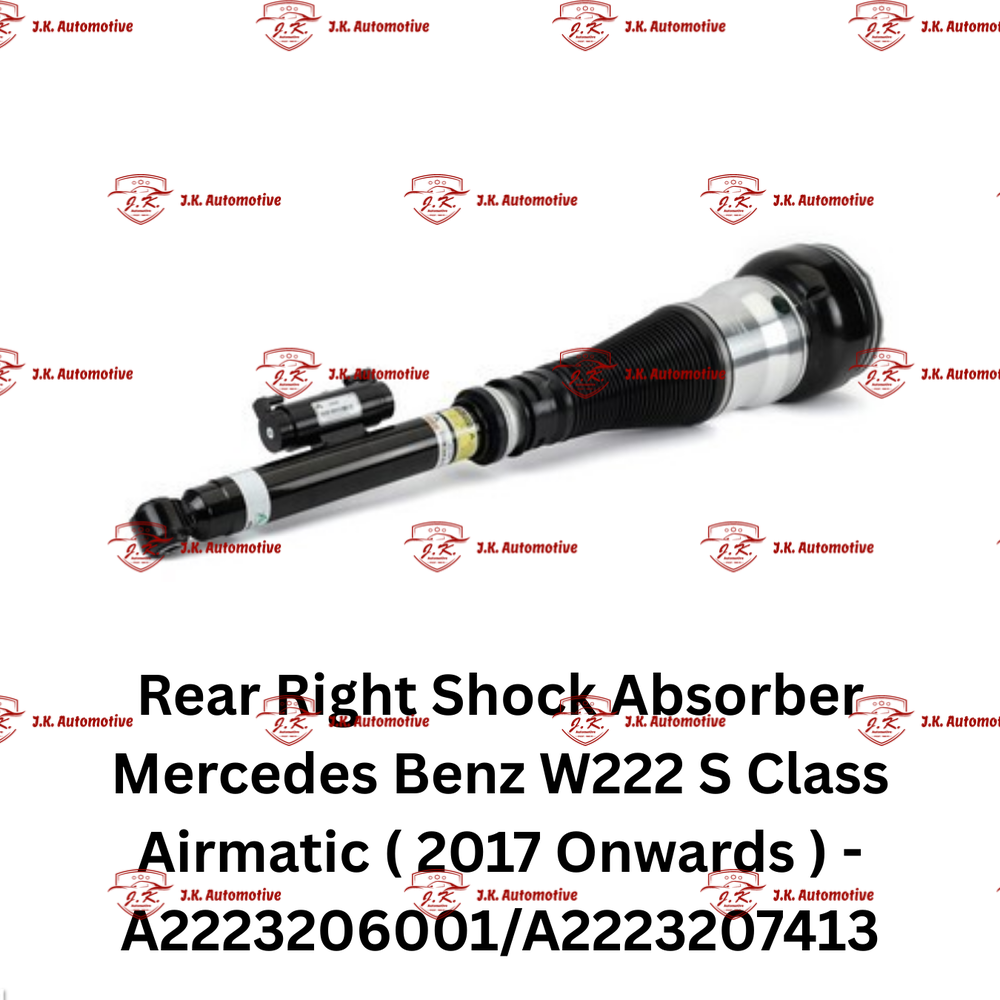
What is the Rear Right Airmatic Shock Absorber A2223206001 / A2223207413 for Mercedes Benz W222 S Class?
The Rear Right Airmatic Shock Absorber A2223206001 / A2223207413 is intended for the stated Mercedes Benz W222 S Class application, with supplied product information showing 2017 Onwards and supplied year range 2013–2020, and it is installed at the rear right suspension position where it helps control compression and rebound movement while operating within the applicable Airmatic suspension arrangement. During normal driving, the rear suspension moves continuously as the wheels respond to bumps, potholes, expansion joints, road undulations, dips and changes in vehicle loading, and the shock absorber's damping function helps regulate these movements so that the suspension settles progressively rather than continuing with excessive repeated oscillation. When the rear right wheel encounters a raised road surface, the suspension moves through compression as the wheel travels upward relative to the vehicle body, while damping resistance helps control the rate of this movement. When the wheel subsequently moves away from the vehicle body after the initial compression event, rebound damping regulates suspension extension and helps the rear of the vehicle settle progressively. Rear suspension forces also change during acceleration, braking and cornering because vehicle load transfers continuously between the front and rear axles and between the left and right sides. The Airmatic system should therefore be considered as a complete arrangement involving applicable pneumatic suspension components, the air compressor, valve block, pressure lines and associated control components rather than treating the rear shock absorber as an isolated part. References A2223206001 and A2223207413 are important product-identification details and should remain unchanged during compatibility verification. A pressure-retention concern may produce symptoms such as the rear right corner lowering while parked, uneven standing height, slower height recovery or increased compressor operation, whereas deteriorated damping may appear as repeated bouncing, excessive rear-body movement or slower settling even when standing height remains relatively stable. These different symptoms should be diagnosed systematically because they do not necessarily have the same cause. Surrounding rear suspension components including suspension arms, bushes, sway bar links, sway links, anti roll link rods, stabiliser sway links and mounting components should also be inspected where noise or unwanted movement is present. The existing rear right unit should be physically compared with the replacement, including mounting arrangements, pneumatic connection and any applicable electrical connection. VIN-based verification should be used whenever exact vehicle compatibility or suspension specification remains uncertain.
How can I confirm A2223206001 / A2223207413 compatibility with my Mercedes Benz W222 S Class?
Compatibility of the Rear Right Airmatic Shock Absorber A2223206001 / A2223207413 with a Mercedes Benz W222 S Class should be confirmed using the complete supplied reference numbers, W222 chassis identification, Rear Right installation position, applicable suspension configuration, existing component details and VIN information where necessary rather than relying only on the S Class model name or production year. The supplied product information identifies the component as Rear Right Airmatic Shock Absorber Mercedes Benz W222 S Class (2017 Onwards) – A2223206001 / A2223207413 with supplied year range 2013–2020, and these details should remain unchanged during product preparation and compatibility checking. Begin by comparing A2223206001 and A2223207413 with the identification information available from the existing suspension unit, vehicle-specific parts information or other reliable reference data. Useful search variations can include W222 A2223206001, W222 A2223207413, Mercedes S Class A2223206001, Mercedes S Class A2223207413, A2223206001 Rear Right Shock, A2223207413 Rear Right Shock, W222 Rear Right Airmatic and Mercedes W222 Rear Air Suspension Shock. Reference-number checking should then be supported by physical comparison of the existing and replacement components. Compare overall construction, upper and lower mounting arrangements, relevant brackets, pneumatic connection and any applicable electrical connector configuration because visually similar suspension components should not automatically be assumed interchangeable. The Rear Right position should be confirmed carefully because a side-specific suspension component should not be assumed identical to the Rear Left unit. The pneumatic pressure connection should correspond naturally with the existing vehicle arrangement without forced fitting or improvised modification. Where an electrical connection is applicable, the connector configuration and accessible wiring arrangement should also be compared rather than altering the original vehicle wiring to accommodate an incorrect component. Production date, suspension specification and vehicle equipment can affect exact component selection, making VIN-based verification useful whenever reference information is incomplete or conflicting. The supplied 2017 Onwards information and 2013–2020 year range should remain exactly as provided rather than being automatically reconciled or changed. Correct compatibility checking should therefore combine A2223206001 / A2223207413, W222 chassis, Rear Right position, physical component configuration and VIN-based confirmation where required.
What are the symptoms of a faulty Rear Right Airmatic Shock Absorber on Mercedes Benz W222 S Class?
Possible symptoms requiring inspection of the Rear Right Airmatic Shock Absorber on a Mercedes Benz W222 S Class can include the rear right corner gradually lowering while the vehicle is parked, uneven standing height, slower suspension-height recovery, frequent or prolonged compressor operation, excessive bouncing after bumps, repeated rear-body movement, slower settling after road disturbances, unusual suspension noises, changes in rear suspension behaviour during acceleration or cornering, or visible deterioration around the suspension component, although these symptoms should be treated as diagnostic indicators rather than automatic confirmation that A2223206001 / A2223207413 requires replacement. The first useful diagnostic distinction is between pneumatic pressure-retention concerns and damping-performance concerns because these functions can produce different symptom patterns. If the rear right corner sits correctly when the vehicle is initially parked but becomes lower after several hours or overnight, the applicable pneumatic circuit should be investigated for pressure loss. The rear right suspension unit, pneumatic connection and relevant pressure line should be inspected for leakage, damage, deterioration, abrasion, contamination or incorrect seating. The valve block should also be considered because it participates in controlling pressure distribution within the applicable air suspension system. Compressor behaviour can provide useful information because increased compressor operation may indicate that the system is repeatedly restoring pressure, but this does not identify the precise location of a leak. If the vehicle maintains the expected standing height but displays repeated bouncing or takes longer to settle after bumps, damping performance should receive greater attention. Suspension noise should be diagnosed carefully because worn bushes, suspension arms, sway bar links, sway links, anti roll link rods, stabiliser sway links or mounting components can produce sounds that overlap with shock absorber symptoms. Tyres should also be inspected if irregular wear or changes in road behaviour are present. References A2223206001 and A2223207413 should be verified before replacement, together with the W222 chassis and Rear Right installation position. Physical comparison with the existing component should include overall construction, upper and lower mounting arrangements, pneumatic connection and any applicable electrical connection. Appropriate leak testing, damping assessment, standing-height observation and inspection of surrounding suspension components provide a stronger basis for determining the actual cause of the symptoms.
Why can the rear right corner of Mercedes Benz W222 S Class lower after parking overnight?
The rear right corner of a Mercedes Benz W222 S Class can potentially lower after the vehicle remains parked if the applicable pneumatic suspension circuit is not retaining pressure correctly, but the Rear Right Airmatic Shock Absorber A2223206001 / A2223207413 should not automatically be considered faulty until the relevant suspension unit, pneumatic connections, pressure lines, valve block and related system components have been inspected systematically. Air suspension depends on maintaining controlled pneumatic pressure, and a gradual pressure loss can become particularly noticeable while the vehicle remains stationary because the compressor is not continuously compensating for escaping air. One useful diagnostic observation is whether the rear right corner sits at an appropriate height when the vehicle is initially parked but gradually becomes lower after several hours. The time required for the height change and whether one or multiple suspension positions are affected can provide useful diagnostic information. The rear right suspension component and pneumatic connection should be inspected for possible leakage, while the relevant pressure line should be checked for abrasion, deterioration, damage, deformation or incorrect seating. Appropriate leak testing can help identify whether air is escaping from the suspension unit, connection, line or another part of the pneumatic circuit. The valve block should also be included in diagnosis because its internal pressure-control function can influence how individual suspension circuits retain pressure. Compressor operation after the vehicle is started should be observed because extended or frequent compressor activity may indicate that pressure lost while parked is being restored. However, increased compressor operation does not identify the exact source of the leak and should not be treated as proof that the rear right suspension unit has failed. If several corners change height, the diagnostic process should be expanded to other pneumatic components and system-level causes. Ride-height sensing and associated control information may also require evaluation if physical leak testing does not identify an obvious source. If the vehicle retains its standing height overnight but the rear suspension displays excessive bouncing or poor settling, the concern may be related more closely to damping performance than pneumatic leakage. References A2223206001 and A2223207413 should be confirmed against the existing component before replacement, while VIN-based verification should be used where exact compatibility remains uncertain.
Can A2223206001 / A2223207413 affect ride comfort and rear suspension control on Mercedes W222?
The Rear Right Airmatic Shock Absorber identified by references A2223206001 / A2223207413 contributes to rear suspension control on the stated Mercedes Benz W222 S Class application by regulating compression and rebound movement at the rear right suspension position while the vehicle responds to changing road surfaces, vehicle loads and driving forces. A shock absorber is designed to control the speed and extent of suspension movement rather than prevent movement entirely, allowing the wheel to respond to road irregularities while helping the vehicle body settle progressively after each disturbance. When the rear right wheel encounters a bump or raised surface, the suspension compresses and damping resistance helps regulate the upward movement. After the initial compression event, rebound damping controls the rate at which the suspension extends, helping reduce repeated oscillation. This process occurs continuously during normal driving because small surface changes create repeated suspension movements even on roads that appear relatively smooth. Acceleration transfers vehicle load toward the rear axle and changes the forces acting through the rear suspension, while braking transfers load toward the front and changes rear suspension loading again. Cornering creates lateral load transfer between the left and right sides, requiring the rear dampers to manage changing suspension forces. If damping performance deteriorates, possible symptoms can include repeated bouncing, excessive rear-body movement, slower settling after bumps or a less controlled response over uneven surfaces. Pneumatic pressure-retention concerns should be considered separately because a vehicle that loses rear right standing height while parked presents a different diagnostic pattern from one that maintains height but demonstrates poor damping. The air compressor, valve block, pneumatic pressure lines and connections should be inspected where height-related symptoms occur. Mechanical components including suspension arms, bushes, sway bar links, sway links, anti roll link rods and stabiliser sway links should also be inspected because wear can influence rear suspension behaviour. References A2223206001 and A2223207413 should remain unchanged during identification and compatibility checking. The Rear Right installation position and W222 application should be confirmed, and VIN-based verification should be used whenever exact suspension specification remains uncertain.
What should be inspected before installing A2223206001 / A2223207413 Rear Right Airmatic Shock on Mercedes W222?
How does the Rear Right Airmatic Shock Absorber A2223206001 / A2223207413 work on Mercedes Benz W222 S Class?
The Rear Right Airmatic Shock Absorber A2223206001 / A2223207413 works at the rear right suspension position of the stated Mercedes Benz W222 S Class application by helping regulate compression and rebound movement while operating within the applicable Airmatic suspension arrangement as the vehicle responds continuously to road irregularities, braking, acceleration, cornering and changes in vehicle loading. When the rear right wheel encounters a bump, pothole, expansion joint or raised road surface, the suspension moves through compression as the wheel travels upward relative to the vehicle body, and the damping function helps control the rate of this movement so the suspension can respond without continuing into unnecessary uncontrolled oscillation. After the wheel passes the road disturbance, the suspension begins extending again and rebound damping regulates how quickly the wheel and vehicle body return toward their operating positions. These compression and rebound events occur continuously during everyday driving because even relatively smooth roads create small suspension movements that require damping control. During acceleration, vehicle load transfers toward the rear axle and changes the forces acting through the rear suspension, while braking transfers load toward the front and changes rear suspension loading again. Cornering creates lateral load transfer between the left and right sides, meaning the rear right suspension position must respond continuously as the forces acting through the vehicle change. The Airmatic arrangement should be considered as a coordinated system involving applicable pneumatic suspension components, an air compressor, valve block, pressure lines and associated control components rather than treating the shock absorber as an isolated part. References A2223206001 and A2223207413 are important identification details and should remain unchanged during compatibility verification. Pneumatic pressure-retention concerns and damping-performance concerns should be distinguished because they can create different symptom patterns. A rear right corner that gradually lowers while parked can indicate a pressure-retention concern, whereas a vehicle that maintains standing height but continues bouncing after bumps may require closer evaluation of damping performance. Pneumatic lines, fittings, valve block operation and compressor behaviour should therefore be considered when height-related symptoms occur. Mechanical components including suspension arms, bushes, sway bar links, sway links, anti roll link rods and stabiliser sway links should also be inspected because wear can create overlapping noises or suspension behaviour. The existing component should be compared physically with the replacement, including upper and lower mounting arrangements, pneumatic connection and any applicable electrical connector. The supplied 2017 Onwards information and 2013–2020 year range should remain exactly as provided, while VIN-based verification should be used whenever exact suspension specification remains uncertain.
Can A2223206001 / A2223207413 cause the rear right side of Mercedes W222 S Class to lower overnight?
A pressure-retention concern affecting the rear right pneumatic suspension circuit can potentially cause the rear right corner of a Mercedes Benz W222 S Class to lower after the vehicle remains parked for several hours or overnight, but A2223206001 / A2223207413 should not automatically be considered faulty until the suspension unit, pneumatic connection, pressure line, valve block and other relevant components have been inspected systematically. Air suspension depends on retaining controlled pneumatic pressure within the applicable suspension circuits, and when pressure escapes gradually while the vehicle remains stationary, the affected corner can begin lowering because the compressor is not continuously operating to replace the lost air. One useful diagnostic observation is whether the rear right corner maintains an appropriate standing height immediately after the vehicle is parked but becomes progressively lower after several hours. The amount of height loss, the time required for the change and whether any other suspension positions also lower can provide useful information about the nature of the concern. The rear right suspension unit should be inspected for possible leakage, while its pneumatic connection should be checked for correct seating, contamination, deterioration or physical damage. Relevant pressure lines should be examined for abrasion, cracking, deformation or other conditions that could compromise pressure retention. Appropriate leak testing can help determine whether air is escaping directly from the suspension component, from a line connection or from another point within the pneumatic circuit. The valve block should also be considered because its pressure-distribution and isolation functions can influence how individual suspension circuits retain pressure. Compressor operation after the vehicle is restarted can provide additional information because frequent or prolonged operation may indicate that the system is restoring pressure lost while parked. However, compressor activity alone does not identify the source of pressure loss and should not be treated as confirmation that the rear right shock absorber requires replacement. Ride-height sensing and associated control information may also require evaluation if physical leak testing does not reveal an obvious source. If the vehicle retains its expected standing height overnight but displays excessive rear bouncing or takes longer to settle after bumps, damping performance should be evaluated separately. Mechanical suspension components and mounting points should also be inspected because wear can create additional movement or noise. References A2223206001 and A2223207413, the W222 chassis and Rear Right position should all be confirmed before replacement.
Can a faulty Rear Right Airmatic Shock cause frequent compressor operation on Mercedes Benz W222 S Class?
A pneumatic pressure-retention concern affecting the rear right suspension circuit can contribute to frequent or prolonged air-compressor operation on a Mercedes Benz W222 S Class because the suspension system may repeatedly attempt to restore pressure or vehicle height, but increased compressor activity should not automatically be interpreted as confirmation that the Rear Right Airmatic Shock Absorber A2223206001 / A2223207413 is faulty. The compressor supplies pressurised air to the applicable suspension system, while the valve block, pneumatic pressure lines, fittings and suspension units participate in distributing and retaining that pressure. If pressure gradually escapes from the rear right suspension unit or its pneumatic connection, the rear right corner can change standing height while the vehicle remains stationary, and the compressor may subsequently operate when the vehicle is started or when the system attempts to restore the applicable suspension condition. However, leakage from a pneumatic line, fitting, valve block or another suspension component can create similar compressor behaviour, which is why the actual pressure-loss location should be identified before deciding that the rear right shock absorber requires replacement. The suspension unit should be inspected for possible leakage, and the pneumatic connection should be checked for damage, contamination, deterioration or incorrect seating. Relevant pressure lines should also be examined for abrasion, cracking, deformation or other damage that could allow air loss. The valve block should be included in the diagnosis because internal pressure-retention or distribution concerns can affect individual suspension circuits. Standing-height behaviour should be observed together with compressor operation because a rear right corner that gradually lowers while parked and then rises when the compressor operates provides useful diagnostic information. Compressor frequency and operating duration can support the diagnostic process but should not be used as a standalone test for shock absorber failure. If the air system has been compensating for pressure loss for an extended period, compressor condition may also require evaluation because repeated additional operation places greater demand on the air-supply system. Where applicable, electrical connections and accessible suspension wiring should be inspected for damage, contamination, corrosion or previous modification. If standing height remains stable but excessive bouncing or slow settling occurs, damping performance should be assessed separately. References A2223206001 and A2223207413 should be verified together with the W222 chassis and Rear Right installation position before replacement.
What should be checked after installing A2223206001 / A2223207413 Rear Right Airmatic Shock on Mercedes W222?
After installing the Rear Right Airmatic Shock Absorber A2223206001 / A2223207413 on the stated Mercedes Benz W222 S Class application, the rear right suspension assembly and related pneumatic, mechanical and applicable electrical connections should be inspected carefully before normal road use so that mounting security, pressure retention, standing height, damping behaviour and overall suspension operation can be evaluated systematically. Begin by confirming that the replacement component has been installed at the correct Rear Right position and that its upper and lower mounting arrangements correspond correctly with the existing vehicle configuration. Relevant brackets, fasteners and mounting hardware should be checked for correct positioning and secure installation according to the appropriate repair procedure. The pneumatic pressure-line connection should be inspected to confirm that it is correctly seated and has not been damaged, contaminated, twisted, stretched or incorrectly positioned during installation. Appropriate leak testing should be performed around the relevant pneumatic connection and suspension component to confirm that pressure is being retained without an avoidable external leak. Where an electrical connection is applicable, the connector should be properly engaged and accessible wiring should be inspected to ensure that it has not been pinched, stretched, damaged or routed incorrectly. The vehicle's standing height should be observed after the suspension reaches its operating condition, paying particular attention to whether the rear right position corresponds appropriately with the remaining suspension positions. The vehicle can also be observed after remaining parked to determine whether the repaired circuit continues retaining pressure over time. Compressor operation should be monitored because unusually frequent or prolonged activity after replacement can indicate that a pneumatic pressure-loss concern remains elsewhere within the system. If the rear right corner continues lowering, the pressure line, fitting, valve block and other applicable pneumatic components should be investigated rather than immediately assuming the newly installed suspension unit is responsible. Damping behaviour should be evaluated through appropriate functional checks and road testing, paying attention to repeated bouncing, excessive rear-body movement, slow settling or unusual suspension noise. Surrounding mechanical components including suspension arms, bushes, sway bar links, sway links, anti roll link rods and stabiliser sway links should also be inspected. Tyres should be examined for irregular wear that could indicate an existing suspension or geometry concern. References A2223206001 and A2223207413 should remain part of final verification together with the W222 chassis and Rear Right position. The supplied 2017 Onwards information and 2013–2020 year range should remain exactly as provided.
How do I know if the Rear Right Airmatic Shock Absorber is bad on my Mercedes Benz W222 S Class?



Reviews
There are no reviews yet.